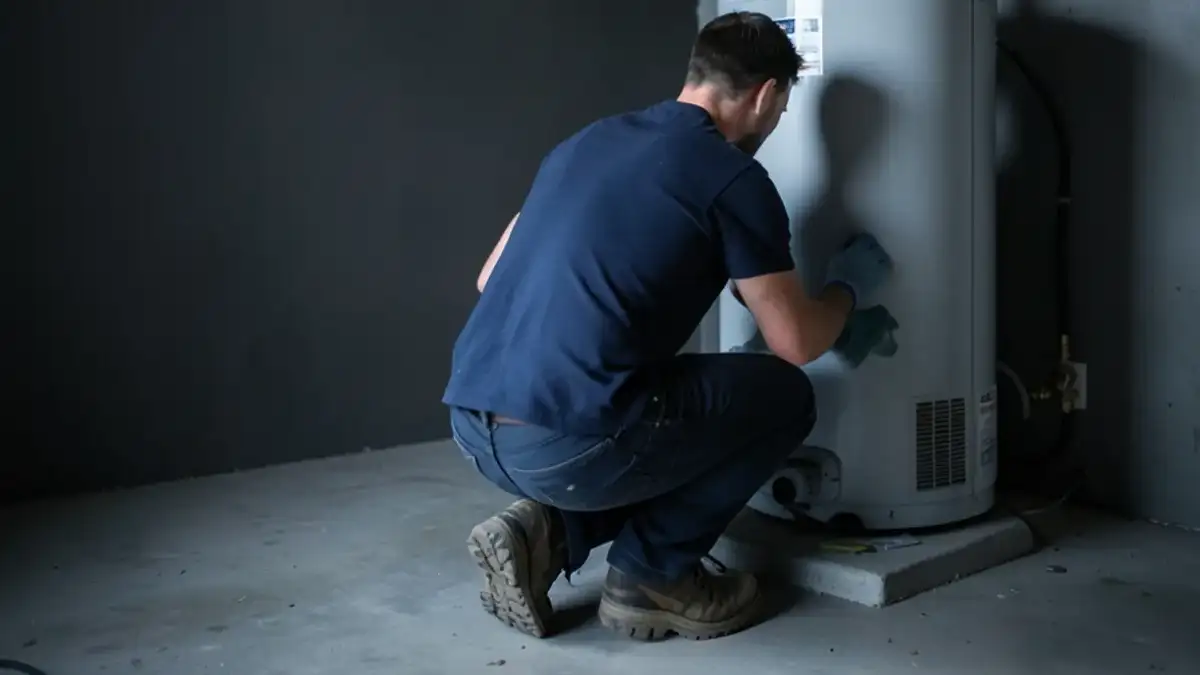
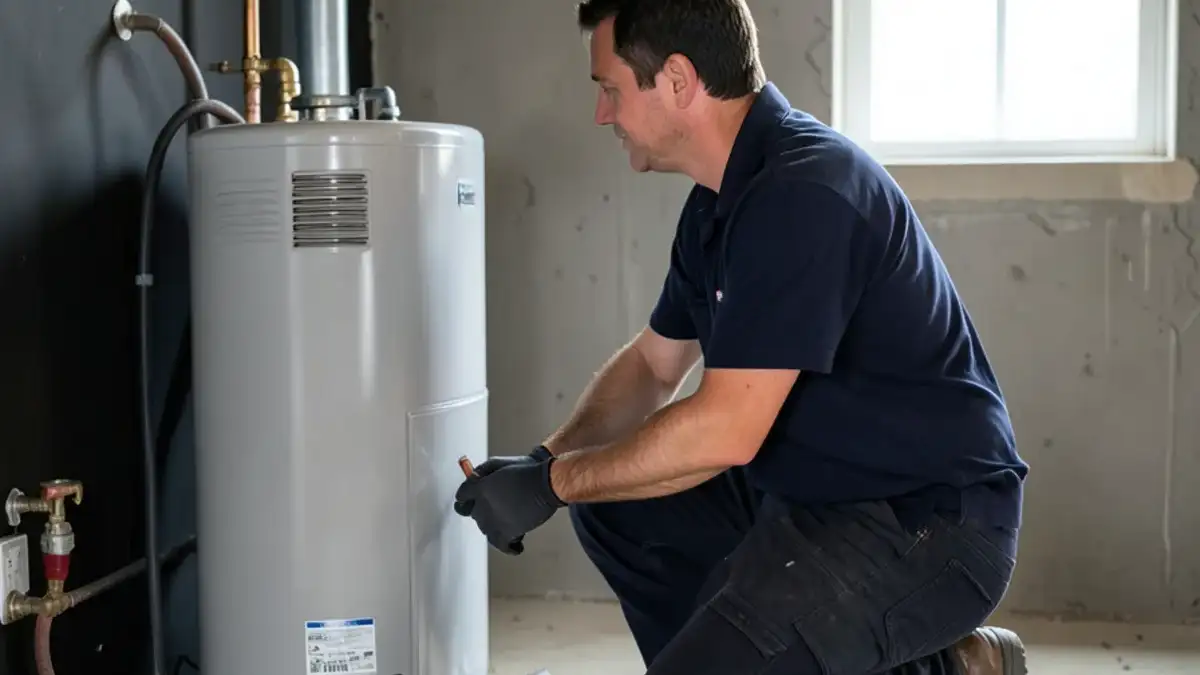
Water Heater Repair in Washington, IL
We fix the failed part when we can, and say so plainly when the tank has to go.
- 4.8 on Google, 16 reviews
- Open 7 days, 7:15 AM to 6:15 PM
- Based in Washington, IL
- Google reviews going back 10 years
Water heater repair in Washington, IL starts with finding which part failed and whether the tank behind it is still sound, a live question for heaters from the 2014 rebuilds. A pilot, thermostat, heating element, relief valve or anode rod can be repaired. A tank that leaks from its body cannot, and we tell you that first.
What Are the Signs of a Failing Water Heater?
Start with what you see, hear and feel. Callers usually describe one of these:
- No hot water, or only lukewarm water
- Hot water that runs out much faster than it used to
- Rumbling or popping from the tank
- Water around the base, or a wet discharge pipe
- Rusty or cloudy water from the hot tap only
- A pilot light that keeps going out, or a tripped breaker on an electric unit
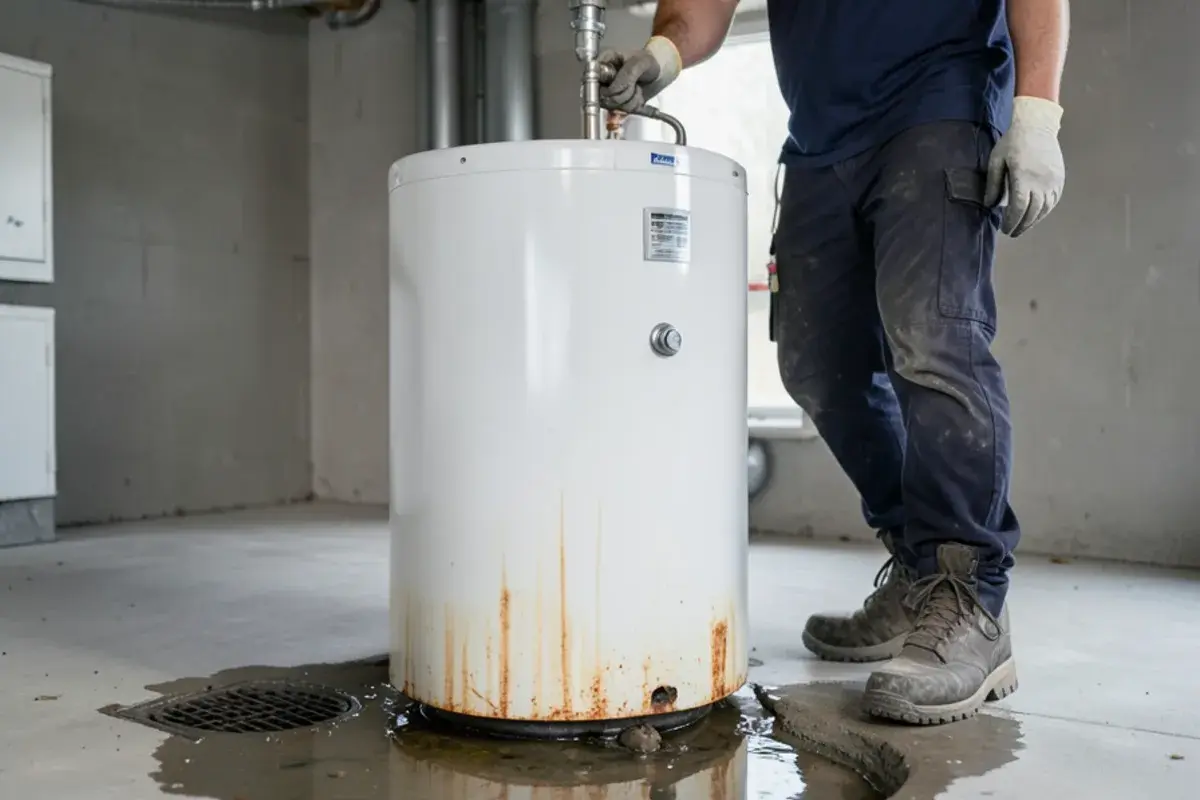
If water is on the floor, close the cold water shutoff valve on the pipe above the tank. On an electric heater, switch off its breaker too. Gas smell is different: get out first, then phone Ameren Illinois or 911 from outside. Do not hunt for the source.
What Can Water Heater Repair Fix?
Most failures are parts. The table shows how we sort them.
| Problem | Usual cause | Repair or replace |
|---|---|---|
| No heat, gas unit | Pilot out, worn thermocouple or gas control | Repair |
| No heat, electric unit | Tripped limit switch, bad thermostat or element | Repair |
| Dripping relief valve | Worn valve, or pressure and heat inside the tank | Repair the valve, then find the cause |
| Popping or rumbling | Sediment on the tank bottom | Flush, and watch for age |
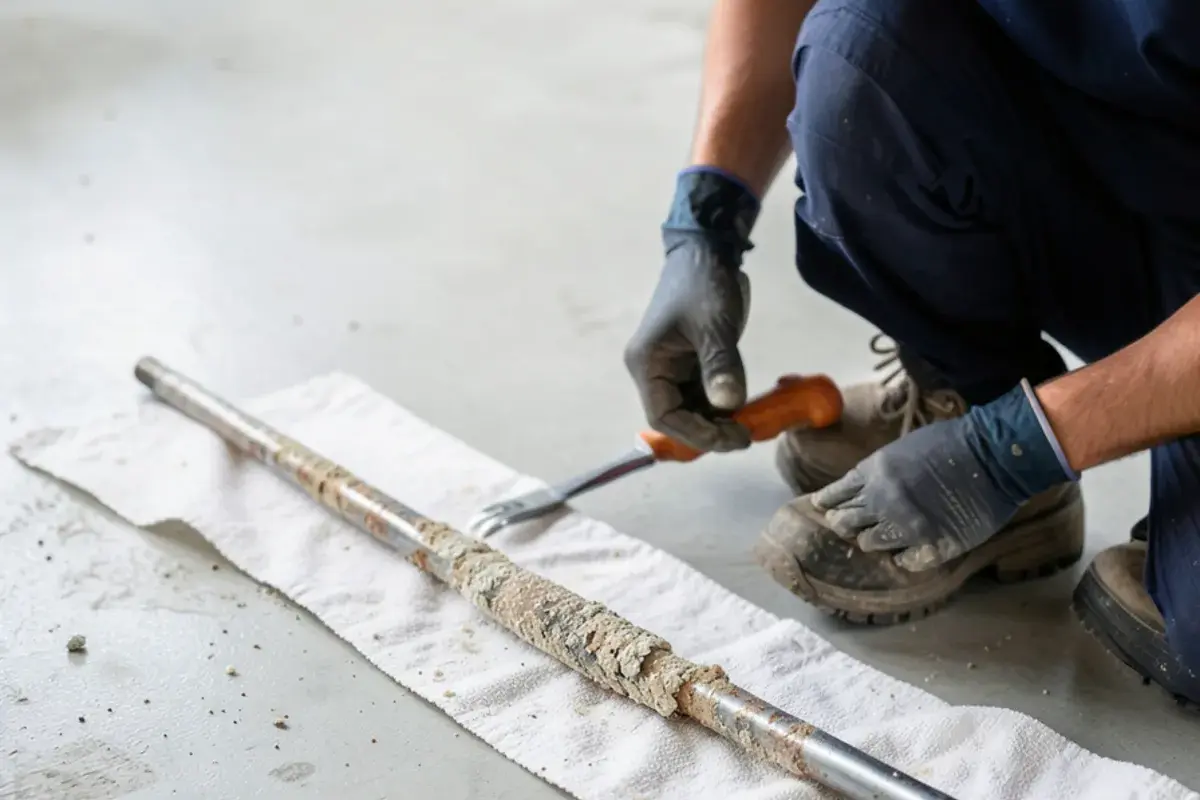
| Rusty hot water | Spent anode rod, or a corroding tank | New rod if the tank is sound, otherwise replace |
| Leak at a fitting or drain valve | Loose connection or failed valve | Repair |
| Water seeping from the tank body | Steel corroded through | Replace |
A repair visit covers diagnosis, the part and the test that proves it. The usual scope:
- Gas units. Pilot, thermocouple and gas control, with a leak check.
- Electric units. Elements, thermostats and the limit switch.
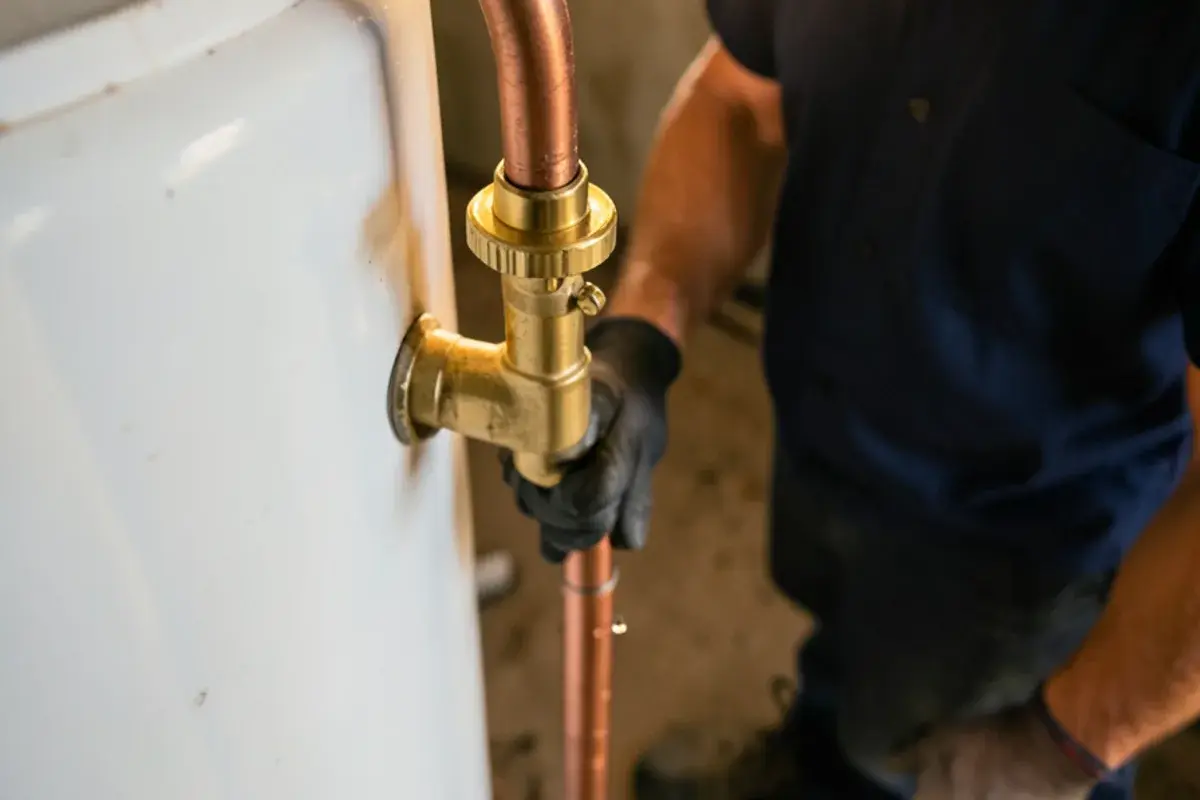
- Relief valve. The safety valve that opens if heat or pressure climbs too high. We test before swapping it.
- Anode rod. A metal rod that corrodes so the steel does not. A new one helps only a sound tank.
- Sediment. A flush through the drain valve.
No hot water this morning? Call (209) 563-1400
Open 7 days, 7:15 AM to 6:15 PM. Tell us what is happening and we will give you a clear, upfront quote.
Request a Quote
Water moving right now? Call first: (209) 563-1400. For anything that can wait, send the details here.
Why Do Tanks Pop and Rumble Here?
Minerals come out of the water as it heats and settle on the bottom of the tank. Water trapped under that layer boils, and you hear it as popping. The layer also insulates the water from the burner, so a gas unit runs longer and the bottom of the tank takes more heat.
How much builds up depends on your water hardness, and that varies by supply. Wells in this region usually run hard. Your utility's annual water quality report lists hardness for city supply, and a water test settles it for a well. In winter the water entering the house is colder, so the heater works harder to recover. If hard water is the cause, a water softener addresses it at the source.
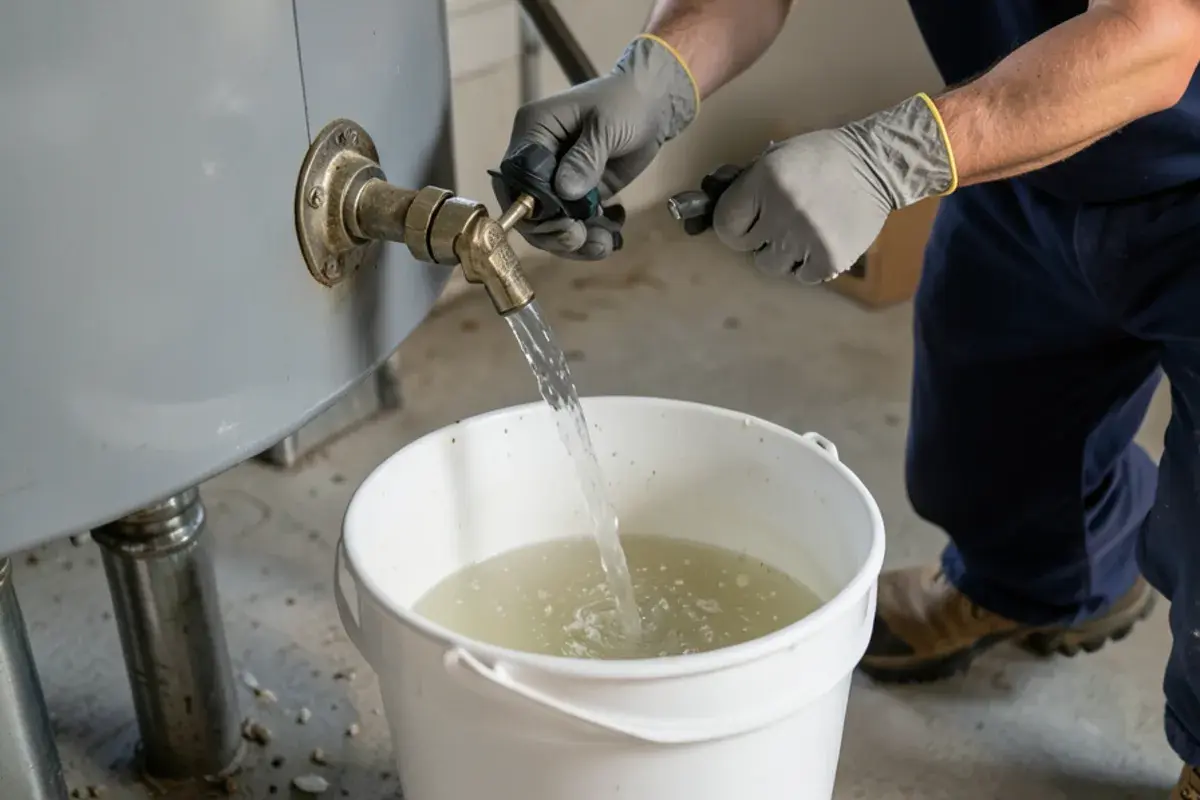
A yearly flush slows buildup. A flush on a tank that has never been drained may bring out a lot of sediment, and that tells us something about how it has aged.
How a Water Heater Repair Visit Goes
The visit follows this order.
- Listen to the symptoms. We ask what you saw and heard, and whether the unit is gas or electric.
- Read the unit. The data plate shows size and build date. We look at the base, fittings and flue for water, rust or scorching.
- Test the suspected part. That may be the pilot and thermocouple, a thermostat, an element or the relief valve.
- Give you the quote. You hear what failed and what it costs before any part goes in.
- Replace the part. On any gas connection we leak check the joints before we leave.
- Run a heating cycle. We confirm hot water at the tap and show you where the shutoff valves are.
Which Rules Apply to a Water Heater Repair?
Check the person before the part. IDPH says anyone who repairs or maintains plumbing systems needs a license under the Illinois Plumbing License Law, 225 ILCS 320, and those working for customers must register as plumbing contractors and carry liability and workers' compensation coverage. Ask for the number, us included, and check it on the IDPH lookup.
Whether a repair needs a City of Washington permit is the city's call. Its inspection line is (309) 444-1122, weekdays 8:00 AM to 5:00 PM, and other towns set their own rules. The relief valve's discharge pipe stays open and unplugged, since capping it defeats the valve.
When Is Replacement the Better Call?
Replace the heater when the tank body leaks, when rust shows at the base, or when a second or third repair is lining up behind the first. Age matters too. If your tank has passed roughly a decade, a repair buys you less than it would on a young unit.
Here is a local angle. Many Washington homes were rebuilt after the November 2013 tornado. A heater installed new in a rebuild around 2014 is now about a dozen years old, which is right where tanks begin to fail. If you are in that group, check the base and anode rod now, not after a flood. When replacement is the answer, our water heater installation page covers sizing, permits and cost, and tankless water heaters explains that option.
What Affects the Cost of a Water Heater Repair?
A published 2026 estimate from thecostin.com puts the typical Illinois plumbing repair at an average of $350, with most jobs between $150 and $700. That figure covers plumbing repair in general, not water heaters alone, and it is not our quote. Your price depends on:
- The part. A thermocouple costs far less than a gas control or an element set.
- Fuel type. Gas work includes a leak check of the connections.
- Access. A tank in a tight utility closet takes longer than one in an open basement.
- Age. Parts for older units can be harder to source, which can tip the answer toward replacement.
- Add-ons. A flush or anode rod swap is extra time.
- The cause behind the part. A dripping relief valve may also need an expansion tank.
Ask for the part, the labor and any add-on as separate lines. If the total nears the price of a new unit, get that number too, so you can compare.
How Do You Keep a Tank Running Longer?
Small habits stretch a tank's life.
- Drain a few gallons through the tank's drain valve every year to clear sediment.
- Have the anode rod inspected on a schedule. Check it more often if you run a softener.
- Keep the area around the heater clear, and know where the cold water shutoff is.
- Look at the base for dampness whenever you do laundry in the basement.
- Follow the manual for the thermostat setting.
Our annual water heater maintenance checklist has the full routine.
Why Professional Sewer & Drain for This Work
You learn what failed
Jason P. wrote that Monte explained how to keep a problem from turning into a bigger, more expensive one. You should leave knowing what broke and whether the tank behind it is worth keeping.
Showed up when they said
Molly J. wrote that the crew arrived right when they said they would and the job was done right the first time. A cold shower on a work morning is a bad time for a missed window.
Open seven days
Google lists us as open 7:15 AM to 6:15 PM daily, and customers have reviewed Saturday and Sunday calls. A heater does not fail on a schedule.
Pricing customers call reasonable
Seven Google reviews call the price reasonable or affordable. You get a clear, upfront quote before parts go in, so a repair never turns into a surprise.
What Customers Say
4.8 out of 5 from 16 Google reviews, checked November 2026. Read all reviews
“Just a superb experience in quality and customer service and price. Called these guys at 5:30p and they were here by 6:00p and Monte did his work in the dark by flashlight! Not only did he do a fantastic job he also educated us on how to prevent these problems from becoming a much bigger and more expensive issue. I would recommend this company to anyone, they are committed to doing a professional job, ensuring it is done right and with very affordable prices.”
“I am so thankful for Monte coming out during the coldest day with blizzard conditions with same day service. He was very kind and worked quickly to rectify issues with plumbing and gave suggestion for future work that needs to occur to prevent any further issues. His services are very reasonable given the work that he did. I will always use him for any issues in the future. Thank you for all that you did for us today and so thankful that you got home safe!”
“Had water leak behind laundry room. Called Monty on a Saturday morning and he came right over. He did a wonderful job to fix the issue. Very professional and knowledgeable. I highly recommend this company.”
Water Heater Repair Questions
Why is my water heater leaking?
Is a ten-year-old water heater worth repairing?
Why does my water heater pop or rumble?
Can I relight my own pilot light?
Why does the relief valve drip?
How long does a water heater repair take?
Does a water softener change how long the tank lasts?
Water Heater Repair in Washington? Call (209) 563-1400
Open 7 days, 7:15 AM to 6:15 PM. Tell us what is happening and we will give you a clear, upfront quote.
Where We Provide This Service
We repair water heaters from our Washington base across Tazewell, Woodford and Peoria counties. Basement tanks in established neighborhoods of Morton and Peoria tend to be older and sit near floor drains. Newer homes on the bluffs of Germantown Hills and along the river in East Peoria have heaters that are younger but face the same sediment and anode-rod wear. The service areas page lists every town.
- Morton: Older Morton basements often keep the heater beside a floor drain.
- East Peoria: Low river-area basements make a leaking tank worth catching early.
- Germantown Hills: Early-2000s Germantown Hills tanks are now at a failure-prone age.
- Peoria: Peoria's older basements can make reaching a tank slower.
- Chillicothe: City wells here bring scale that wears tanks and elements.
- Sunnyland: Sunnyland rebuilds from 2014 have tanks that are now a dozen years old.
- Peoria Heights: Village well water with manganese can foul tanks and hot taps.
- Eureka: Rentals here need quick answers when a tank fails between tenants.
- Canton: Rusty cold water can follow Tuesday hydrant flushing, so rule that out before blaming the tank.