Emergency guides
Water Heater Leaking? Steps to Take Before It Floods
Published November 1, 2026. Updated November 1, 2026.
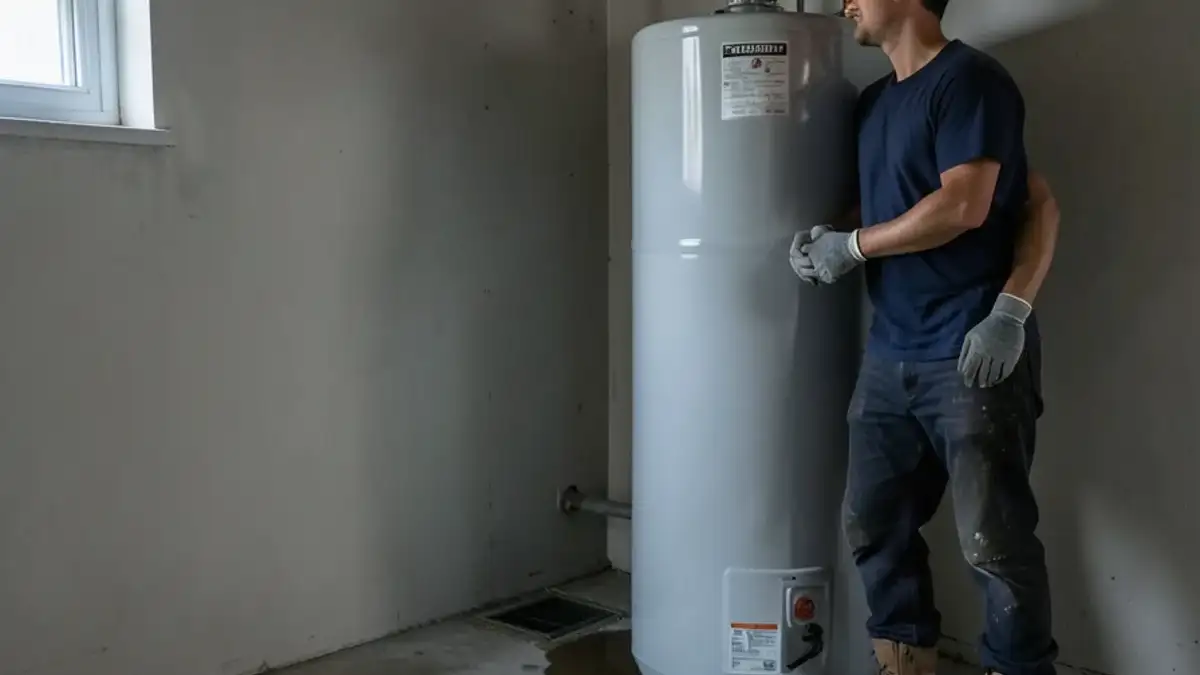
Water heater leaking, what to do first: turn off the power or gas to the heater, close the cold water inlet valve above it, and find out where the water is coming from. A fitting or valve leak is often a repair. A leak from the tank itself usually means replacement. This guide helps you tell which one you have.
Water Heater Leaking? What to Do in the First Few Minutes
Cut the energy, then cut the water. These steps limit the damage while you work out where the leak starts:
- Turn off the power or gas. On an electric heater, flip its breaker. On a gas heater, set the gas control knob to off. Do not leave an electric element energized in a tank that is losing water.
- Close the cold water inlet valve on the pipe above the heater. A gate valve turns clockwise until it stops, and a lever valve turns a quarter turn.
- Do not touch the relief valve or plug its discharge pipe. Water that comes out of it can be scalding.
- Contain and protect. Set a bucket under the drip, move stored items off the floor, and clear a path to the floor drain.
- Photograph the leak and the floor before you wipe anything up.
- Call a plumber.
If the closet is flooding and you cannot reach the inlet, close the main water valve instead. Smell gas, or hear a hiss, and the order changes: leave the house, then call the gas utility or 911 from outside.
Water heater leaking in the basement? Call (209) 563-1400
Open 7 days, 7:15 AM to 6:15 PM. Tell us what is happening and we will give you a clear, upfront quote.
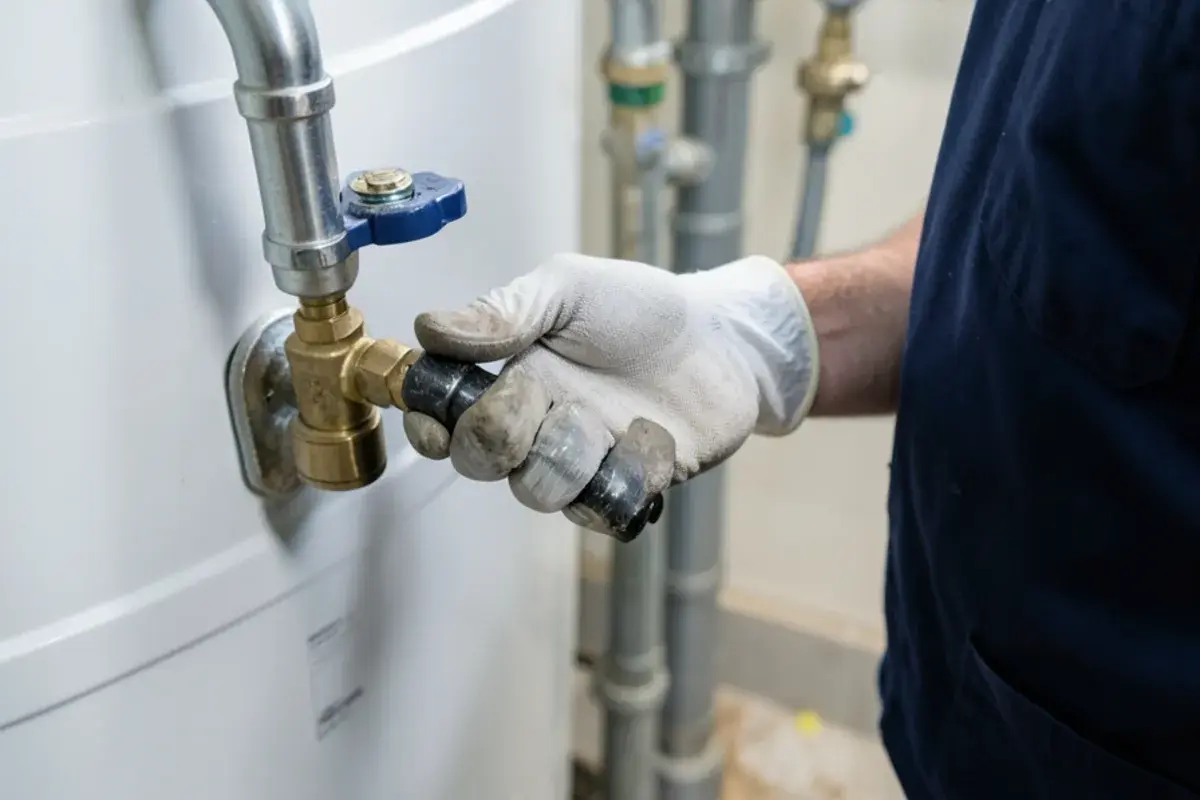
Where Is the Water Heater Leak Coming From?
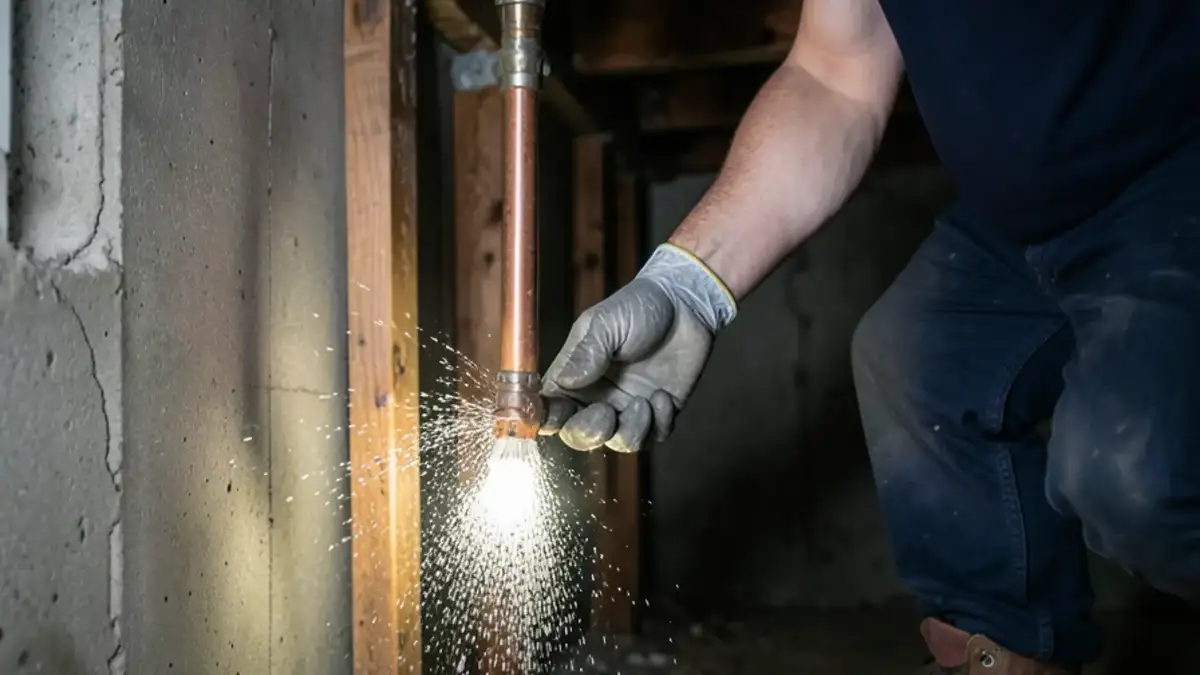
The source tells you whether this is a repair or a replacement. Dry the area with a towel and watch where fresh water appears first.
| Where it leaks | What it usually means | Typical next step |
|---|---|---|
| Pipe connections at the top | Loose or corroded fitting, or a failing flex connector | Repair |
| Discharge pipe from the relief valve | Valve opening on high pressure, or a worn valve | Test the valve and pressure |
| Drain valve near the base | Worn valve or a loose fitting | Repair or replace the valve |
| Bottom or sides of the tank | Tank corroded through | Replace the heater |
| Damp base with no drip | Condensation, especially on gas units | Watch and dry it |
Water that seeps from the shell has corroded through the steel from the inside. A patch will not hold, and the tank can give out all at once. That is the one case where we steer you toward a new heater, and our water heater installation page covers that visit.
Leak or Condensation? A Half-Hour Test
Condensation and a slow seep look the same on a concrete floor. If water is spreading, skip this, keep the inlet closed and call. If it is only a damp ring, try this:
- Dry the base of the tank, the floor and every fitting you can reach.
- Tuck dry paper towels under the drain valve and around the base.
- Look up. Check the pipes and the ceiling above the heater with a flashlight.
- Come back in 30 minutes. A soaked towel at one spot marks the source, while a light film across the tank points to condensation, which is common on a gas heater refilling with cold winter water.
Why Would a Relief Valve Drip?
Pressure is usually the reason, not the valve. One manufacturer's technical bulletin shows how fast it builds: water in a closed tank at 50 psi, heated just 10°F, reaches 250 psi. A plumbing system turns closed when a check valve at the meter, a pressure reducing valve or a softener stops expanded water from pushing back toward the street.
The signs are a valve or faucet that drips while the tank reheats and nobody is using water, creaking pipes, and a surge when a tap opens. The bulletin says the relief valve is an emergency device and should not be relied on to handle this. The usual fix is an expansion tank on the cold line, plus a pressure reducing valve if supply pressure runs above 60 to 70 psi. A valve that drips at normal pressure is simply worn, and the National Board puts its service life at about three years. Our annual water heater checklist covers how to test one.
Why Do Tank Water Heaters Start to Leak?
Corrosion is the usual reason. A review of 700 U.S. homeowners' insurance claims, published by the Institute for Business & Home Safety in 2007 and reported by Canadian Underwriter, found 69 percent of tank failures came from slow leaks or sudden bursts through rust and corrosion. Failures averaged 10.7 years of age, and ranged from 1 to 30.
Steel tanks carry a sacrificial anode rod that corrodes first and protects the shell. One manufacturer says its life depends on the chemicals in the water, how much hot water you use and whether a softener is installed, and recommends inspecting it once a year.
Once the rod is gone, the tank itself starts to rust. Sediment from hard water can add to the problem by baking onto the bottom of the tank. Central Illinois water varies by supply, deep wells in this region usually run hard, and your utility's annual water quality report or a test settles it for your house.
Other causes are cheaper to fix. Triple-I advises replacing hoses that lead to water heaters every five to seven years, and checking for cracks or leaks. Loose fittings, a failed drain valve and a tired relief valve account for the rest.
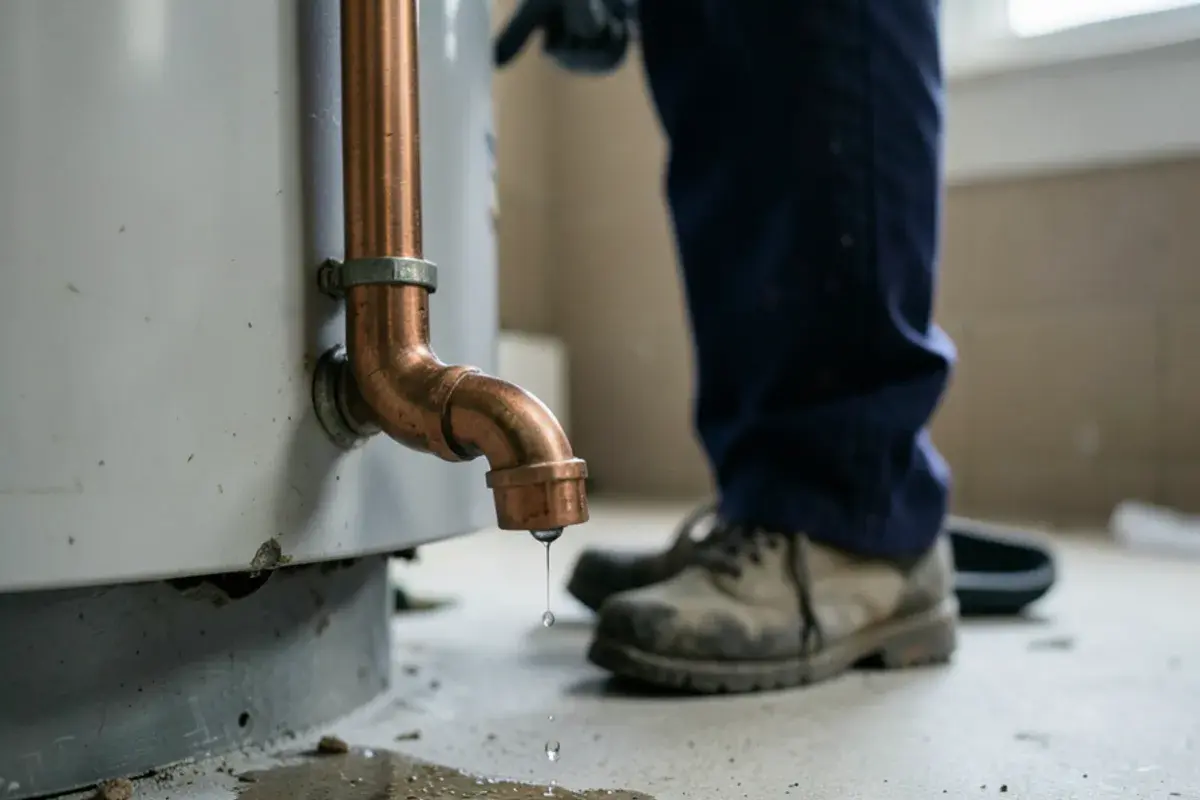
What We Look For When We Get a Leak Call
We separate the heater from the plumbing around it. A wet floor under a water heater is not always the heater. Condensation, a leaking supply line above it or a dripping flex connector can look the same.
We close the cold inlet, dry everything, and let fresh water show us the path. We read the relief valve and discharge pipe, check pressure at a spigot or the heater, and look at the age of the unit and the state of the connections. A heater with a leaking tank gets a plain answer: it is time. A heater with a bad fitting gets a repair, and we say so.
If you live in Germantown Hills, about six miles from our base, note where your basement sump pit or floor drain sits in relation to the heater. Leaking water heads for the lowest point, and you want to know where it will go. Our water heater repair page covers what a repair visit includes, and the next step if replacement is needed is to compare costs in our guide to water heater replacement cost.
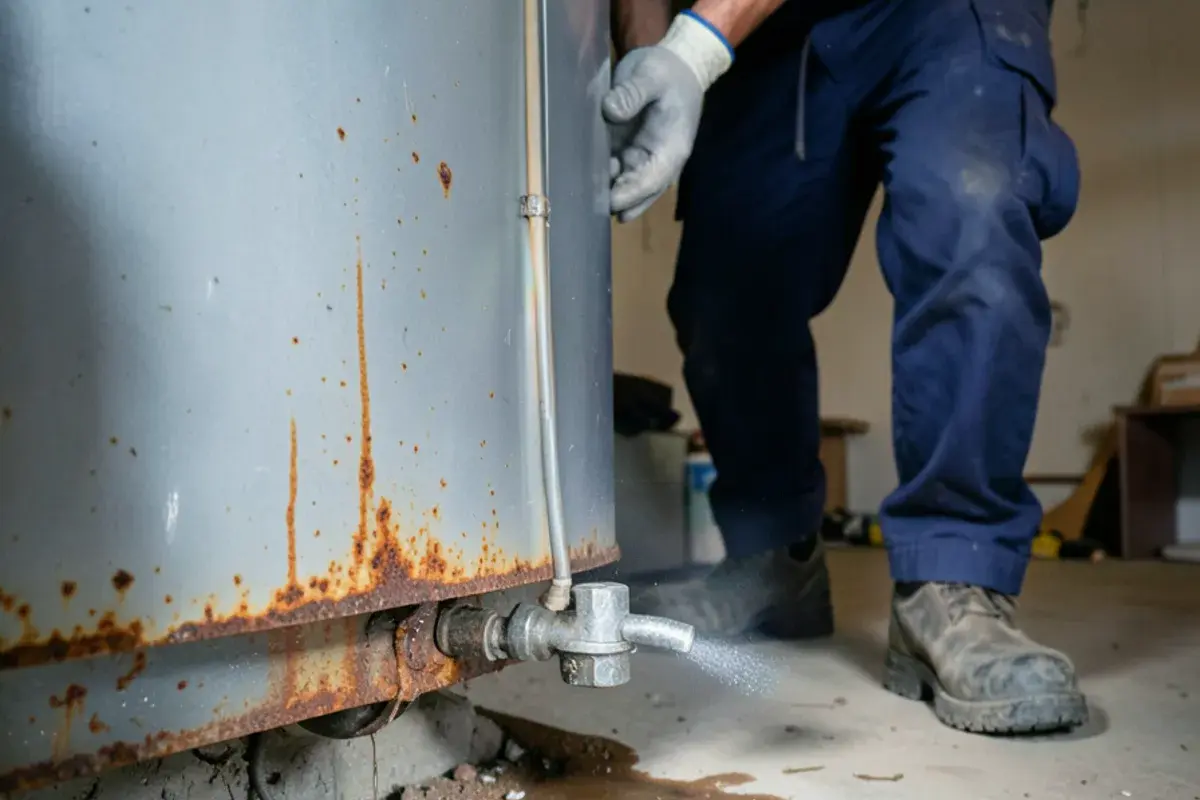
Repair or Replace? Let Age Break the Tie
The leak type sets the answer, and age settles the close calls. The National Board gives 8 to 13 years as the average life of a residential heater. This table is our rule of thumb, not a formula:
| Leak | Heater under about 8 years | Heater past about 10 years |
|---|---|---|
| Fitting or connector | Repair | Repair, and start planning a replacement |
| Relief valve | Fix the pressure cause, then the valve | Same, but price a new heater first |
| Drain valve | Replace the valve | Replace the valve, or the heater if the repair is close in cost |
| Tank shell | Replace, and check the manufacturer's paperwork | Replace |
Today's Homeowner's Washington, IL page lists repairs at $118 to $591 and installation at $772 to $1,931, last updated in February 2025. Those are published estimates, not our quotes. The honest trade-off is that a small repair on an old tank buys time, not safety from the next leak. In an unfinished basement with a floor drain, that can be a fair bet. Next to a finished room, or above one, we would replace sooner, because the tank is the cheaper loss.
How Quickly Does Water Heater Water Damage Spread?
Fast, because a tank holds a lot of water and it all goes at once if the shell fails. Wet drywall takes up moisture within hours, and wood framing that stays wet beyond 48 hours can grow microbes. Dry the room, run a fan, and use a moisture meter before you close anything up.
Tell your insurer, since a sudden leak may be covered under your policy. Read it first for what counts as sudden and what counts as gradual wear. Triple-I says the standard HO-3 policy covers an accidental discharge of water from a plumbing system but excludes seepage, which it treats as a maintenance issue. State Farm says worn-out appliances are typically not covered, so expect any claim to center on the damage, not a new heater.
Before You Call, Gather Four Details
A short call gets the right parts on the truck. Tell us:
- Whether the heater is gas or electric, and how old it is, with a photo of the label if you can.
- Where the water shows first.
- Whether the inlet and the power or gas are off.
- Where the water is draining, and what sits in its path.
Then call (209) 563-1400. Our Google hours are 7:15 AM to 6:15 PM every day. If the inlet will not close and water is spreading, close the main valve first, and read how emergency leak repair works while you wait.
Sources
- Water heater manufacturer: maintenance and the anode rod
- Triple-I: Water Damage, What's Covered and What's Not
- ENERGY STAR: Gas Tankless Water Heaters, Benefits and Savings
- Water heater manufacturer: Technical Bulletin 45, Thermal Expansion
- National Board of Boiler and Pressure Vessel Inspectors: Residential Water Heater Safety
- Canadian Underwriter: An Oft-Forgotten Risk (reporting the IBHS water heater study)
- Today's Homeowner: Plumbers in Washington, IL (cost estimates, updated Feb. 25, 2025)
- Triple-I: Am I Covered?
- State Farm: Does Your Insurance Provide Coverage for Home Repairs?

Written by the Professional Sewer & Drain Services team
A plumbing and sewer company based in Washington, IL. About us