Water Softener Installation in Washington, IL
A softener sized to your own water test, set on the main line with a bypass and a proper drain.
- 4.8 on Google, 16 reviews
- Open 7 days, 7:15 AM to 6:15 PM
- Based in Washington, IL
- Google reviews going back 10 years
Water softener installation in Washington, IL means setting a resin tank and brine tank on the main water line so hardness comes out before water reaches your fixtures and heater. A softener solves scale, a common worry where deep wells supply the water. It does not make water safe to drink, and a test result sizes it.
What Does a Water Softener Do, and What Does It Not Do?
A softener removes the minerals that make water hard, mainly calcium and magnesium. It does this with a bed of resin beads that trade those minerals for sodium or potassium. When the beads fill up, the unit flushes itself with salty water from the brine tank and starts over. That cycle is called regeneration.
What it does not do matters just as much:
- It does not remove bacteria, nitrate, lead or chlorine.
- It does not filter out sediment.
- It handles only small amounts of iron.
- It does not make a well safe to drink.
What a Softener Install Includes
An install covers the equipment, the piping and the first setup, so the unit runs correctly from its first regeneration. The usual scope:
- Sizing from your number. Hardness, household size and any iron on the test.
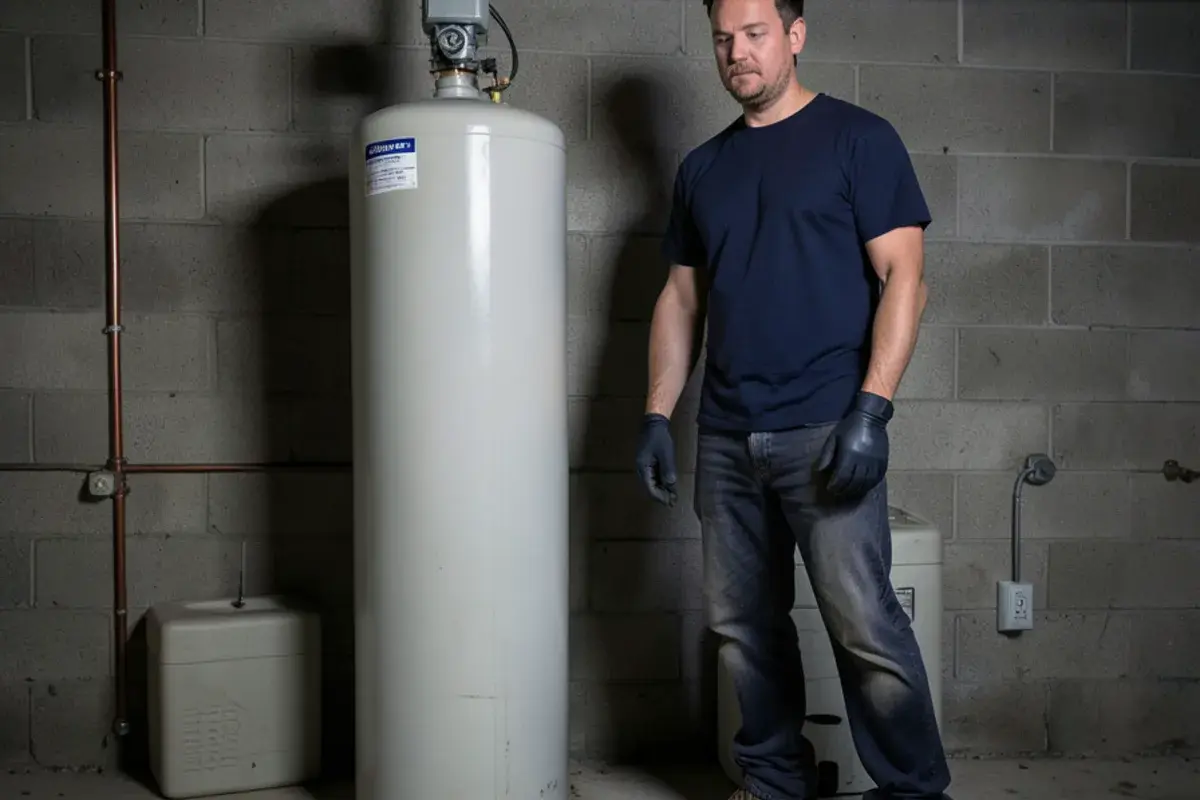
- The resin and brine tanks. Set on a level floor near the main shutoff valve.
- Main line connection. Cut in with a bypass valve, usually ahead of the water heater.
- A drain with an air gap. Regeneration water runs to a floor drain or standpipe.
- Controller setup and a test. Hardness entered, a regeneration run and leaks checked.
Salt, power and any electrical work are separate from the plumbing, so ask exactly what the quote covers and leaves out. We also talk through which outside spigots stay on hard water, and what a softener will not treat. Removing an old unit should be listed in the quote too, since a full brine tank is heavy.
How Hard Is Your Water, and How Do You Find Out?
Find out from your supplier or from a test. We do not give a hardness number for Washington or any nearby town, because no reliable figure is on file and numbers differ by supply. Deep wells in this region usually run hard, but a usual result is not your result.
- City water. The utility's annual water quality report lists hardness. Ask the utility if you cannot find it.
- Private well. No report exists, so use a lab test or a reliable test kit.
- Units. Results come in grains per gallon or milligrams per liter. One grain per gallon is about 17.1 mg/L.
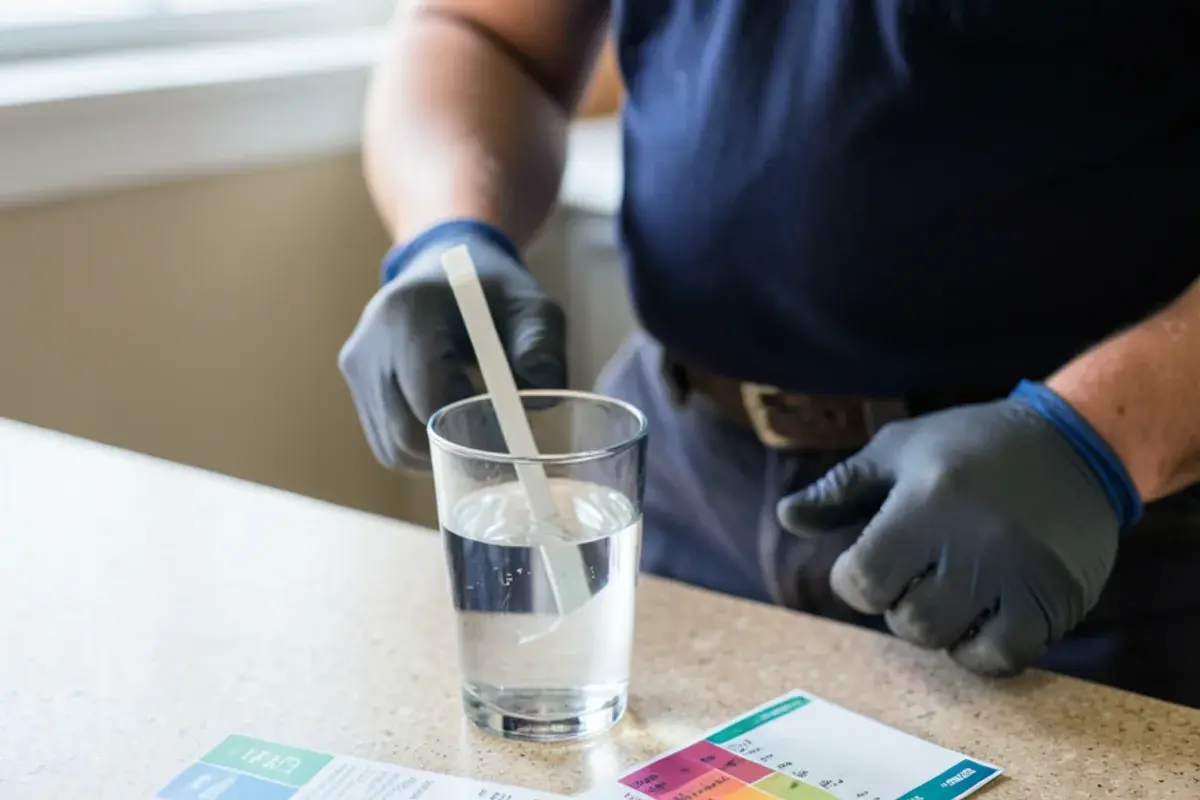
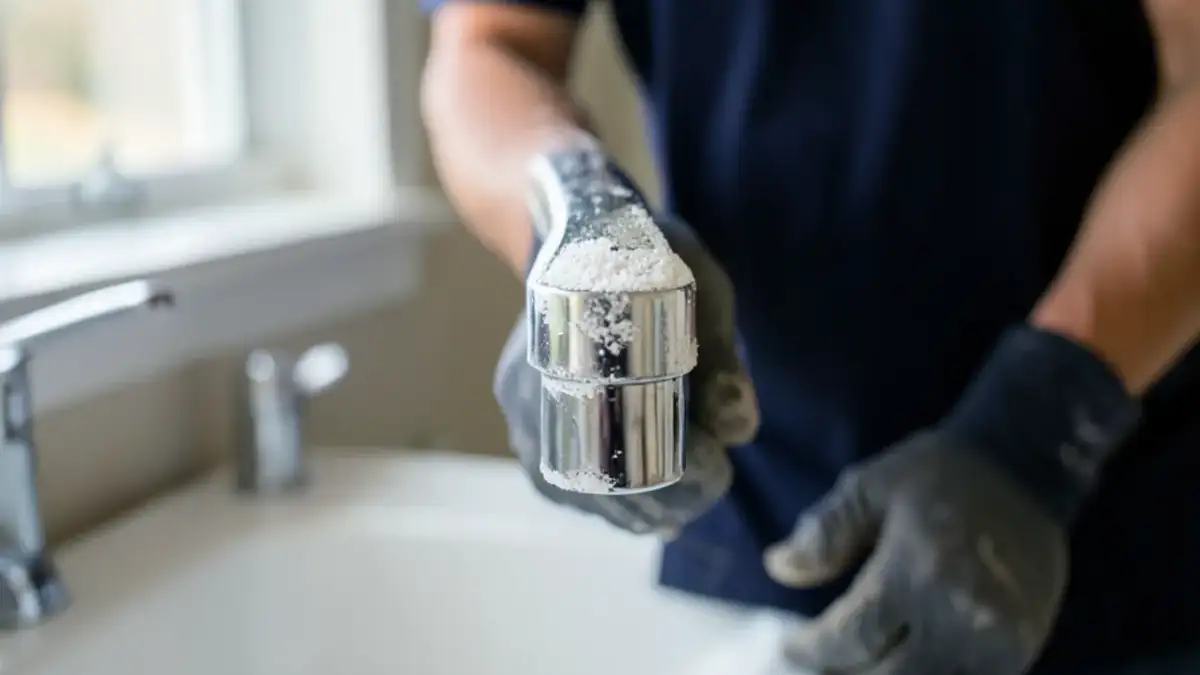
Signs of hard water show up well before any test result does. Look closely for white crust at faucets, spots on glasses, film in the tub and soap that does not lather. Scale also builds up inside a water heater, which is why hardness is worth settling early.
How Is a Softener Sized?
Size follows household water use and the test result. A unit is rated by how many grains of hardness it can remove before it must regenerate.
- Multiply the number of people by daily water use. Many sizing guides assume around 75 gallons a person.
- Multiply by the hardness in grains per gallon. That is the grains the house uses each day.
- Choose a unit whose capacity covers several days between regenerations.
For arithmetic only: four people at 75 gallons is 300 gallons a day, and at 15 grains per gallon that is 4,500 grains a day. This is not a measurement of any Washington supply. Your test number replaces the example.
An undersized unit regenerates too often and wears out sooner. An oversized unit can sit between cycles, so the resin sits idle. Iron in the water also raises the size you need.
| Option | What it does | Trade-off |
|---|---|---|
| Salt-based softener | Removes hardness minerals | Needs salt, a drain and power |
| Potassium chloride in the same unit | Same removal, potassium instead of sodium | Costs more to run |
| Salt-free conditioner | Changes how scale forms, hardness stays | No salt or drain, but results vary |
Hard water scaling your fixtures? Call (209) 563-1400
Open 7 days, 7:15 AM to 6:15 PM. Tell us what is happening and we will give you a clear, upfront quote.
Request a Quote
Water moving right now? Call first: (209) 563-1400. For anything that can wait, send the details here.
Where Does the Softener Go, and What Does Installation Involve?
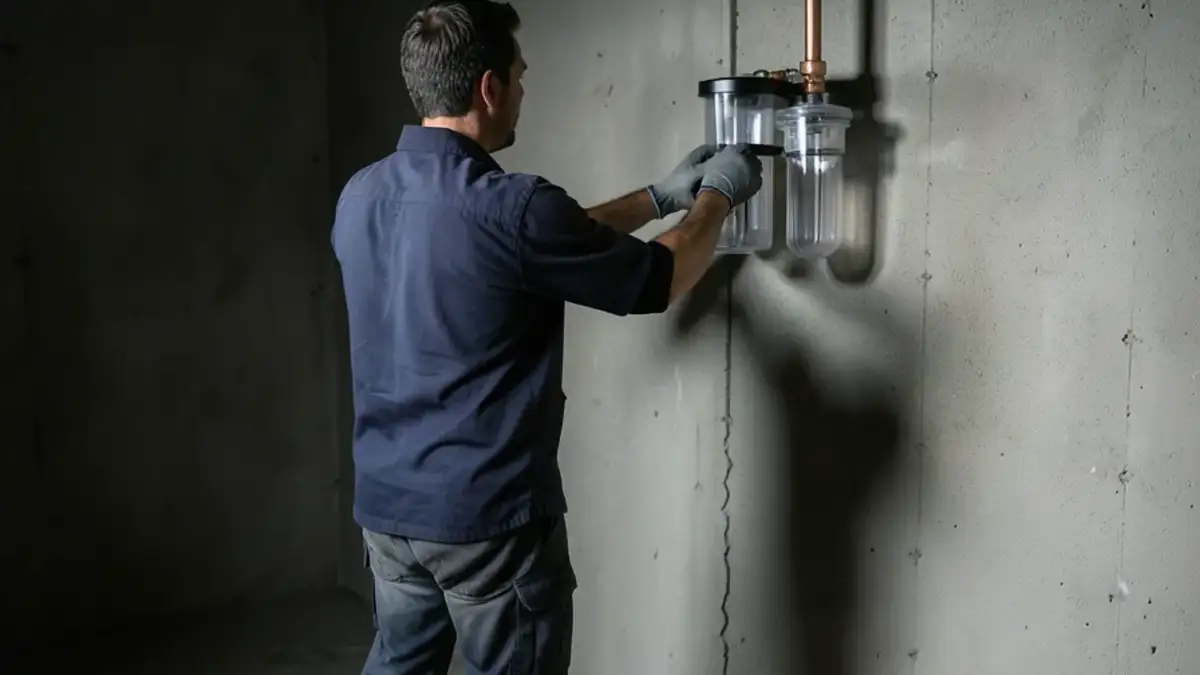
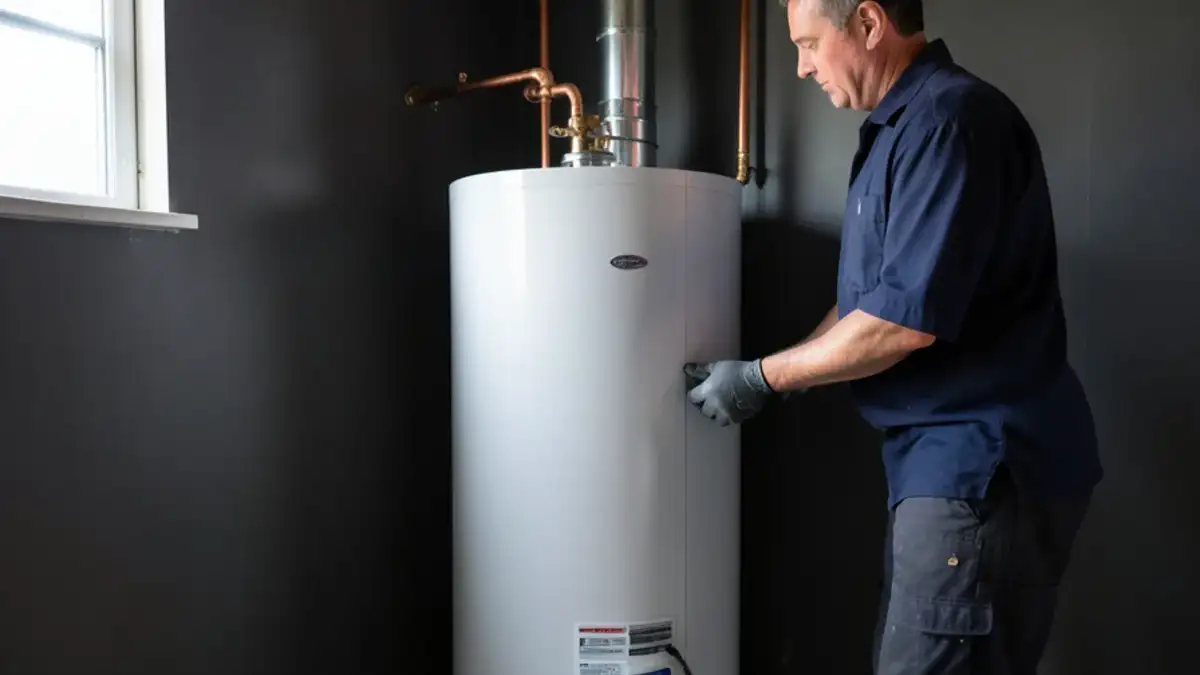
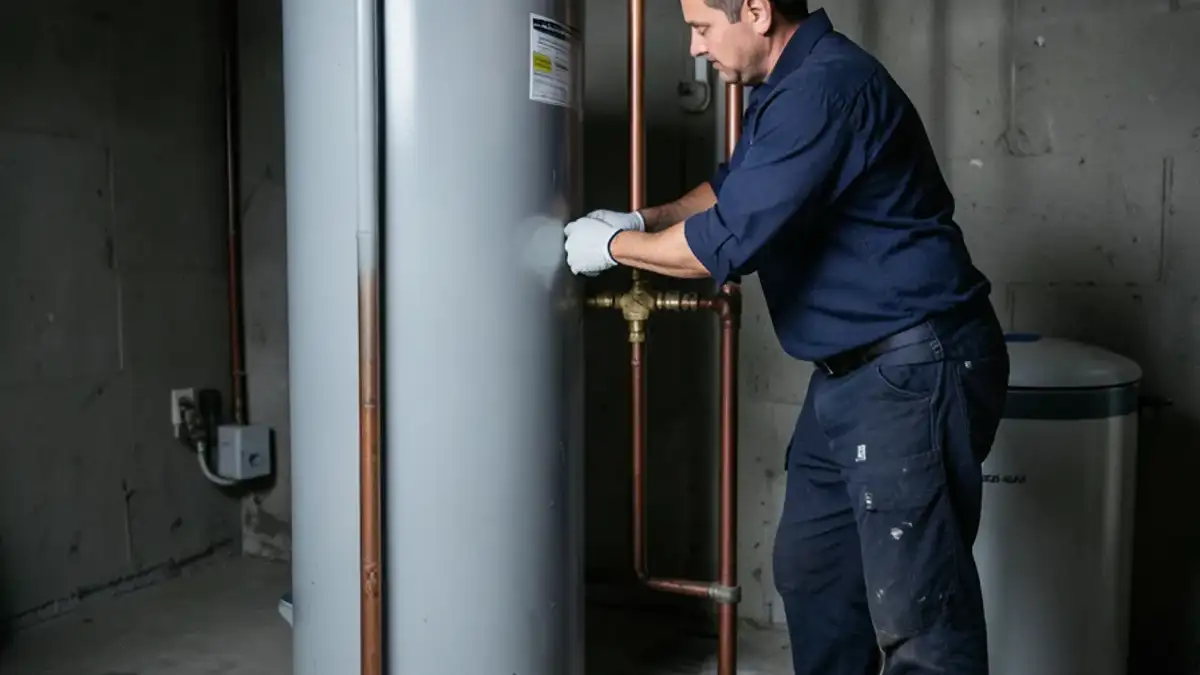
It goes on the main line, near the main shutoff valve and before the water heater, so all the hot and cold lines are treated. Outdoor spigots are often left on the untreated line.
- Pick the spot. It needs floor space, an outlet and a nearby drain.
- Shut off the water at the main shutoff valve and drain the lines.
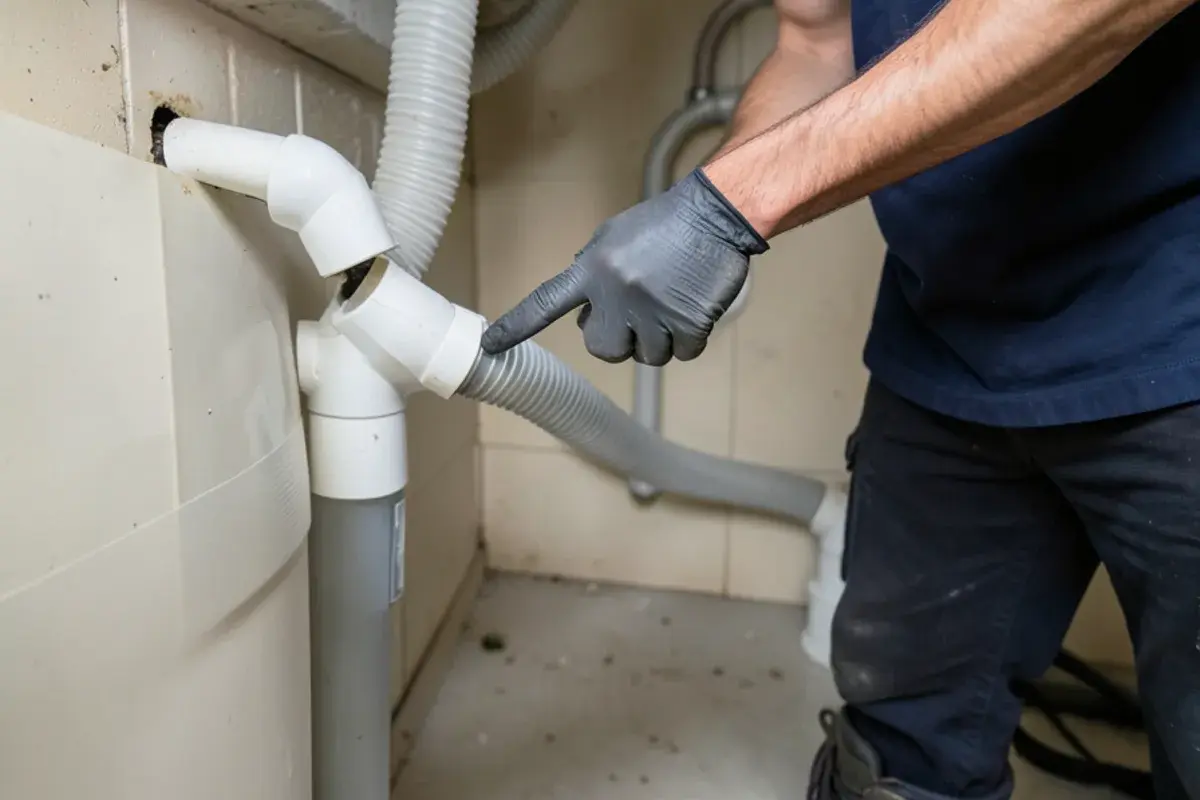
- Cut in the unit with a bypass valve, so water can run around the softener during service.
- Run the drain. The regeneration water goes to a floor drain or standpipe, ending above the drain with an air gap.
- Set the controller to the tested hardness and household size.
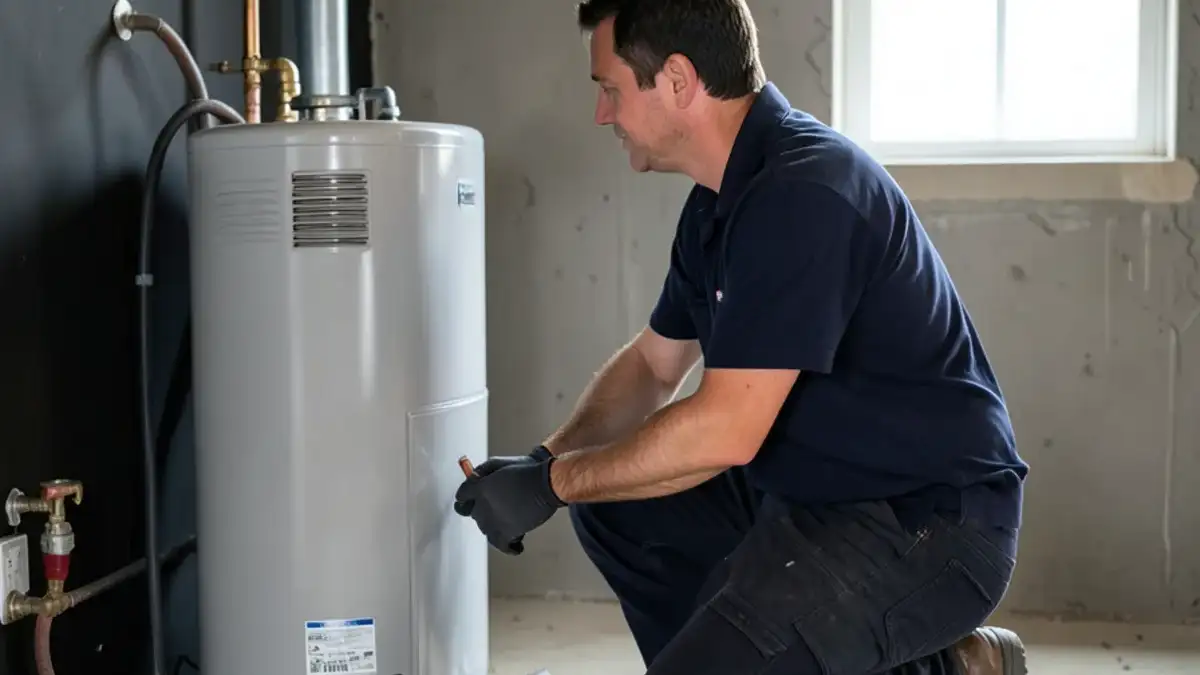
- Start it and test. We check for leaks, run a regeneration and confirm the water at a tap.
Which Rules Apply to a Softener Install?
A softener joins your main water line, so the Illinois Plumbing License Law, 225 ILCS 320, and the Illinois Plumbing Code, 77 Ill. Adm. Code 890, are the place to start. Ask for the license number and check the IDPH lookup.
Confirm any permit with the City of Washington on its inspection line, (309) 444-1122, weekdays, or with your village hall elsewhere. Septic homes need extra thought, since the regeneration water goes into the septic system or another drain. IDPH regulates private sewage separately. Septic tank pumping and installs are a separate licensed trade, and we work on the house plumbing up to the system.
What About a Softener on a Private Well?
Test first, then size. A well can bring iron, bacteria and nitrate that a softener cannot treat. Illinois Department of Public Health guidance calls for a yearly well test for bacteria and nitrate, and a metals test every three years.
The softener goes after the pressure tank, so the whole house gets treated water. In rural Woodford County, where private wells are common, we start from the lab result and build the plan from there.
What Changes the Cost, and What Does It Cost to Run?
You get a clear, upfront quote for the install. These things move it:
- Unit size and type. Capacity follows household use and hardness.
- Plumbing changes. A main line in a cramped corner takes more work.
- Drain access. A floor drain nearby is simpler than a new standpipe.
- Electrical. The control head needs an outlet within reach.
- Replacing an old unit. Disconnecting and hauling it away adds time.
- Iron or a well. Extra treatment ahead of the softener changes the whole job.
We list these variables only, because no reliable local price is on file for softeners, and a test result can change the unit size you need. Running cost is salt and the water used in each regeneration. The City of Washington lists residential water at $3.28 and sewer at $6.01 per 1,000 gallons, or $9.29 per 1,000 gallons for water sent down the drain. Check the current rate before you budget.
How Do You Care for a Softener?
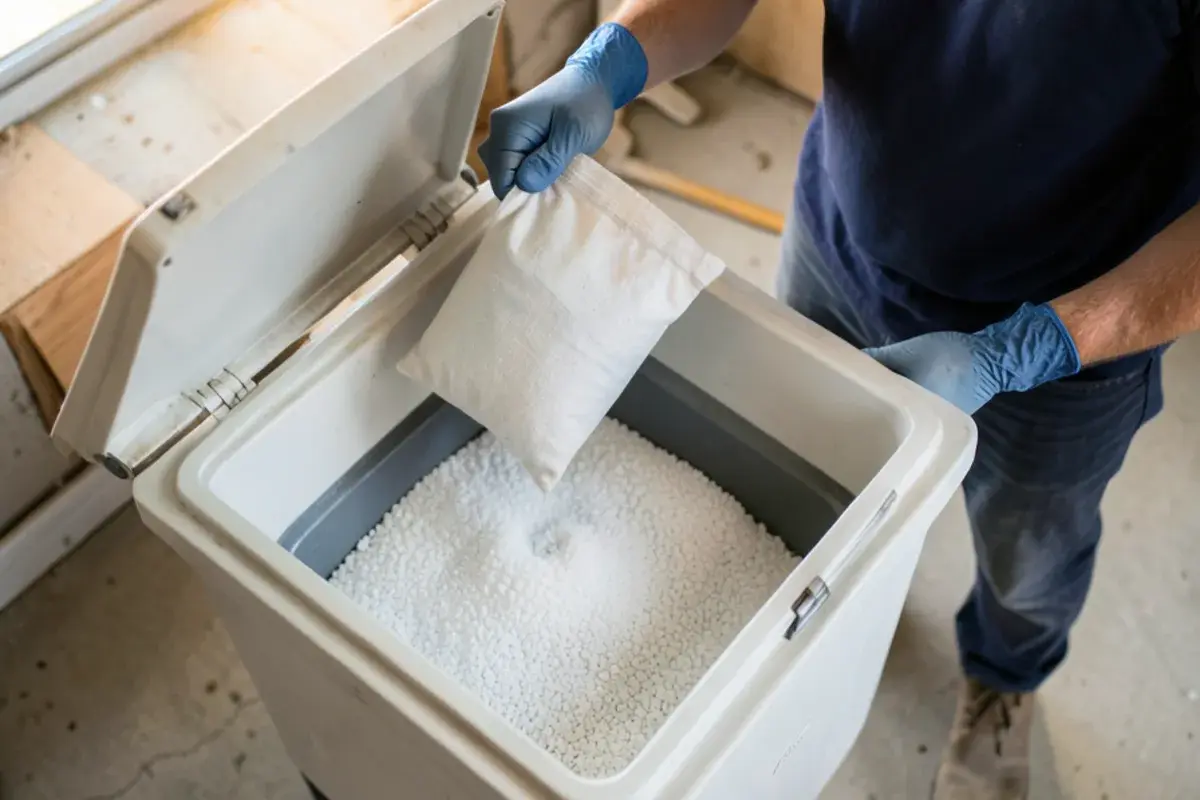
Check the salt once a month and keep it well above the water line. Break up any crust. Clean the brine tank if sludge builds up. If the water goes hard, the usual causes are no salt, a bridged tank, or a bypass left open.
Why Professional Sewer & Drain for This Work
We explain, not just install
Jason P. and Roben V. each wrote about advice they were given on avoiding a repeat. A softener is only as good as the settings and the salt habits that go with it.
Open seven days
The Google profile lists 7:15 AM to 6:15 PM every day, so an install or a measurement visit does not have to wait for a weekday.
Showed up when they said
Molly J. wrote that the crew came at the promised time and the job was done right on the first try.
Pricing reviewers call reasonable
Seven past customers described our price as reasonable or affordable, speaking about their own jobs. You get a clear, upfront quote for yours.
What Customers Say
4.8 out of 5 from 16 Google reviews, checked November 2026. Read all reviews
“Just a superb experience in quality and customer service and price. Called these guys at 5:30p and they were here by 6:00p and Monte did his work in the dark by flashlight! Not only did he do a fantastic job he also educated us on how to prevent these problems from becoming a much bigger and more expensive issue. I would recommend this company to anyone, they are committed to doing a professional job, ensuring it is done right and with very affordable prices.”
“Great experience! Called on a Sunday afternoon and they came right over. Extremely professional and knowledgeable! Very reasonable price! Will definitely call them back for maintenance.”
“Very knowledgeable and professional. They showed up right when they said that they would be there, and the job was done right the first time. Highly recommend them!”
Water Softener Installation Questions
How do I know if I need a water softener?
Will a softener remove chlorine, lead or bacteria?
Is softened water safe to drink?
Can a softener be installed on well water?
How often does a softener need salt?
Is a salt-free conditioner the same as a softener?
Water Softener Installation in Washington? Call (209) 563-1400
Open 7 days, 7:15 AM to 6:15 PM. Tell us what is happening and we will give you a clear, upfront quote.
Where We Provide This Service
We install softeners from our Washington base across Tazewell, Woodford and Peoria counties. Homes on city water start with the supplier's annual report, while the rural properties of Woodford County, where private wells are common, start with a lab test. In Eureka, Morton and the rest of Tazewell County, the hardness number can differ from one supply to the next. The service areas page names every town we cover.
- Germantown Hills: Caterpillar Trail water is lime softened at the plant, so test yours before sizing a home unit.
- Metamora: Metamora draws groundwater from three village wells, and its annual report is where to start.
- Eureka: Eureka's two city wells make its annual report the first hardness reference for homeowners.
- Morton: Morton homeowners should read the supplier's report, then size a softener from their own test.
- Chillicothe: Chillicothe runs its own wells, and scale on fixtures is the usual first sign of hardness.
- Deer Creek: Deer Creek's board has discussed manganese, which needs filtering, and softeners, so test before choosing.
- Peoria Heights: Manganese in Peoria Heights well water is a reason to get a full test before adding a softener.
- Marquette Heights: A 2005 filing describes a city ion exchange plant, so check what your tap already delivers.
- Lincoln: Lincoln's wells draw on the Mahomet Teays Aquifer, so read the report or test first.
- Fulton County: Canton moved to aquifer water in 2012 and rural wells vary, so test your tap.