Prevention checklists
Annual Water Heater Maintenance Checklist
Published November 1, 2026. Updated November 1, 2026.
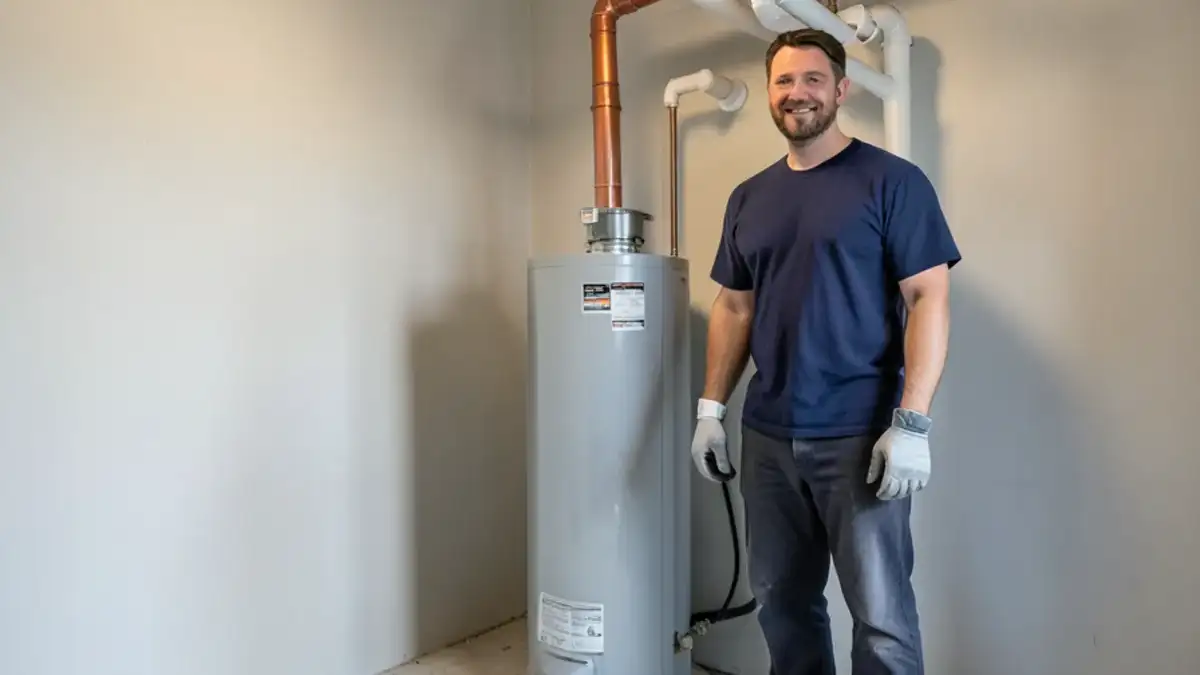
A water heater maintenance checklist comes down to six checks: leaks, the relief valve, sediment, the anode rod, the thermostat and the age of the tank. Two of them are easy homeowner jobs, two belong to a plumber and two are quick looks. Do them once a year and note the date.
What Belongs on a Water Heater Maintenance Checklist?
Six checks cover a tank heater. The table shows how often, who does it, and what a published source says.
| Check | How often | Who | Source or basis |
|---|---|---|---|
| Look for leaks, rust and damp at the base and fittings | Monthly glance | You | Common sense; a leaking tank needs a plumber |
| Test the relief valve | Once a year | You | National Board |
| Flush sediment | Intervals range from several times a year to every one to three years | You or a plumber | National Board; City of Blaine, MN |
| Anode rod | Every two to five years | Plumber | National Board |
| Thermostat at 120°F | Once a year | You | CPSC |
| Age of the tank | Once a year | You | National Board: 8 to 13 years typical |
The published flush intervals disagree. The National Board says two to four times a year, more often in hard-water areas. The City of Blaine, Minnesota says every one to three years depending on model and water. Follow your manual, and flush more often if you know your water is hard.
For gas units, the National Board adds a yearly check by a service professional who cleans the burners and inspects the flues and vents. If you ever smell gas, leave the house and call the gas utility or 911 from outside.
Water heater leaking or no hot water? Call (209) 563-1400
Open 7 days, 7:15 AM to 6:15 PM. Tell us what is happening and we will give you a clear, upfront quote.
How Do You Test the Relief Valve?
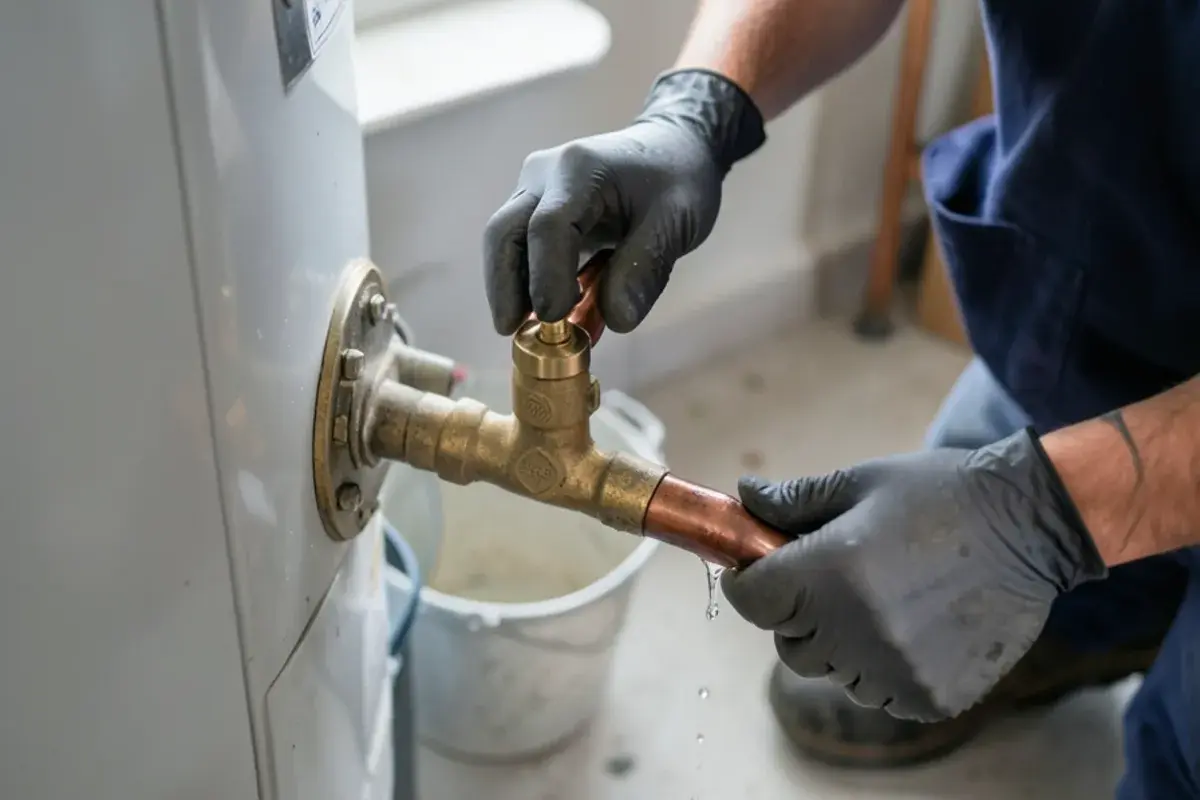
Put a bucket under the end of the discharge pipe, stand clear and lift the lever. Water should flow out, which shows the valve can open. The National Board says to test it once a year and to pull the lever a few times if sediment keeps it from reseating. Expect hot water.
Never cap the discharge pipe to stop a drip. The valve exists to relieve high temperature or pressure, and a capped pipe defeats it. The board puts the valve's service life at usually three years and says only a qualified plumber should replace it, even if it looks fine. Our water heater repair page covers what a replacement visit involves.
How Do You Flush a Tank, Step by Step?
Follow the manual first, because gas and electric units differ. The steps below follow the U.S. Department of Energy's Building America guide:
- Shut off the power at the breaker, or set a gas unit as the manual directs.
- Close the cold-water inlet valve.
- Open a hot-water tap upstairs so air can enter the tank.
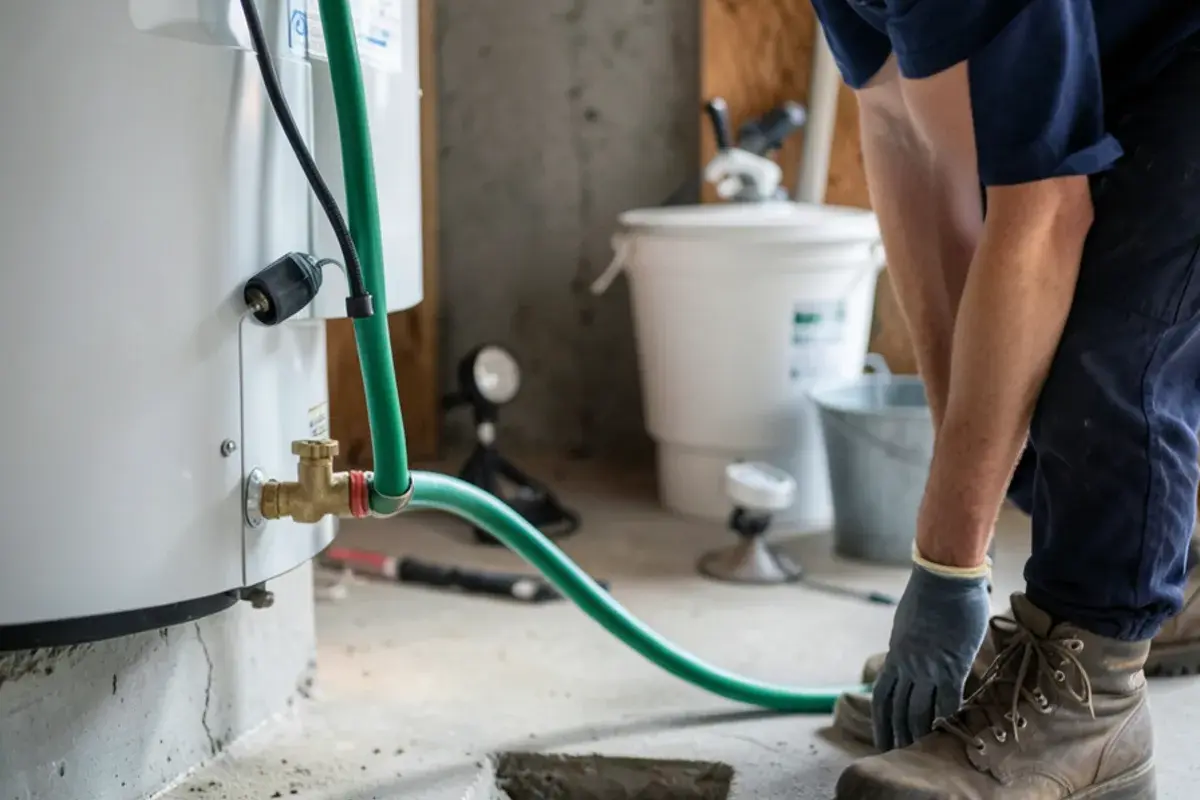
- Attach a garden hose to the drain valve, running to a drain lower than the tank's bottom.
- Open the drain valve and let the tank empty.
- Open the cold inlet for about ten seconds at a time to stir up sediment, and repeat until the water runs clear.
- Close the drain, refill with the hot tap open until the flow is smooth, then restore power or gas.
Two cautions come from the same guide. The water is hot, and running a heater while empty or partly empty can quickly damage it. Wait several hours before laundry, since the tank takes time to reheat.
What Temperature Should the Thermostat Be Set To?
120°F. The U.S. Consumer Product Safety Commission urges that setting, and says it also saves energy. The reason is scalding: most adults suffer third-degree burns after two seconds at 150 degrees, six seconds at 140 and thirty seconds at 130.
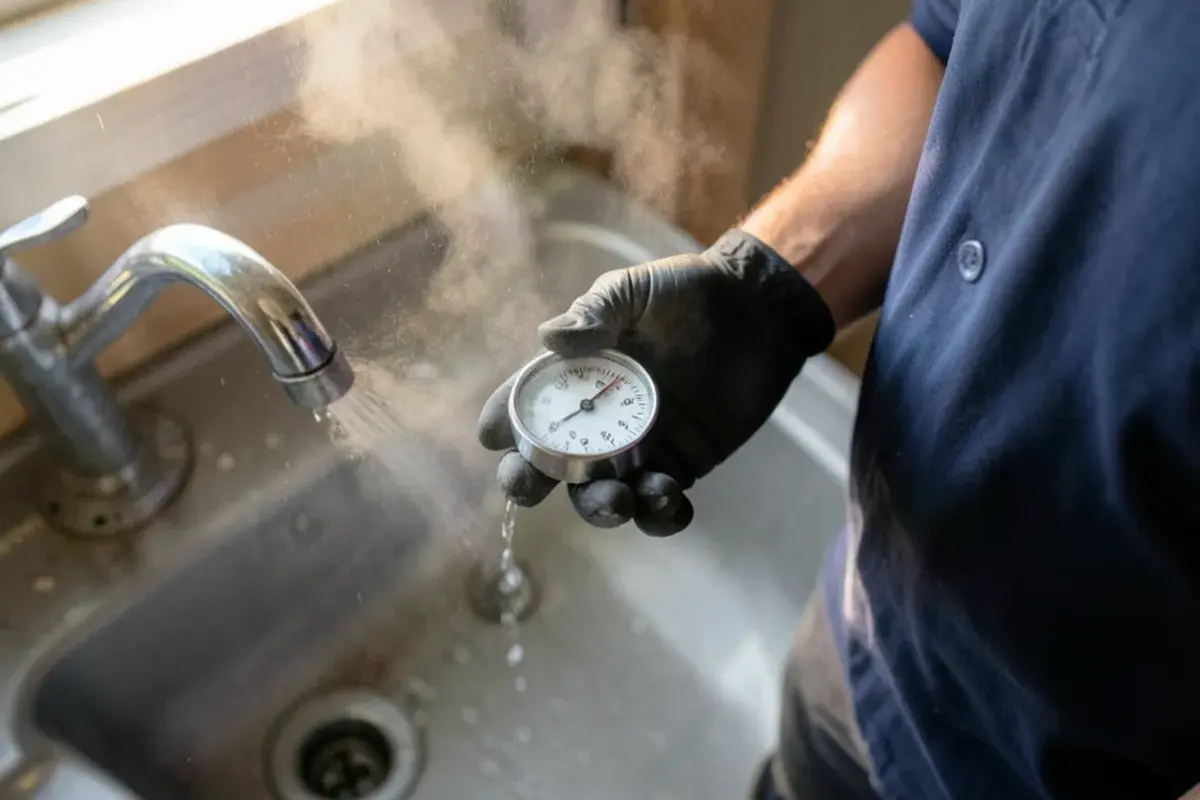
Check it by running hot water for a few minutes at the kitchen tap and holding a kitchen thermometer under the stream. Adjust the thermostat as the manufacturer's instructions describe, then check again after a couple of hours.
Is 120°F Right for Every Household?
For most homes, yes, though it is a trade-off. Lower settings cut scald risk, and Legionella bacteria grow best in lukewarm water. A Green Building Advisor article quotes U.S. Department of Energy language calling the risk at 120°F very slight for most people. That same language suggests 140°F for someone with a suppressed immune system or chronic respiratory disease, with mixing valves to limit scalding. If that describes your household, ask your doctor first, then ask a plumber about a mixing valve.
What Does the Anode Rod Tell You?
It tells you how hard your water is working on the tank. The rod corrodes so the steel does not, and once it is gone, the tank is next. This Old House says to replace it when more than 6 inches of core wire shows or the rod is thinner than 1/2 inch. It suggests a look every three to five years, or yearly where water is hard. The National Board says to have a plumber replace it every two to five years.
Rods wear at different speeds. Deep wells in this region usually run hard, and softened water can wear a rod faster, so an early look tells you which pace your house runs at. We leave this one to a plumber because the hex head is often seized and the job means draining part of the tank.
How Does the List Change by Heater Type?
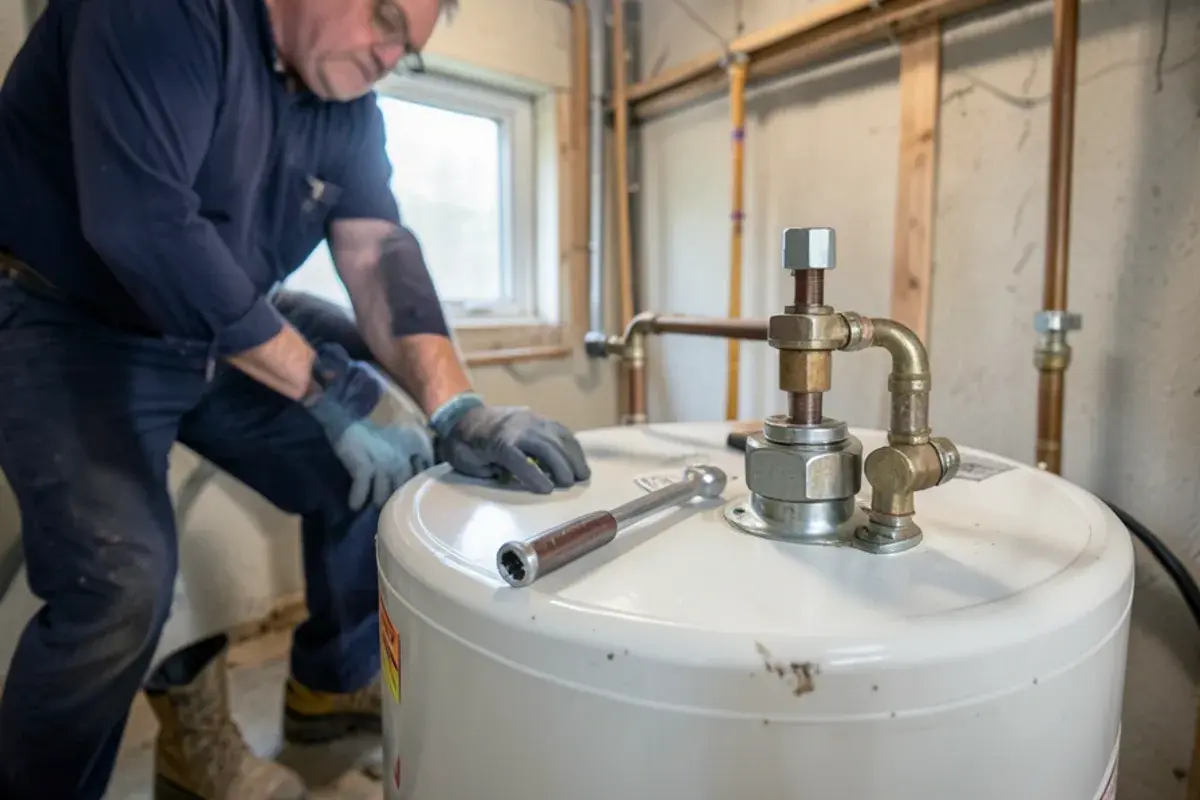
The six checks fit a standard tank. Other heaters add their own jobs:
| Heater | Add to the list | Who does it |
|---|---|---|
| Gas tank | Clean burners, inspect flues and vents yearly; keep flammable liquids away | Service professional, per the National Board |
| Electric tank | Power off at the breaker before draining; never power up a partly empty tank | You, per the DOE guide |
| Heat pump | Clean the air filter quarterly; clear the condensate drain yearly | You, per New York HCR's schedule and your manual |
Those New York intervals were written for building maintenance staff, so your manual comes first. Tankless units follow their own descaling schedule, which is in the manual.
How Do You Keep the Routine Going?
Tie it to a date you already remember. Early November works here, because the job gets done before the cold season starts on about December 1, and it fits the rest of our winter plumbing checklist.
- Find the heater's age. The label lists the model and serial number. Palo Alto's utility notes that manufacturers code the date differently, so check the method for your brand.
- Tape a card to the tank. Write the install date and each year's test and flush.
- Do the yearly checks in one visit. Leaks, relief valve, thermostat, then the flush if your interval calls for one.
- Book the plumber's jobs in the same month. Anode rod, relief valve replacement and burner service.
- Note what changed. A new noise, a slower recovery or a stain is worth writing down.
A relief valve that drips only while the tank reheats points to pressure, not a worn part. Our guide to a leaking water heater explains that one.
What We Check Before Saying a Heater Has Years Left
We read the tank before we read the problem. How old is it, and where does it leak, if it does? Is the relief valve piped to a safe spot and uncapped? Is there rust at the fittings or a stain on the floor?
Then we look at the water. Cloudy water or flakes from the drain valve point to sediment, which a flush may help. A tank that is wet underneath is a different story. A leak from a fitting or valve can often be fixed, but a leak from the tank body is usually the end of that tank. When replacement is the answer, the water heater installation page covers sizing, and a tankless water heater is the other option to weigh. For Germantown Hills homes and the rest of our area, you get a clear, upfront quote, with the replacement decision left to you.
When Maintenance Stops Being Worth the Money
- A new anode rod on an old tank. It pays on a younger heater. At eleven or twelve years, inside the National Board's 8 to 13 year range, that money may do more toward a replacement.
- A first flush on a neglected tank. It can clear sediment, and it can also leave a corroded drain valve that will not close. Weigh that risk with the heater's age.
- Repairs near the end of the range. Today's Homeowner estimates water heater installation in Washington at $772 to $1,931, a published figure and not our quote. Set any repair quote beside that number.
Hand Us the Jobs That Are Not Yours
Do the checks you are comfortable with, then call (209) 563-1400 for the rest. Tell us the heater's age, gas or electric, and what you noticed. Replacing the relief valve or anode rod and any gas work are plumber jobs, and you get a clear, upfront quote before we start.
Sources
- National Board of Boiler and Pressure Vessel Inspectors: Residential Water Heater Safety
- U.S. DOE Building America Solution Center: Flush Water Heater Tank
- City of Blaine, MN: Water Heater Flushing
- U.S. Consumer Product Safety Commission: Avoiding Tap Water Scalds
- Illinois Department of Public Health: Plumbing
- This Old House: How to Replace an Anode Rod
- Green Building Advisor: Water Temperature and Legionnaires' Disease
- New York Homes and Community Renewal: Heat Pump Hot Water Heater Maintenance
- City of Palo Alto Utilities: Check Your Water Heater's Age

Written by the Professional Sewer & Drain Services team
A plumbing and sewer company based in Washington, IL. About us