Commercial and property managers
Plumbing Emergencies: A Plan for Property Managers
Published November 1, 2026. Updated November 1, 2026.
A property manager plumbing plan has four parts: a shutoff map for every building, a way to sort calls by urgency, a plumber's file with access details, and a habit of documenting everything. Illinois law also lets tenants hire certain repairs themselves after notice, so a slow response can cost twice. Build the plan before the first call.
What Belongs in a Property Manager Plumbing Plan?
Five things belong in the plan, and each one saves minutes on the worst day.
- A shutoff map for each building. Show the main, every unit shutoff, the water heater and the cleanouts. Tag the valves.
- A triage list that tells staff which calls are emergencies and which can wait.
- A plumber's file with the building address, access instructions and tenant contacts.
- A paper trail: photos, times and invoices for every event.
- A winter vacancy routine. Illinois American Water advises having someone regularly check an empty property to confirm the heat is working and the pipes have not frozen. Illinois American Water also describes a freeze alarm that phones a number you choose when indoor temperature falls under 45 degrees.
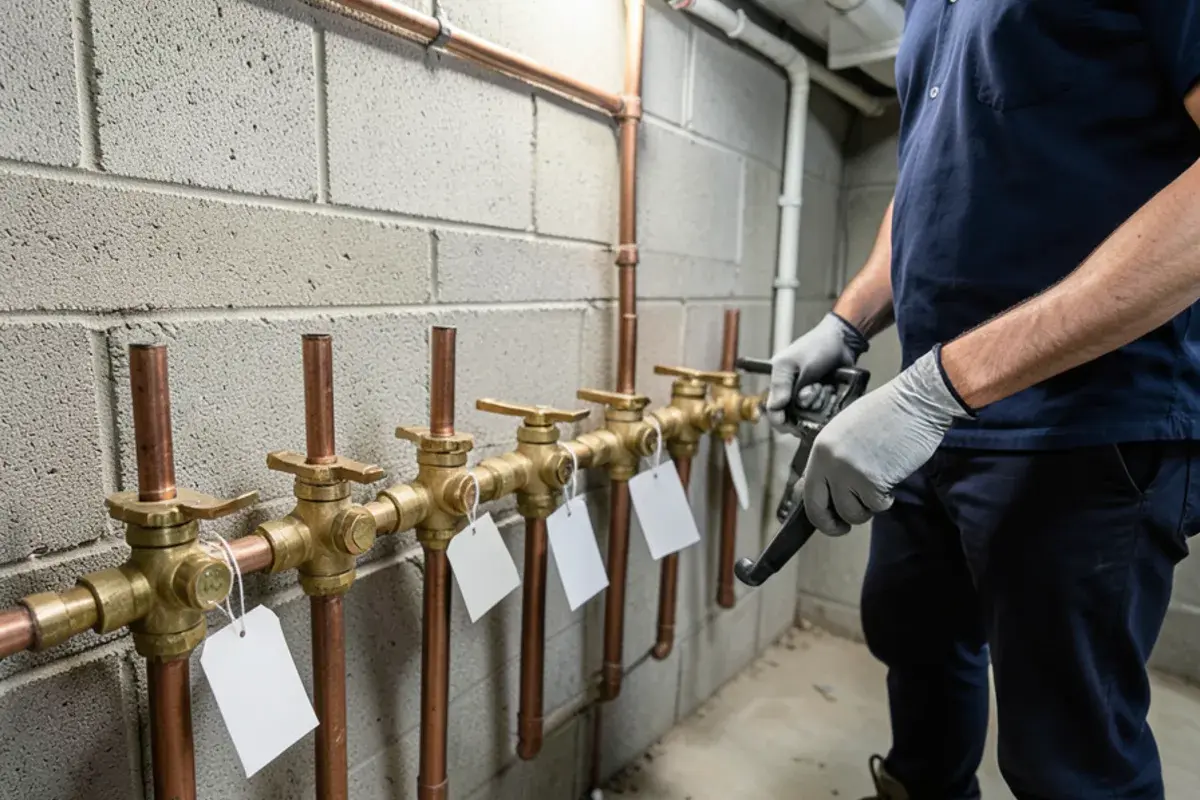
Our commercial plumbing page covers the offices, retail and rental property we work on. If your portfolio includes Peoria, about 11 miles from our base in Washington, tell us the building when you call so we can say what we can do.
Burst pipe or sewage in a rental unit? Call (209) 563-1400
Open 7 days, 7:15 AM to 6:15 PM. Tell us what is happening and we will give you a clear, upfront quote.
Which Calls Are Emergencies?
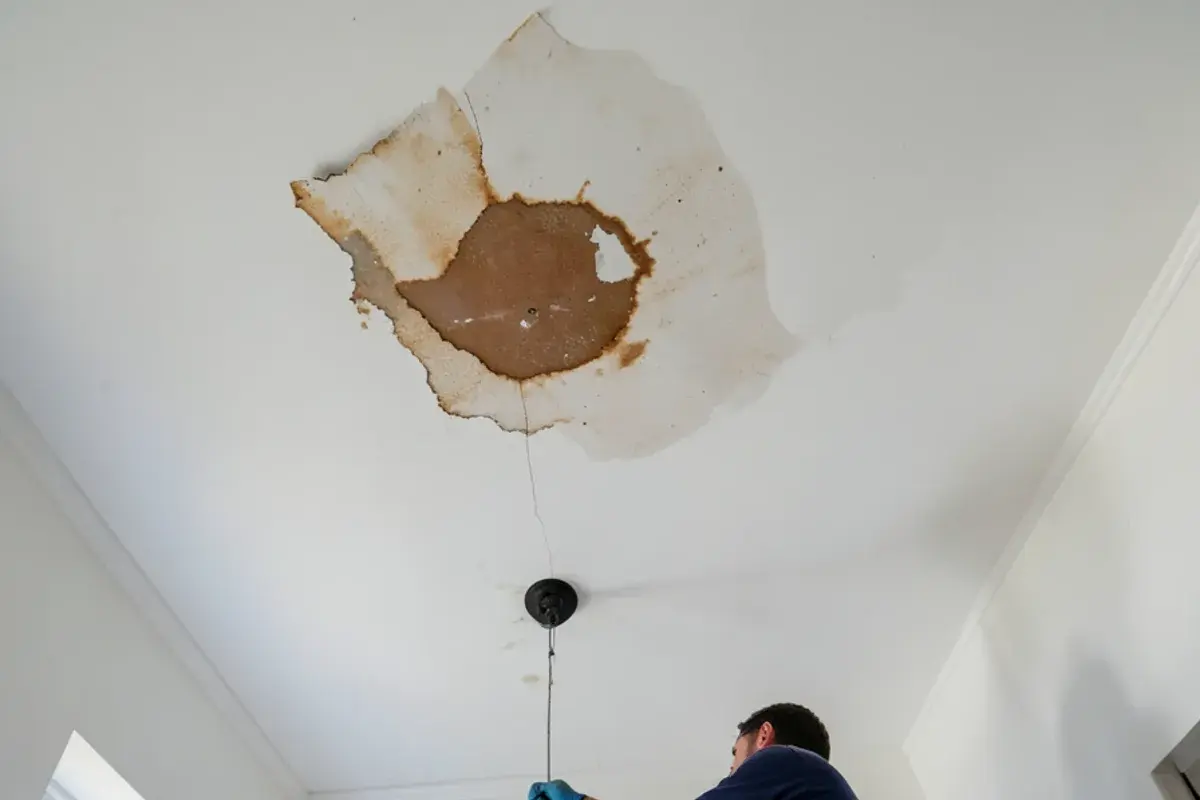
An emergency is any condition that is actively causing damage or threatens health. A short written list keeps a night-shift worker or a tenant from guessing.
| Level | Examples | What staff does |
|---|---|---|
| Emergency | Water flowing from a pipe or ceiling, sewage in a unit, no water to the building | Shut off the water, call the plumber, document |
| Gas | A smell of gas | Leave the unit, then call the gas utility or 911 from outside |
| Urgent | A slow drain in one unit, no hot water in a unit | Schedule promptly and keep the tenant informed |
| Routine | A dripping faucet, a running toilet | Log it and schedule |
Ameren Illinois serves the area for gas. Never ask anyone to search for a gas leak. For a sewage backup, our emergency sewer backup page explains the first steps. For water, our guide to what to do when a pipe bursts covers the first ten minutes, and emergency leak repair covers what follows.
What Does Illinois Law Say About Tenant Repairs?
A slow response can pass the job to the tenant. The Residential Tenants' Right to Repair Act, 765 ILCS 742/5, says that when a repair is required under a lease, statute, rule or local ordinance, and its reasonable cost is no more than the lesser of $500 or one-half of the monthly rent, a tenant may give the landlord written notice by registered or certified mail. If the landlord does not repair within 14 days, the tenant may have the work done and deduct the cost from rent.
Emergencies move faster. The statute treats conditions that threaten health or safety, or risk irreparable harm, as calling for prompt action. It excludes problems the tenant or a guest caused through a deliberate or negligent act.
Water damage follows a similar split. O'Flaherty Law, an Illinois firm, says landlords are generally responsible for damage from plumbing failures such as ruptured pipes or backed-up sewer lines. A tenant may pay when their own act caused it, or when a late report let the damage grow. That makes a clear, dated reporting channel valuable to both sides.
This is a plain-language summary, not legal advice, and we read it through two public reproductions of the statute. Ask your attorney how it applies to your leases.
What Should the Plumber's File Contain?
The file should answer every question a plumber asks on the first call, so nobody has to hunt for a key or a valve.
- Building address, unit numbers and who can let us in.
- A photo of the main shutoff and each unit shutoff.
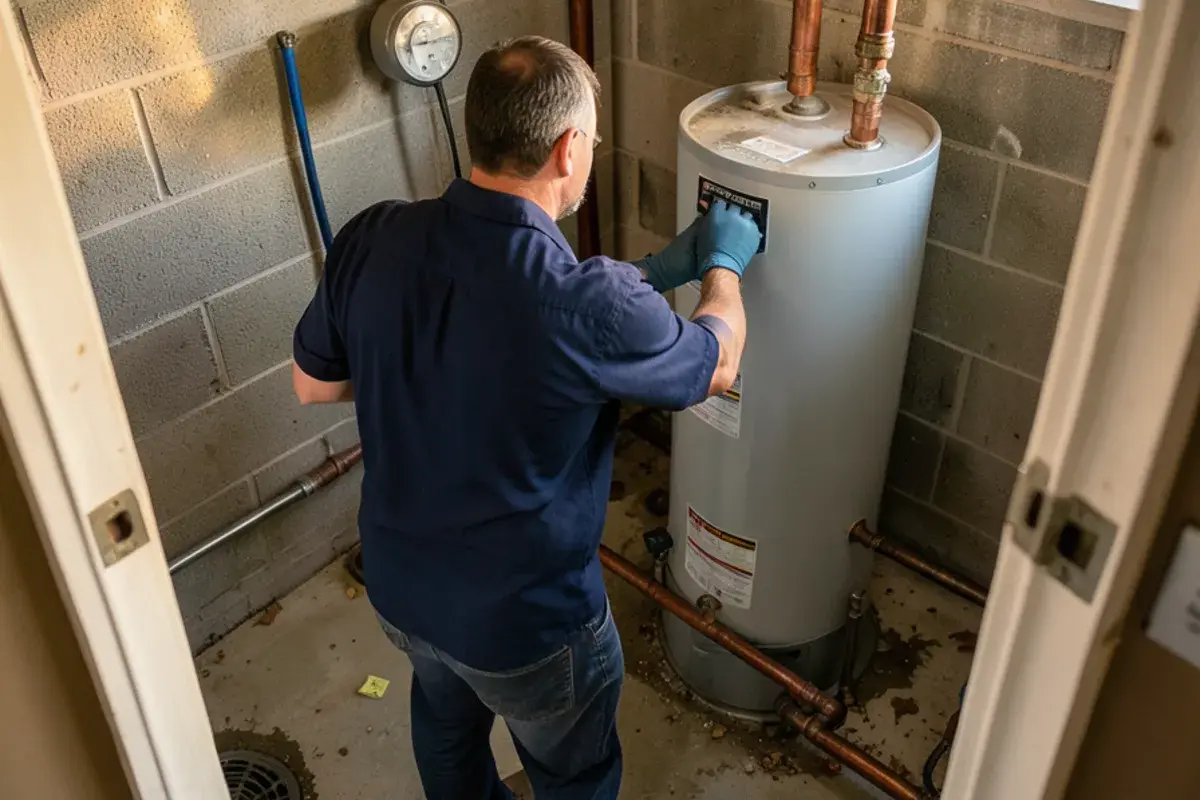
- Location of the water heater, cleanouts and floor drains.
- Past leaks, backups and who serviced them.
- The name of the person who can approve work and the invoice recipient.
When you pick a plumber, ask for the Illinois plumbing license number. State law requires anyone who repairs or maintains plumbing to be licensed, and advertisements must include the number. Check it with the Illinois Department of Public Health.
We list daily hours of 7:15 AM to 6:15 PM on Google, with no after-hours service claimed, so the plan needs a shutoff-first step for the night. Reviewers describe past calls, not promises. Jason P. wrote that after a 5:30 PM call the crew was there by 6:00 PM and Monte worked by flashlight, and Chris K. had a cleanout finished by 7:30 PM after a 4 PM call.
Decide Who Can Say Yes
Put the approval rule in the file before anyone needs it. A plumber in a flooded unit should not wait on an owner who is out of reach. Have the owner set a dollar limit a manager can approve for emergency work, name who decides above it, and add the insurance carrier's claim number. Write down a second approver for vacations.
What Happens in the First 48 Hours After Water Escapes?
Move fast, because drywall absorbs moisture within hours. Framing that stays wet past 48 hours risks microbial growth. Photograph everything before cleanup, and keep damaged items until your insurer says otherwise.
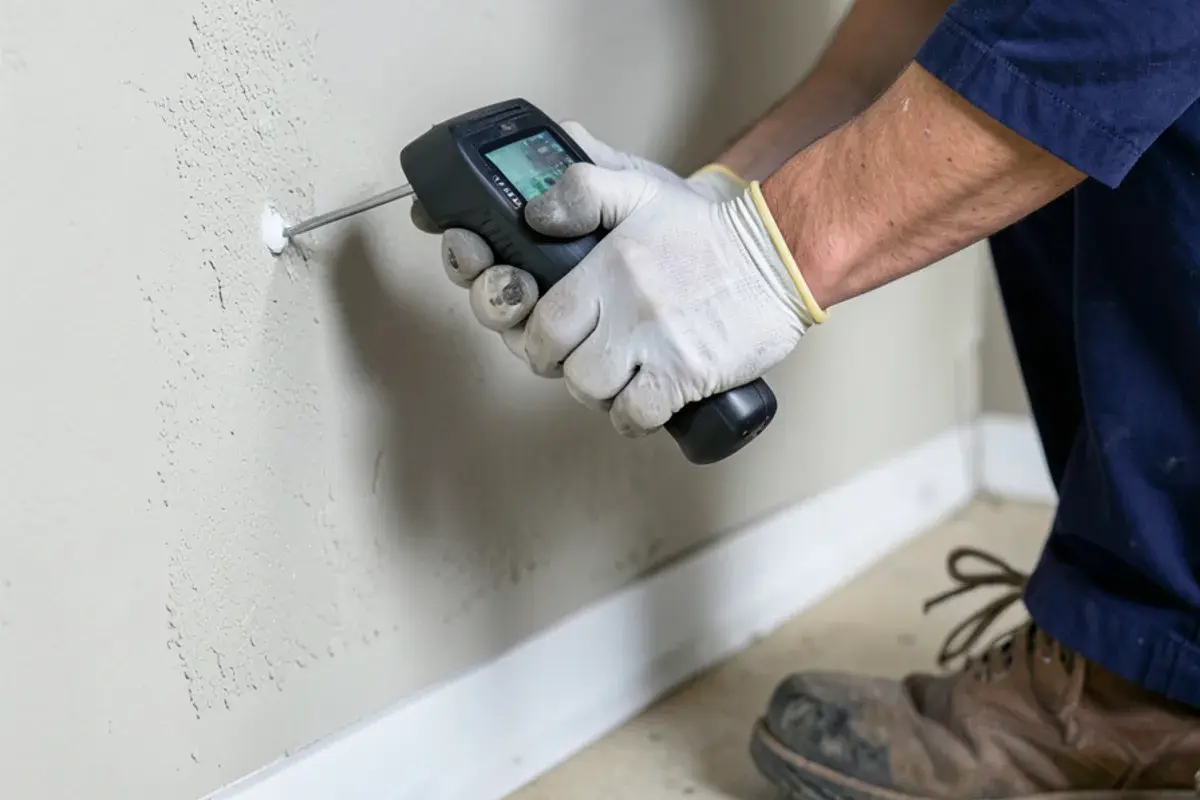
Once the leak is fixed, a moisture meter confirms that walls and framing are dry, not just that they look dry. Keep the readings with the invoice. A restaurant tenant adds another layer, since sewage in a food area stops service. Our post on grease trap and drain maintenance for restaurants covers that rule.
What Should Tenants Get on Move-In Day?
Tenants are the first responders in every unit, so give them one page on the day they get the keys.
- A photo of the unit shutoff, with the direction to turn it
- The number to call, and what to do when the office is closed: shut off first
- The short version of your triage list
- What not to flush or pour, starting with wipes and grease
- How to report a drip or a slow drain, in writing, as soon as they notice it
- Where to go if they smell gas: outside, then call
Have them sign for it and keep the copy. Repeat the page each fall, with a reminder about space heaters, open cabinets and leaving town.
How Do You Test the Plan Before It Is Needed?
Put it on a calendar, because a plan nobody has run is a guess. This yearly round fits a Central Illinois building:
| When | Task | Why it matters |
|---|---|---|
| March | Test sump pumps and check floor drains | Snowmelt and spring rain arrive first |
| June | Turn each tagged shutoff closed and open | Mild weather makes a stuck valve easy to plan around |
| September | Update tenant contacts and the plumber's file | Summer move-outs leave the file stale |
| November | Set the vacancy routine and pull hoses | The cold season starts about December 1 |
| Yearly | Test backflow devices where your water supplier requires it | Many Illinois suppliers require annual tests |
Do not skip the valves. Raleigh's water department says an unused valve can seize from corrosion, and one valve maker says to exercise them at least every few years, more often where service matters most. A shutoff that will not close sends the crew to the next valve back, which cuts water to more units. Warn tenants first, because an old valve can start weeping at the stem after it moves. Have a plumber on hand for the first round on old valves.
What We Ask on the First Call From a Manager
We ask the same short list every time. What is the address and unit? Where is the water coming from, and has it been shut off? Is there sewage? Is anyone in the unit, and who has the key?
We also ask whether the shutoff map exists. A manager who can say "second valve on the left, tagged" turns a ten-minute search into a ten-second one. After the work, you get a written record of what we found and what we did, ready for the file. For East Peoria and the other towns we cover, the plan works the same way.
Trade-Offs We Would Talk Through
- Leak sensors. They catch a leak in a vacant unit or behind a dishwasher, and one sensor maker's guide puts them there and near water heaters. A sensor only sends an alert, so it helps only if someone answers and can reach the valve.
- Unit shutoffs. Adding them costs money on a quiet day and may mean opening walls. Without them, one failed toilet supply can take water from the whole building.
- One plumber or two. One company learns your buildings. A second name covers a day when the first is booked. We would rather you keep both on file than have no answer on a bad Saturday.
Bring Us the Building List
Call (209) 563-1400 with your addresses, the number of units and what your shutoffs look like today. We will tell you what we can do for each building, and you get a clear, upfront quote before work starts.
Sources
- 765 ILCS 742/5, Residential Tenants' Right to Repair Act (via Onecle)
- 765 ILCS 742/5, Residential Tenants' Right to Repair Act (via FindLaw)
- Illinois Department of Public Health: Plumbing
- Illinois American Water: Cold Weather Tips To Prevent Frozen Pipes (January 15, 2024)
- O'Flaherty Law: Who's Responsible for Water Damage in Illinois
- City of Raleigh: Valve Exercising Program
- Milwaukee Valve: Move It or Lose It
- Minut: How to Stop Water Leaks in Multifamily Properties

Written by the Professional Sewer & Drain Services team
A plumbing and sewer company based in Washington, IL. About us