Commercial and property managers
Grease Trap and Drain Maintenance for Restaurants
Published November 1, 2026. Updated November 1, 2026.
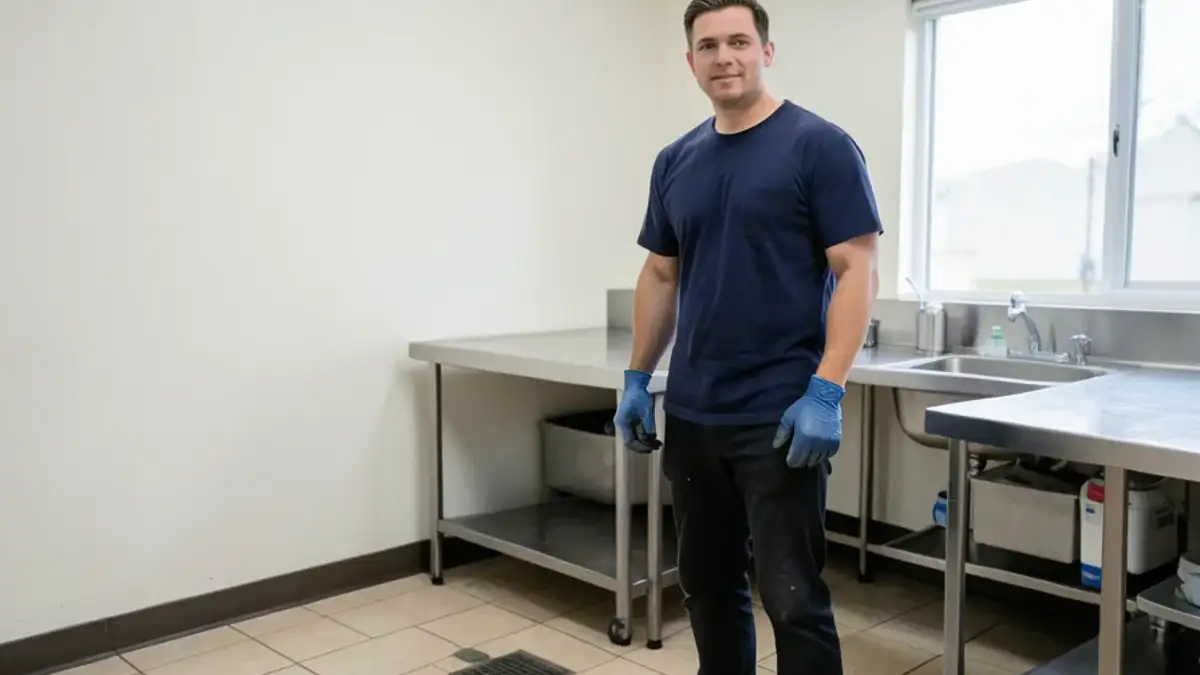
Restaurant drain maintenance comes down to three habits: keep grease out of the drains, keep the grease interceptor serviced on a written schedule, and keep the lines below it clear. When a kitchen drain backs up, it is more than a plumbing problem. Food regulators treat sewage in a food area as a reason to stop serving.
What Does Illinois Require for Grease Interceptors?
Illinois sets the baseline in its Plumbing Code, 77 Ill. Adm. Code 890, administered by the Illinois Department of Public Health. Subpart E covers interceptors and separators, and section 890.510 is titled Grease Interceptor Requirements. The code defines a grease interceptor as a device that separates and retains grease, oils and other floating matter from sewage waste while the remaining flow goes on to the drain.
We are not quoting sizing here. The version we read is IDPH's 2019 rulemaking text, so confirm the adopted version, and let your plumber and the building department decide size at plan review.
A city can add its own rules on top. Ask the City of Washington's public works office three things: whether it has a grease ordinance, how often it requires the interceptor to be cleaned, and what records it expects. For the kitchen itself, IDPH says local food protection programs set standards and conduct inspections. In Tazewell County, that is the county health department in Tremont, listed at 309-925-5511. Confirm which office covers your address.
Kitchen drain backing up during service? Call (209) 563-1400
Open 7 days, 7:15 AM to 6:15 PM. Tell us what is happening and we will give you a clear, upfront quote.
What Should the Kitchen Do Every Shift?
The kitchen does most of the work, because grease that never enters the drain never has to be removed. These habits cost nothing:
- Scrape plates dry into the trash before they reach the sink.
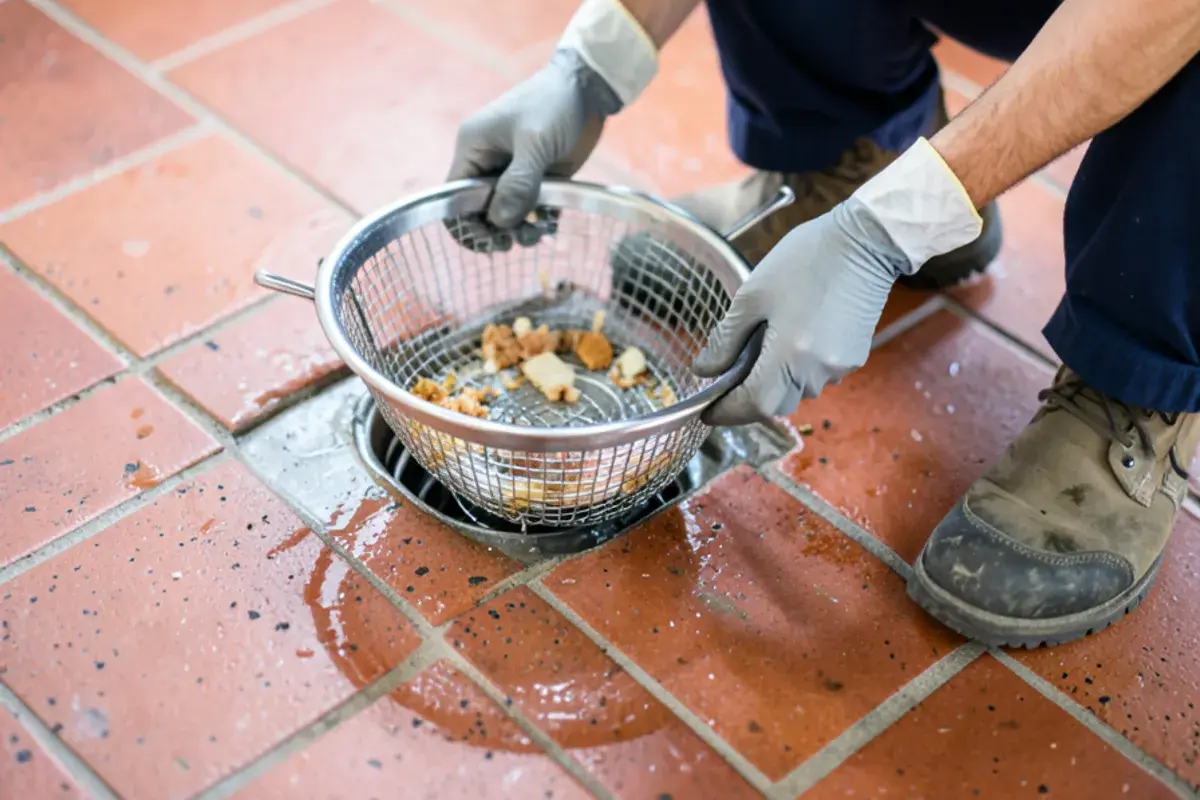
- Seat a strainer in every sink and floor drain, and empty it each shift.
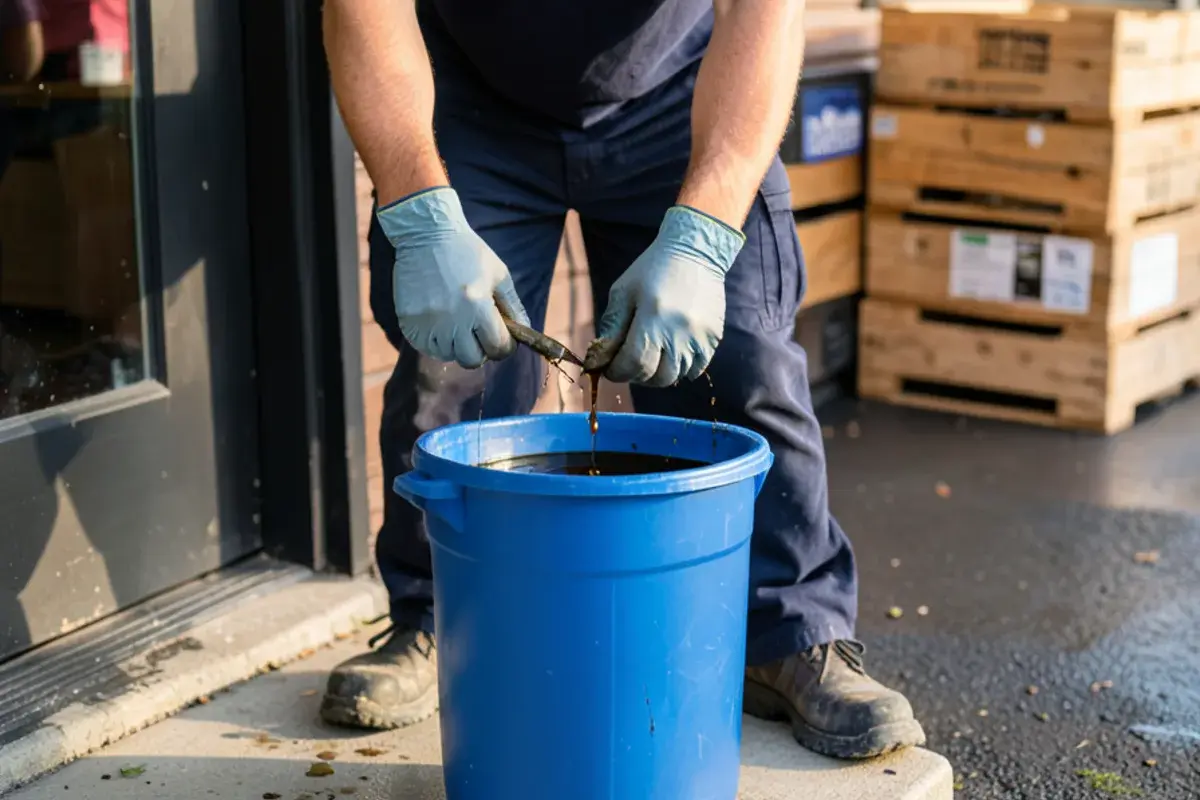
- Catch used fryer oil in a lidded container for pickup. Never pour it down a drain.
- Wipe pots and pans with a paper towel before washing.
- Keep food waste out of the interceptor unless the design allows it.
- Write it down. A one-page log of cleanings and ticket numbers is the first thing an inspector asks to see.
Which Jobs Fill an Interceptor Faster?
Some of the biggest loads come from cleaning, not cooking. Sioux City, Iowa's grease program warns that vent hood and exhaust cleaning, floor mats and heavily soiled utensils all fill the device faster, so plan the next clean-out around them. Its best-practice list adds three habits worth copying:
- Keep wash water under 140°F, the limit that list sets.
- Send mat and mop water through a utility sink connected to the interceptor.
- Sweep floors before wash-down, so solids go in the trash.
Dairy counts too. Sioux City's sheet sets a 400 mg/L discharge limit for grease and oil, and lists whole milk at 37,000 mg/L and ranch dressing at 470,000. That limit is Sioux City's, not a local one, but the comparison shows why a bakery or coffee shop has a grease problem as well.
Trap or Interceptor: What Changes for Maintenance?
The device decides who cleans it and how it is sized. A trade article in PHCPPros describes gravity units as large central tanks and hydromechanical units as smaller, local ones.
| Hydromechanical unit | Gravity interceptor | |
|---|---|---|
| Typical location | Recessed in the floor, or on it for a single sink | Buried outside, or in a garage with truck access |
| Sized by | Waste flow in gallons per minute | Tank volume, by a method the code sets |
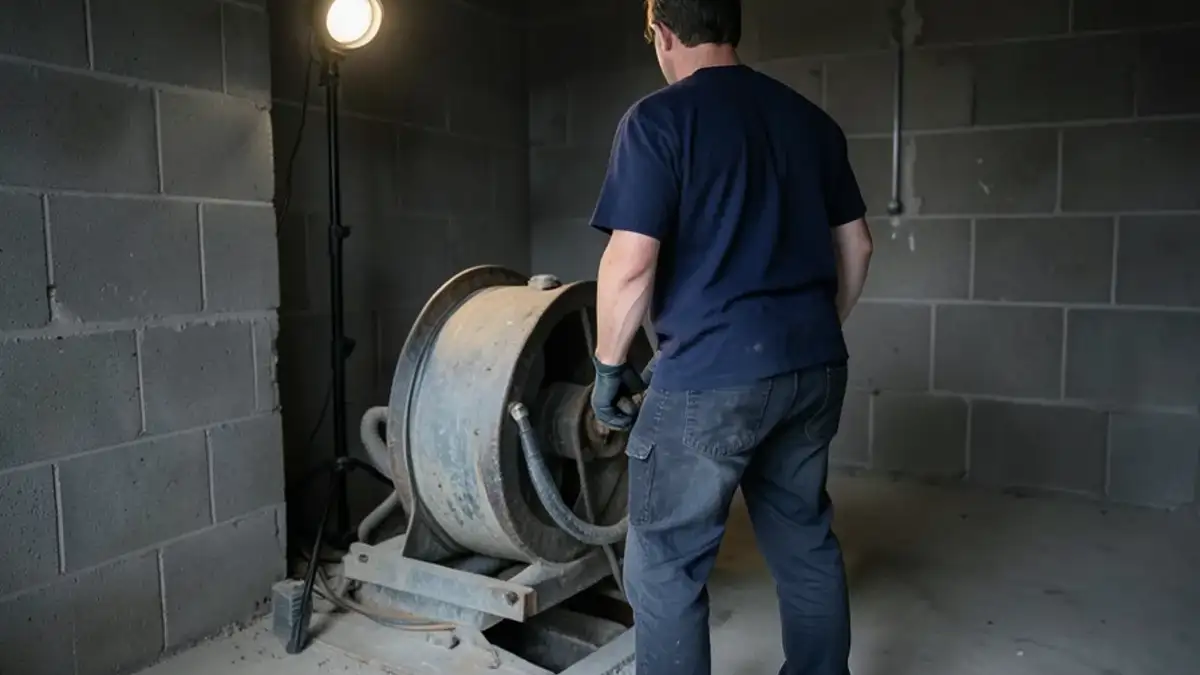
| Cleaned by | Staff or a hauler, where local rules allow it | A hauler with a vacuum truck |
| Sioux City's example rule | At least weekly, or sooner at 25% | Pumped when it reaches 25% |
Those intervals are one Iowa city's ordinance, not a Washington rule. They are useful as a sense of scale.
How Often Should a Grease Interceptor Be Cleaned?
We did not find one number that applies to every kitchen, so we will not invent one. The right interval depends on the interceptor's size, how much grease the kitchen produces, and any rule the city sets. The practical method is to check the interceptor, note how fast it fills, and set the schedule from that.
The 25% Rule, With the Math
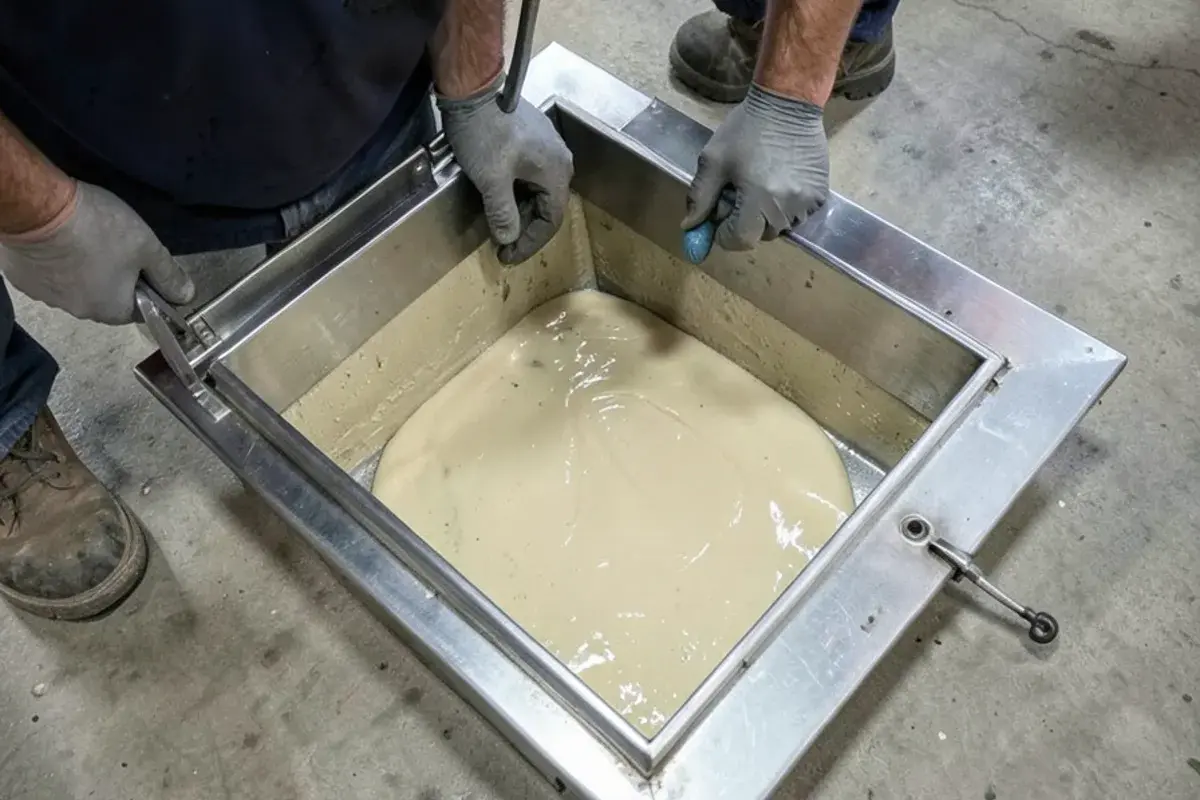
Many sewer authorities set a measure rather than a date, and the common one is 25%. Under Sioux City's version, floating grease plus settled solids cannot reach a quarter of the liquid depth. Its worked example has 0.5 feet of grease and 1 foot of solids in 4 feet of contents. That is 1.5 divided by 4, or 37.5%, so the kitchen fails and needs to pump more often.
We have not confirmed that Washington uses this measure, so ask public works. Even without a rule, it gives you a target. Have the hauler record both depths on the ticket for a few cycles, and you will see how fast your kitchen fills. Sioux City also says to witness each cleaning, which is the easiest way to know the job was finished.
Three different people handle three different jobs:
| Task | Who | How often |
|---|---|---|
| Scrape, strain, catch oil | Kitchen staff | Every shift |
| Pump out the interceptor | A grease hauler | Set by size, volume and local rules; keep each ticket |
| Clear and jet the lines | A plumber | Based on what a camera shows beyond the trap |
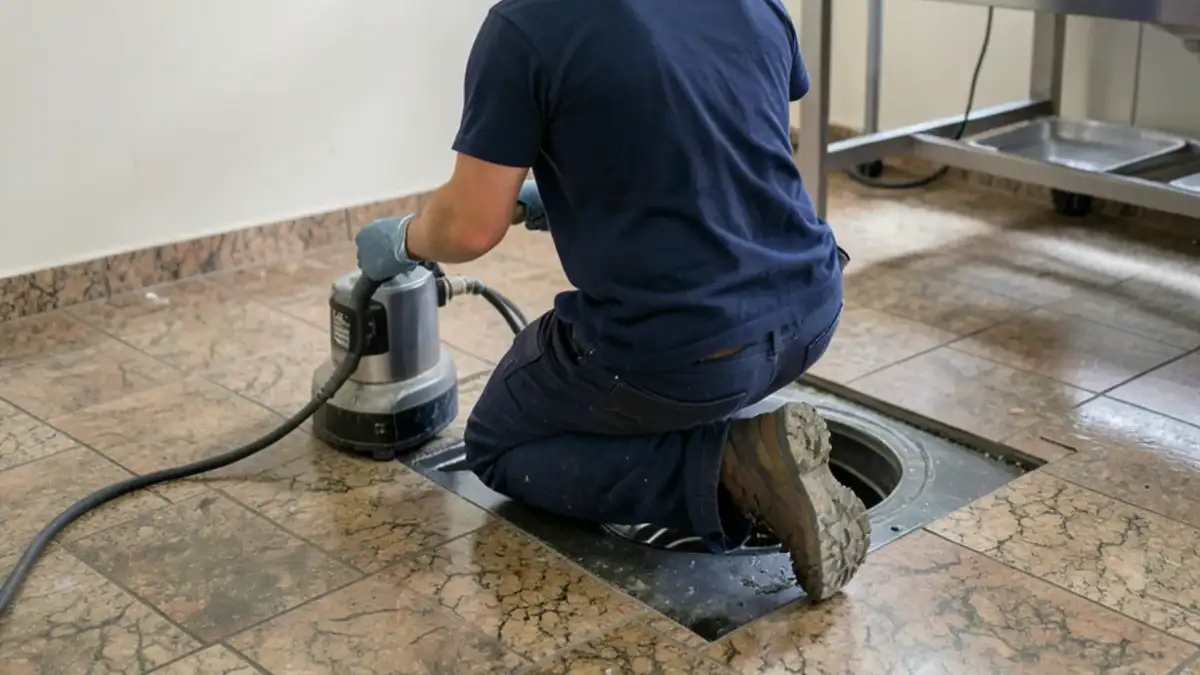
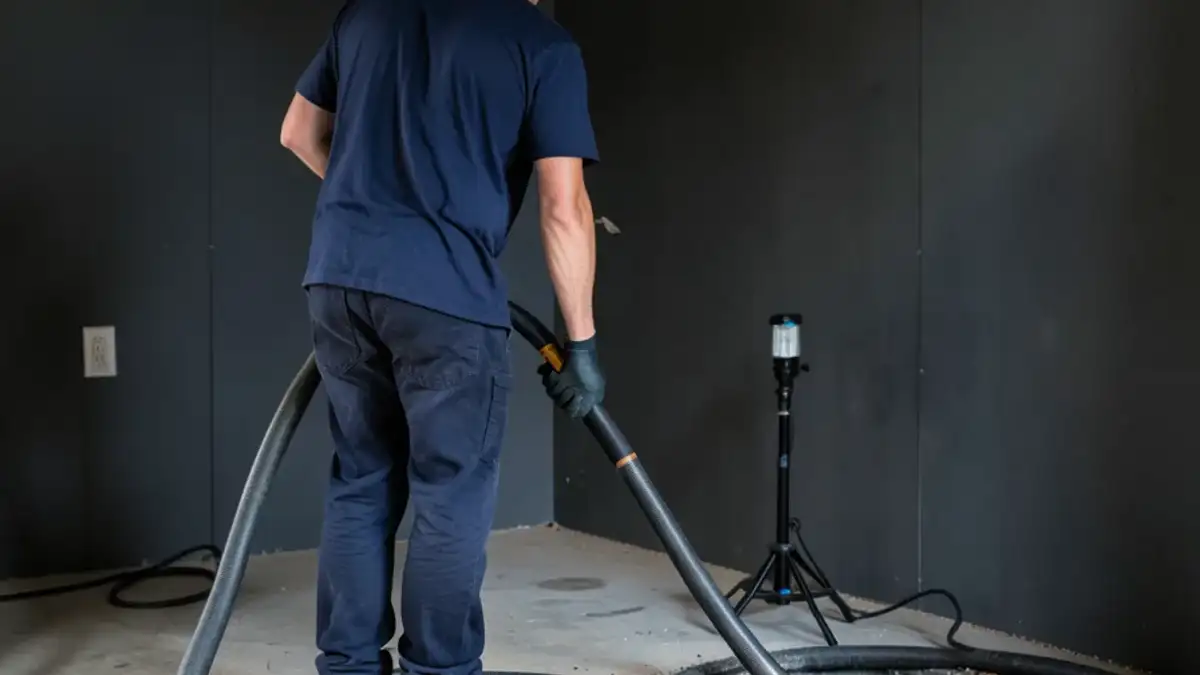
Pumping is a separate trade from plumbing. What we do is commercial drain service: cutting and jetting the lines on either side of the interceptor. Hydro jetting scours grease from pipe walls where a cable only punches a hole through it. Our comparison of snaking and hydro jetting explains when each fits.
What Do You Do When Sewage Backs Up Into the Kitchen?
Stop serving food from the affected area and call the health department. Illinois rules come from IDPH and your local health department, so we cite the model here, not a state rule. The FDA Food Code is the model regulators use to write their own rules. Wisconsin and Indiana guidance, both written from that model, say the same things:
- Close or stop operating if sewage keeps backing up from a floor drain, toilet, sink or other fixture. Wisconsin says to discontinue all operations in that case.
- Stop food preparation if no handwashing sink works and you cannot set up an alternative. Operation must also cease if employees have no working toilet.
- Report it. Indiana says an owner or operator must close and report to the regulatory authority for a single backup event.
- Discard contaminated food and take affected fixtures out of service.
- Clean spills with detergent, then a sanitizer.
Ask your health department what it requires before you reopen. Then call a plumber, and photograph the drain and the water before anything is cleaned up. Our post on plumbing emergencies for property managers covers building-level planning.
What We Check on a Kitchen Line Before We Touch It
We begin with the symptoms. Is it one sink or every drain? Does the floor drain slow first, and does it gurgle when the dish machine empties? A pattern across fixtures puts the problem in the line they share, not in a single trap.
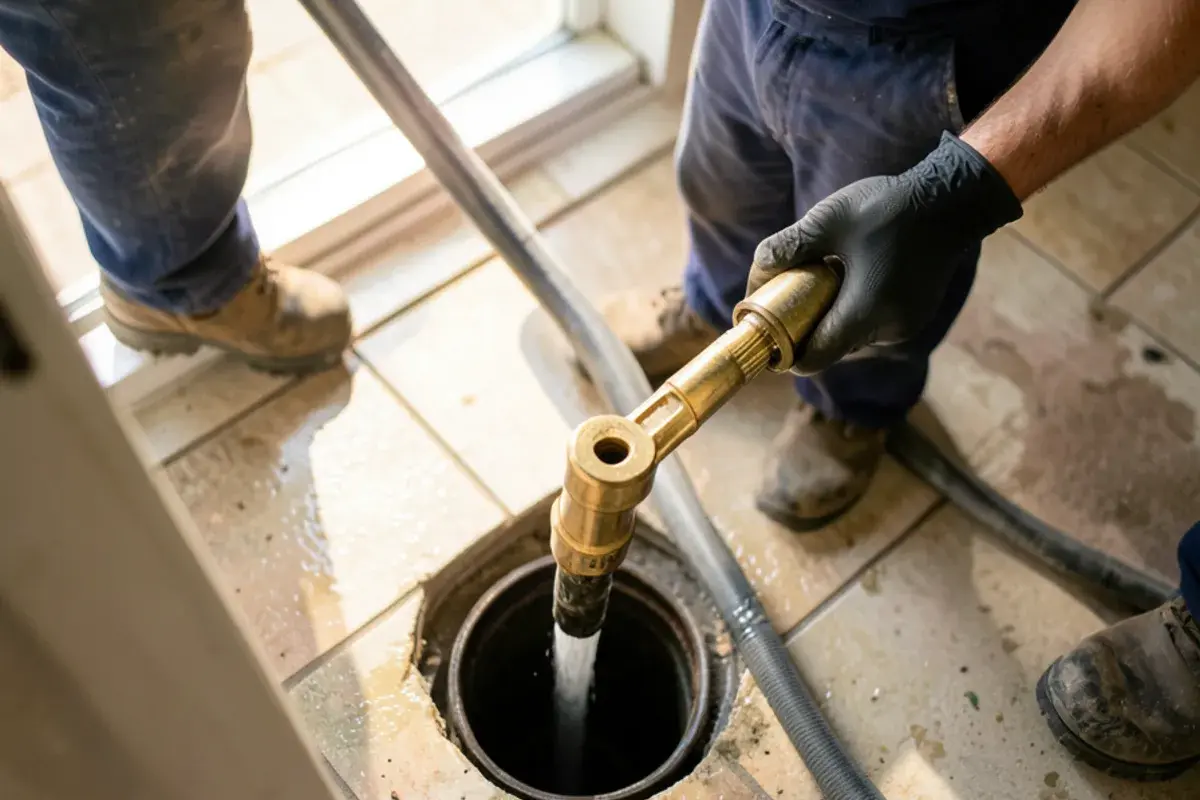
Then we look at the plumbing around the interceptor, the cleanouts we can reach, and what comes out on the cable or jetter. A camera pass beyond the interceptor shows whether grease has coated the pipe wall, and that tells you how soon the line will need attention again. Ask any plumber for the license number before work starts, since Illinois requires it in advertising. For a restaurant in Sunnyland, about four miles from our base, call first and we will tell you what we can do.
Scheduled Cleaning or Wait for the Clog?
- Scheduled line cleaning costs money when nothing looks wrong, and you pick a slow morning for it. A kitchen with heavy fryer volume usually comes out ahead.
- Waiting costs nothing until the backup lands during service. Then you pay for the line, the lost shift and any health department steps.
- Too much jetting has a cost as well. Old pipe should be checked with a camera before it gets repeated pressure.
The honest answer depends on the first few cleanings. If little comes out, stretch the interval. If the same line is coated again in weeks, look harder at what goes down the drain.
Set the Schedule Before the Next Rush
Call (209) 563-1400 and tell us which drains slow first, when the interceptor was last pumped and when your kitchen is quiet. We will talk through a first cleaning and a camera pass, and you get a clear, upfront quote before work starts.
Sources
- Illinois Department of Public Health: Illinois Plumbing Code, 77 Ill. Adm. Code 890
- Illinois Department of Public Health: Plumbing
- Illinois Department of Public Health: Food Safety
- Tazewell County Health Department
- U.S. FDA: FDA Food Code
- Wisconsin DATCP: Response to Sewage Backup fact sheet
- Indiana State Department of Health: Sewage Backup
- City of Sioux City: Understanding Grease Removal and the 25% Rule
- PHCPPros: Grease Interceptors 101

Written by the Professional Sewer & Drain Services team
A plumbing and sewer company based in Washington, IL. About us