Local angles
Frozen Pipes in Central Illinois: Prevention Guide
Published November 1, 2026. Updated November 1, 2026.
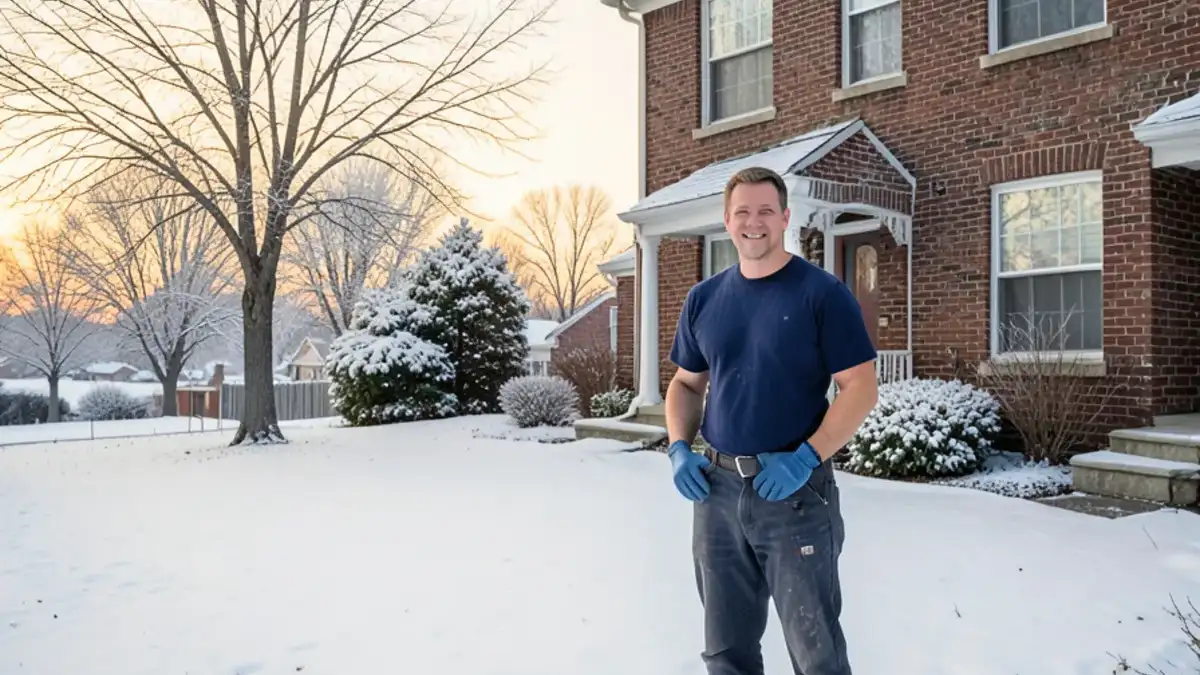
Frozen pipes in Illinois start in the same handful of places every winter: outside walls, crawl spaces, attics, garages and outdoor faucets. Prevention is a few jobs done before the first hard freeze, plus a plan for the night it turns bitter. If a pipe has already frozen, shut off the water first.
How Cold Does a Washington Winter Get?
Cold enough that pipes in the wrong place are at risk every year. Washington's cold season runs from about December 1 to March 1, with average daily highs under 43°F (Weather Spark). The January average low is 15.8°F (Plantmaps), and the town gets about 24 inches of snow a year (BestPlaces).
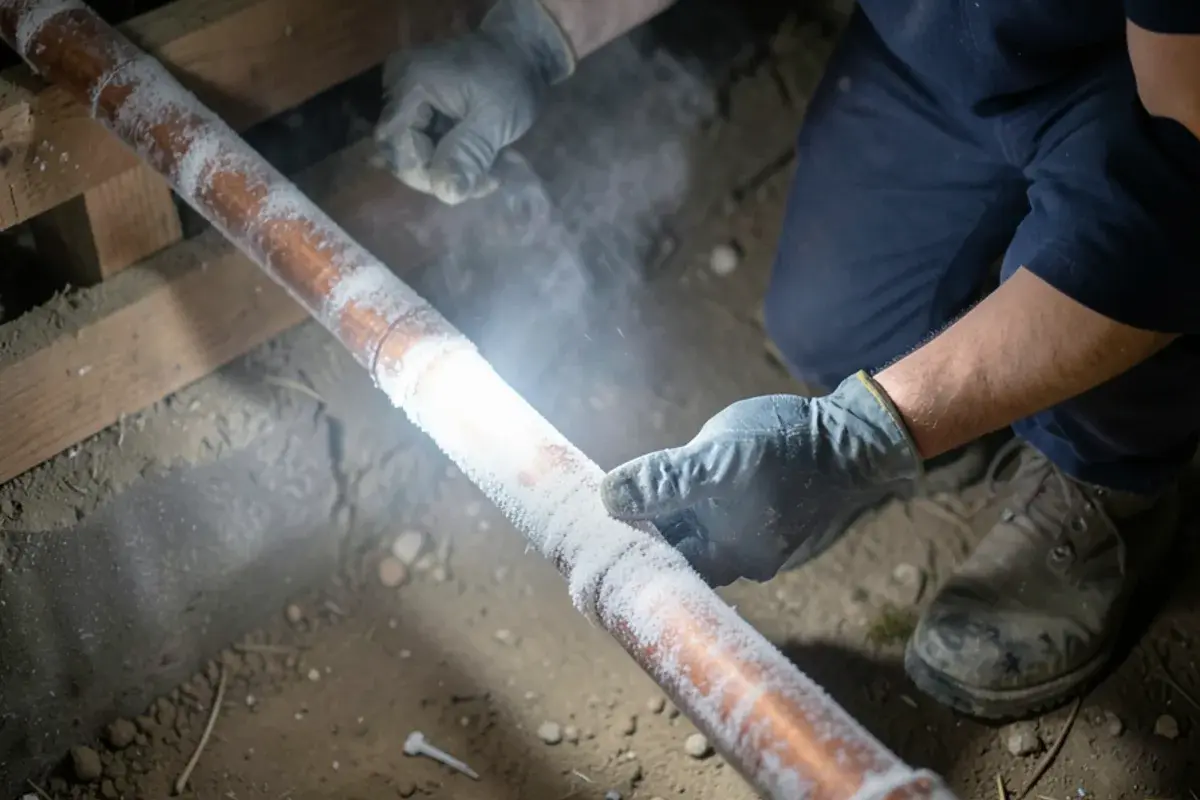
Water freezes at 32°F, but a pipe inside a heated room rarely gets there. The trouble starts with pipes that sit in outside walls, in unheated spaces or in the path of a draft. When ice forms, it blocks the flow, and the pressure trapped between the ice and a closed faucet is what usually splits the pipe.
A split pipe is expensive. Today's Homeowner estimates burst pipe repair in Washington at $788 to $3,154, a published estimate and not our quote.
Pipes frozen and no water at the tap? Call (209) 563-1400
Open 7 days, 7:15 AM to 6:15 PM. Tell us what is happening and we will give you a clear, upfront quote.
At What Temperature Do Pipes Freeze in a House?
Bare pipes in unheated spaces start to freeze when it is about 20°F outside. That figure traces to field tests by the Building Research Council at the University of Illinois, which watched uninsulated pipes in an unconditioned attic. It was set as an alert level for southern states, and the same guidance warns that moving cold air through a crack or a gap in insulation can freeze a pipe at warmer temperatures.
In Washington it is not a rare number. The January average low of 15.8°F means an ordinary January night is already past it. Read the forecast this way:
| Forecast | What is at risk | What to do that evening |
|---|---|---|
| First nights below 32°F | Hoses and outdoor faucets | Disconnect and drain them |
| Low near 20°F or colder | Bare pipe in unheated spaces | Open cabinets and set a trickle |
| Freezing with a hard wind | Pipes behind drafts, even above 20°F | Block the draft, watch the windward wall |
Why Can a Pipe Burst Where It Never Froze?
Water pressure does the splitting, not the ice pushing outward. Jeffrey Gordon's 1996 report for the University of Illinois Building Research Council, as summarized by the engineer who writes the Dr. Drang blog, found that a pipe open at one end cannot be pressurized. Once ice fully blocks the line, the water trapped against a closed faucet has nowhere to go. In one test on 3/4-inch copper, pressure reached about 4,000 psi before the pipe failed.
The failure comes at the weakest point, which may be far from the ice. A fitting under a sink can split without ever getting cold. That explains two habits below: a trickle keeps the far end of the line open, and after a freeze you check the whole run, not only the cold stretch.
Where Do Pipes Freeze First in a Central Illinois House?
They freeze where heat does not reach them. These are the places to check first:
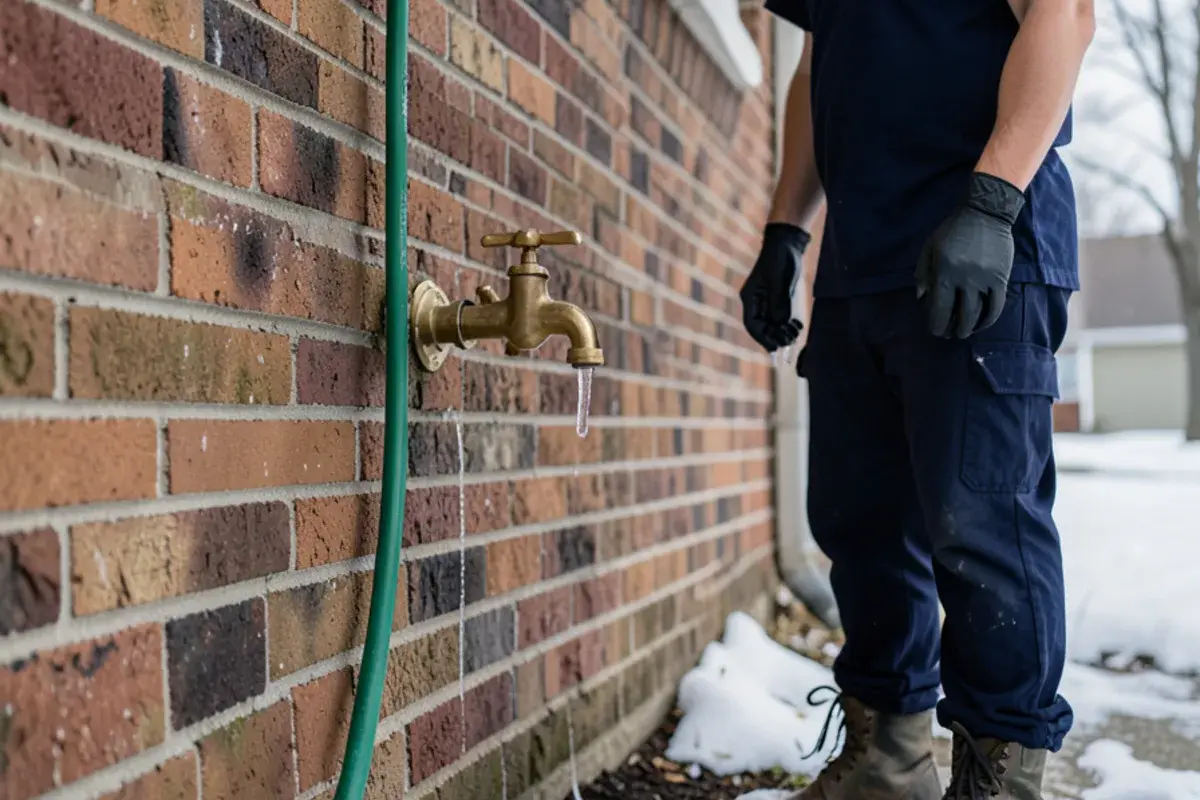
- Outdoor hose faucets. A hose left attached holds water against the cold.
- Pipes in outside walls, especially a kitchen or bath sink on an exterior wall.
- Crawl spaces and the rim of a basement, where pipes run near the sill.
- Attics and garages, which sit outside the heated envelope.
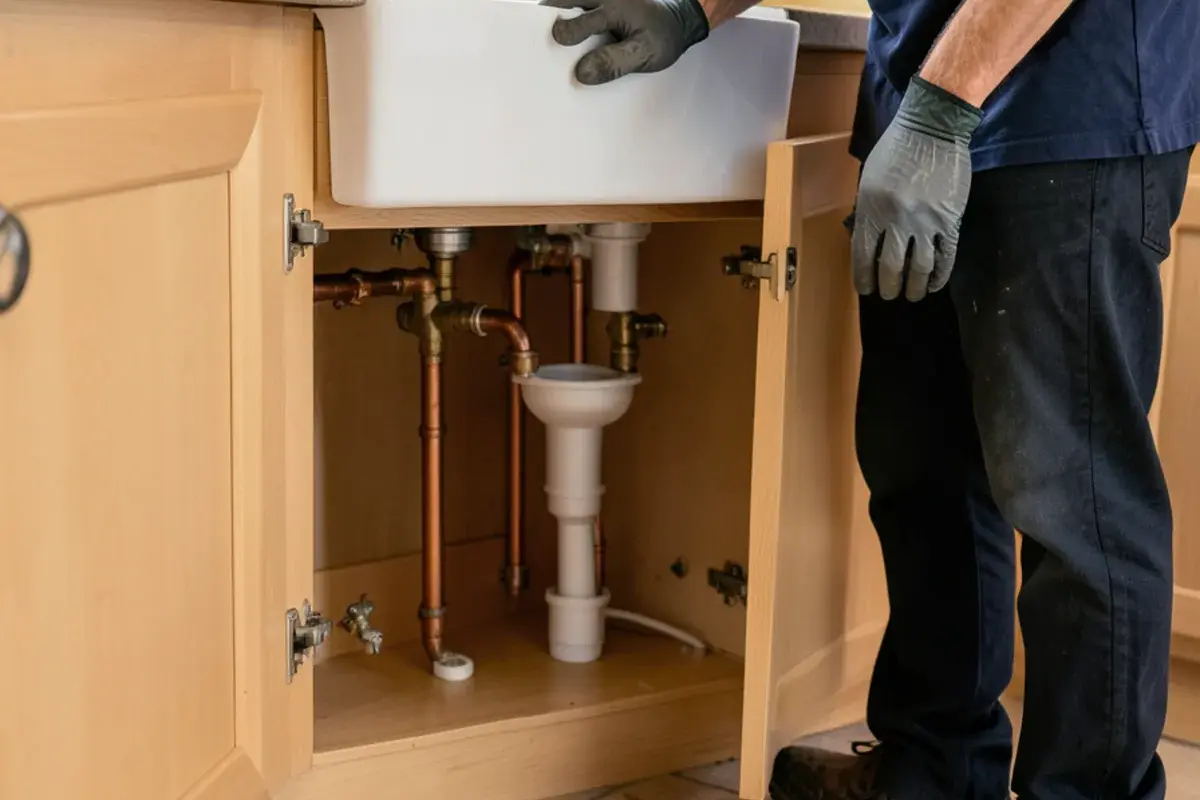
- Supply lines under sinks, in cabinets that trap cold air against the wall.
Older homes, including those in East Peoria, can have long runs of exposed pipe in basements and crawl spaces. In newer houses the same pipes sit inside closed walls, where a missing piece of insulation is harder to see.
What Should You Do Before the Next Cold Snap?
Do the jobs in this order, before the first hard freeze and again before any forecast of a deep cold night.
- Find and test the main shutoff, so you can close it in seconds if a pipe lets go.
- Shut off and drain outdoor faucets, and bring hoses in.
- Insulate exposed pipes. The Illinois Emergency Management Agency and the National Weather Service said in November 2025 that this simple step can make all the difference.
- Open cabinet doors under sinks on exterior walls so room air reaches the pipes, as Illinois American Water advises.
- Let a small trickle run overnight on the coldest nights, at a faucet on an exterior wall.
- Plan for an empty house. Have someone check regularly that the heat is working, and think about a freeze alarm, which can call a phone number if the indoor temperature drops below 45 degrees.
Our winter plumbing checklist turns the whole season into a printable list.
If You Use Heat Tape
Heat tape adds heat where insulation only slows its loss, and it carries a fire risk if it is old or badly fitted. The Consumer Product Safety Commission's guidance is decades old, but the hazards it describes have not changed:
- Unplug it each fall and look along its full length for charring, cracks, cuts or bare wire. Replace it if you find any.
- Fix it directly to the pipe, and do not lap it over itself or run it over foam unless the maker's directions allow that.
- Plug it into a grounded GFCI outlet.
- Replace uncertified tape more than three years old with tape certified to UL, CSA or FMRC standards.
If the House Will Sit Empty
Keep the heat on and the thermostat above 55 degrees, the figure Arlington County, Virginia, gives for long absences. If a long freeze is coming and nobody can check the house, that county's fallback is to shut the main valve, open every faucet to drain the lines, flush the toilets and drain the water heater with its power or gas off. A house with a boiler or other wet heating system needs a plumber's advice first, because draining the wrong line can leave heating pipes full of water.
What Do You Do If a Pipe Freezes?
Shut off the water first. Illinois American Water says not to try thawing a frozen pipe unless the water is off, because freezing can cause cracks you cannot see, and a thawed crack will leak.
Then work in this order:
- Open the faucet the pipe feeds, so melting water and pressure have a way out.
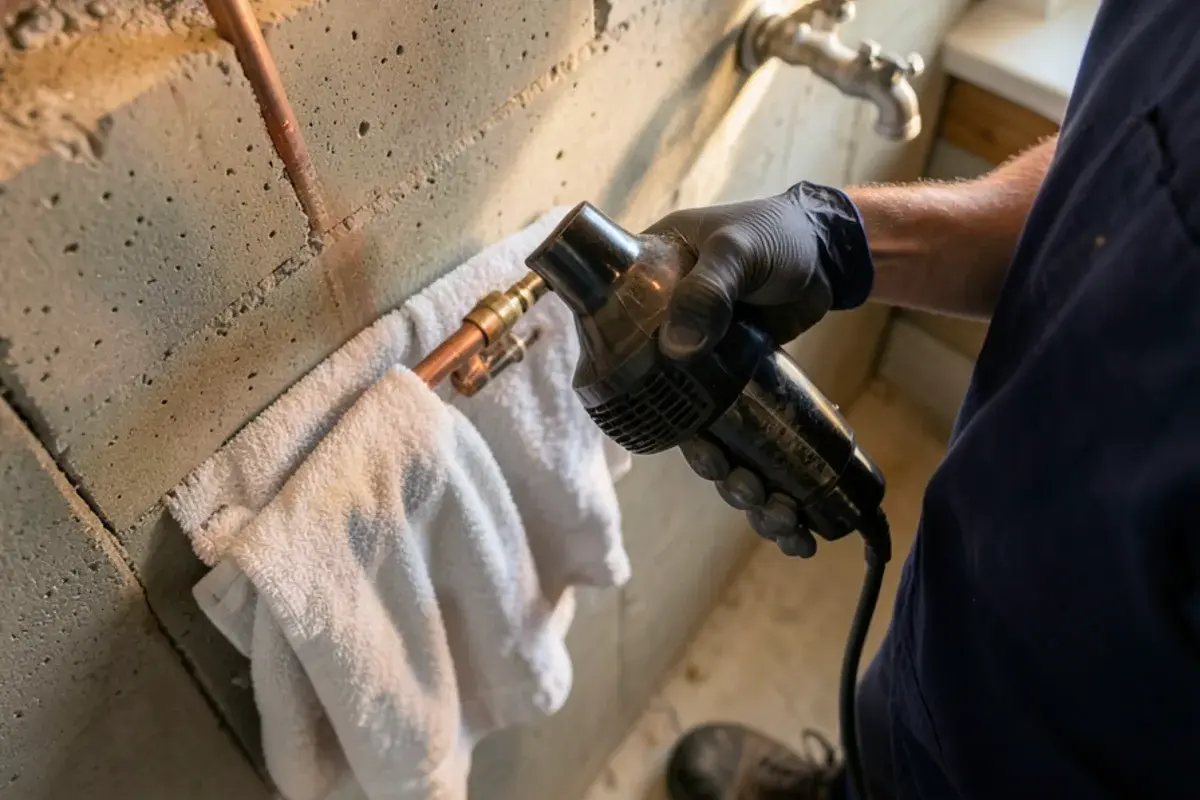
- Warm the air around the pipe with a hair dryer, a space heater or hot water. Never leave a space heater unattended.
- Avoid kerosene heaters and open flames.
- When the flow returns, turn the water on slowly and check every joint and the ceiling below for leaks.
If you see water spraying or dripping, stop. That is a burst pipe, and the steps in our guide to what to do when a pipe bursts come first. If the pipe is behind a wall or you cannot find the frozen section, frozen pipe thawing is a call to make rather than a job to improvise.
What We Check After a Pipe Thaws
Water flowing again does not mean the job is over. We look at the length of the thawed section, every fitting along it and the wall or ceiling beneath. We run the line under pressure and watch for a slow drip, which is how a hairline crack announces itself.
We also ask why this pipe froze. Often the answer is a gap in insulation, a draft at a rim joist or a cabinet that sits tight against a cold wall. Roben V. wrote that Monte came out on the coldest day, in blizzard conditions, fixed the plumbing problem and suggested future work to prevent more. That final step, a cause and a fix, is the part that keeps the pipe from freezing again.
Every fix has a limit, and we will say which one you are buying. A foam sleeve adds no heat, so on a bare crawl-space line it buys time and no more. A trickle protects one line for the price of some water, but a slow drip can still freeze on a bitter night. Heat tape needs power and a yearly look. Moving the pipe into heated space is the lasting answer, and it is also the most work, since it can mean opening a wall.
If the line did burst, burst pipe repair covers what the repair involves. Homes in Morton face the same cold as Washington, where January lows average 15.8°F, so the same checks apply.
Do Not Wait for the Thaw to Find Out
The time to deal with a suspect pipe is before the ice lets go. If a faucet on a cold wall has lost pressure, or a pipe froze last winter and nobody found out why, call (209) 563-1400 and tell us where the line runs and what you have tried. A crack you suspect but cannot see is a job for leak detection, and finding it costs less than finding it through the ceiling.
Sources
- Illinois American Water: Cold Weather Tips To Prevent Frozen Pipes (January 15, 2024)
- Illinois Emergency Management Agency and Office of Homeland Security: winter weather preparedness release (November 2025)
- U.S. Consumer Product Safety Commission: Heat Tape Guidelines (1996)
- U.S. Consumer Product Safety Commission: Inspect Heat Tapes and Cables as You Winterize Your Home (1989)
- Arlington County, Virginia: Prevent Frozen Pipes
- Dr. Drang: Freezing Pipes (January 21, 2026), on Gordon's 1996 University of Illinois report

Written by the Professional Sewer & Drain Services team
A plumbing and sewer company based in Washington, IL. About us