Local angles
Basement Flooding on the Illinois River Bluffs
Published November 1, 2026. Updated November 1, 2026.

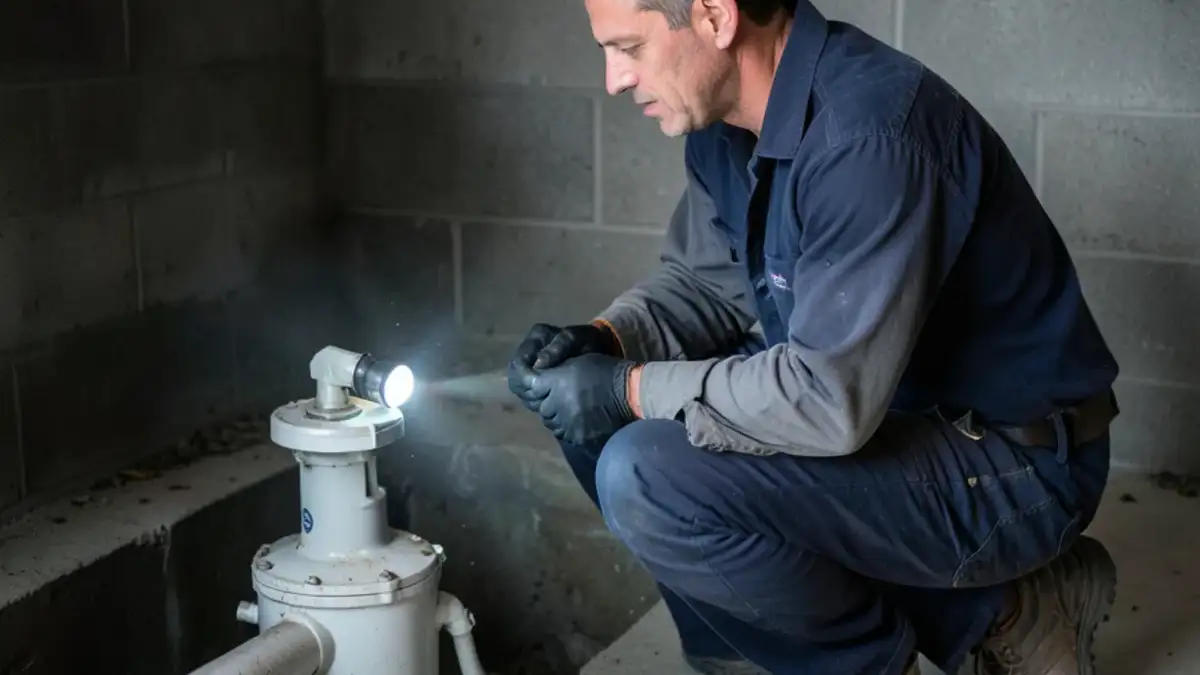
Basement flooding in the Peoria area comes from three paths: groundwater seeping through the wall, sewage backing up a floor drain, and surface water running down a slope into a window well. Each path has a different fix. Working out which one you have comes first.
What Does the Land Along the Illinois River Look Like?
The land along the Illinois River is a low valley with higher ground behind it, and water follows that shape. East Peoria sits on the east bank directly across from downtown Peoria. Its first settlement stood on what Wikipedia calls a swampy floodplain, and the name Fondulac is said to mean bottom of the lake.
Farther east, much of the surface soil is windblown silt. The Illinois State Museum says the Peoria Silt settled between 28,000 and 14,000 years ago, and that loess is thickest just east of the major river valleys. That puts the Tazewell County side of the river in the thick part.
What that silt does to drainage is our reasoning, not a measured finding: fine soil holds water and becomes heavy and slick when it is saturated. East Peoria saw that on April 17, 2013, when the soil was so waterlogged that mudslides occurred.
Water coming into your basement? Call (209) 563-1400
Open 7 days, 7:15 AM to 6:15 PM. Tell us what is happening and we will give you a clear, upfront quote.
Where Is the Water Coming From?
Illinois DNR's floodproofing guide names three causes of basement flooding. The fix for each is different, so identify yours first.
| Path | What you see | Where the fix lives |
|---|---|---|
| Groundwater seepage | Clear water at cracks, the wall and floor joint, or around pipes | Footing drain, sump pit and pump |
| Sewer backup | Foul water from the floor drain or lowest fixture | The lateral, the main, backup protection |
| Surface water | Water at windows or door wells after rain | Grading, downspouts, window wells |
Slopes add a twist. On a hillside lot, the downhill wall and its window wells collect runoff from the yard above. DNR warns that surface water puts much more pressure on foundation walls than seepage does and can even break them.
What Did April 2013 Show About Wet Ground and a Rising River?
It showed how quickly every path fills at once. The same storms that triggered the East Peoria mudslides flooded the Fondulac District Library's basement overnight. The library did not reopen until April 24.
At the river, officials expected Peoria to crest at a record 30 feet. A flood wall of more than 30,000 sandbags went up along Water Street, and the river was rising about two inches an hour. East Peoria's main levee was in good shape, but its secondary levees were expected to overflow.
Two Floods, Five Days Apart
The rain and the river did not peak together. The National Weather Service recorded daily-record rain at Peoria of 2.47 inches on April 17 and 1.37 inches on April 18. The river crested at 29.35 feet on April 23, above the old record of 28.80 feet set in May 1943. The Weather Service marks those crest values as preliminary.
That gap is the useful part. A home up the slope met its worst water during the storm, from runoff and groundwater. A home on the bottomland could dry out the sump and still have the river coming days later. So a clear sky does not end the watch near the valley.
A high river puts pressure on the ground around it, and our reasoning is that homes near the bottomland feel that first. Basements farther up, in towns like Morton, are more likely to deal with rain, groundwater and the sewer. For East Peoria addresses near the valley, the river itself is part of the question.
How Should a Basement on a Slope Be Set Up for a Wet Spring?
Set it up so each path has an answer. This list follows DNR's suggestions plus ordinary practice:
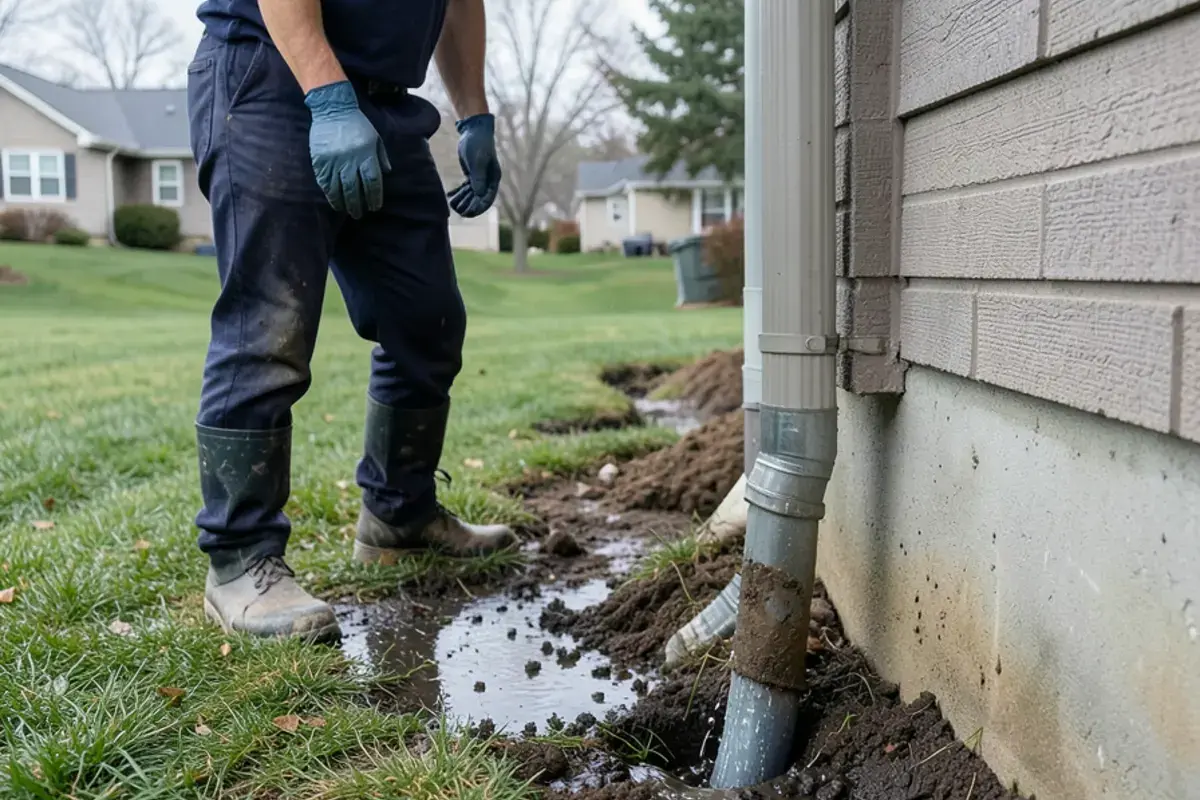
- Move roof water away. Extend downspouts so they discharge well past the foundation, and downhill from it.
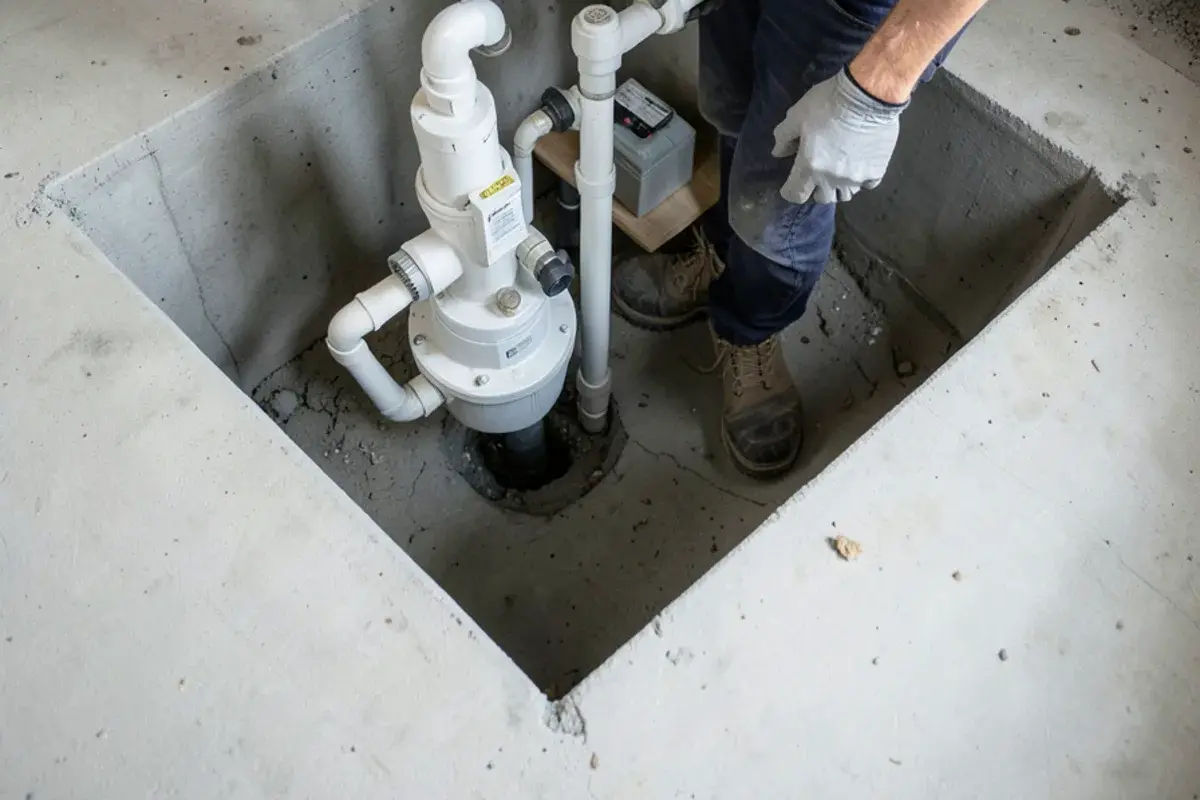
- Protect the pump. DNR suggests a backup power source, a larger or additional pump, and a check valve on the outfall. Sump pump service covers each.
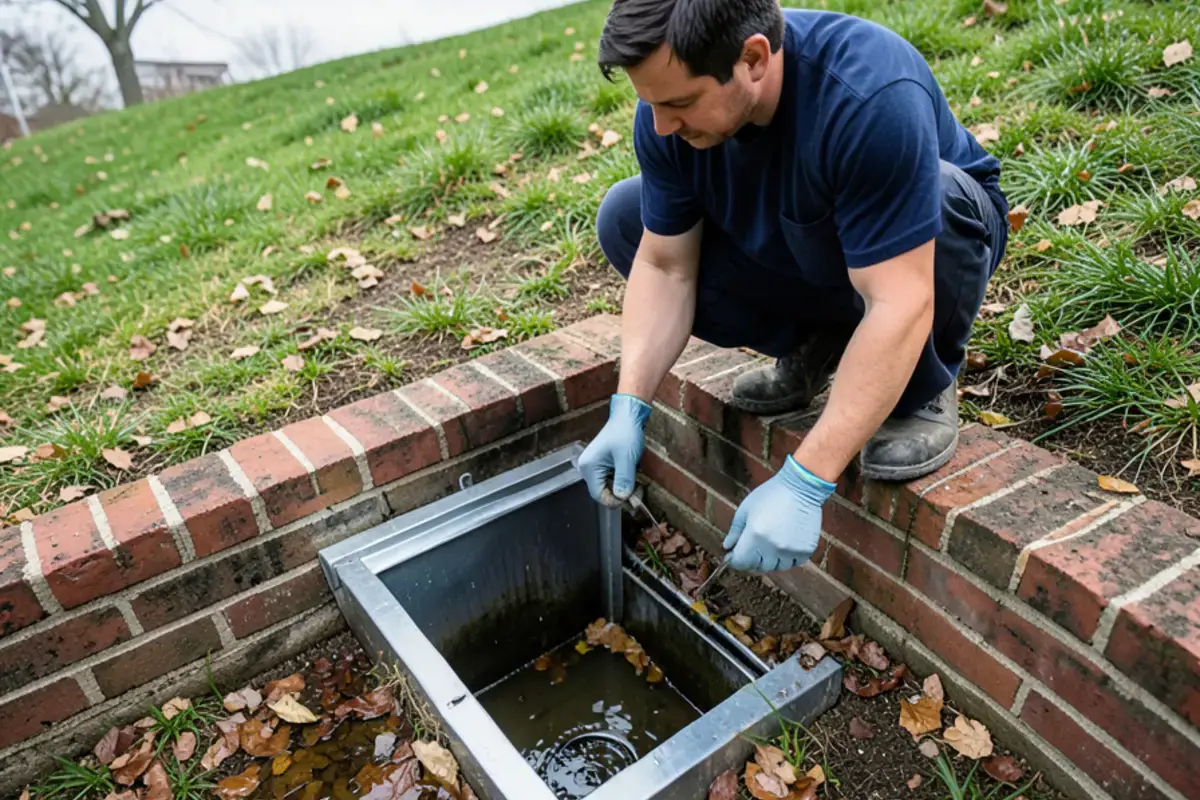
- Cover and drain window wells. Check the drain at the bottom before spring. DNR also suggests building up walls around a well, but never block a basement window that serves as an emergency exit.
- Protect the floor drain. DNR lists a plug, a standpipe, an overhead sewer and a backup valve, with the last two needing a licensed plumber and a building permit.
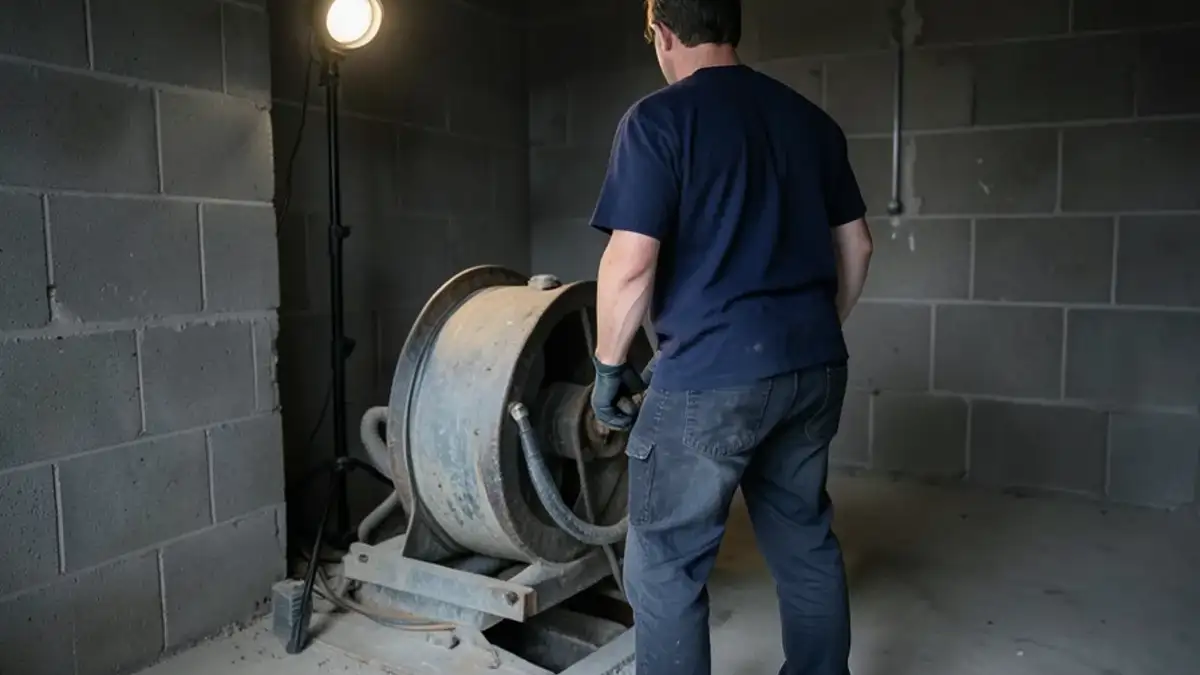
- Keep the lateral clear. A line half full of roots fails first in a storm. Sewer line cleaning restores the room it needs.
For the sewer side of a wet spring, read our guide to sewer backups after heavy rain in Tazewell County. Before cleanup begins, our post on insurance and sewer backups explains what to document.
How Do You Trace Your Water on the Next Wet Day?
Go out while it is raining, because a dry yard hides most of the evidence. DNR admits the source of basement water can be hard to pin down, and a basement flooding pattern is easier to read with a dated record. Walk it in this order:
- Stand under the gutters and look for water spilling over, which lands right at the wall.
- Follow each downspout to its end. DNR says to route downspouts and sump discharge farther from the house.
- Note where water pools or runs toward the foundation on the uphill side.
- Look in every window well for standing water and a blocked drain.
- Go inside and listen to the sump. Count how often it runs, and check that it empties the pit.
- Trace any pipe from a downspout, footing drain or sump that disappears into the floor. DNR calls connections to the sanitary sewer a common cause of backups.
- Photograph where water first shows, with the date, so the next storm can be compared.
Which Fixes Promise More Than They Deliver?
Several common ideas only answer one path, or none. DNR's guide is blunt about the limits:
| Idea | The limit |
|---|---|
| Waterproofing the walls | It deals with groundwater, not surface flooding |
| Sealing the basement against floodwater | DNR says not to, because pressure on walls and floors can crack or buckle them |
| An earth berm around the house | It needs a 3:1 slope, about 6 feet of width per foot of height, and it can overtop or erode |
| Regrading the yard yourself | It can block natural flow along a property line, so ask the building department first |
Before you spend money, ask your local building or planning department whether the address sits in a mapped floodplain and what its flood history is. DNR also says to get permits before filling or regrading.
Flood Insurance Has a Waiting Period
Coverage does not start the day you buy it. DNR notes a 30-day wait before National Flood Insurance takes effect, so a forecast crest is too late. It also says standard coverage leaves out basement contents and finished items such as paneling and carpet. The guide is older, so confirm the terms with your agent.
What We Walk Around the Outside For
We start outside the house, because half the answer is out there. We follow each downspout to where it ends, look at the lawn's slope toward the wall, and check the window wells and where the sump line discharges.
Inside, we open the pit, lift the float, look at the check valve and ask what happens during a power outage. We find the cleanout and the floor drain. Then you get a short list of fixes in order of what protects the basement most, with a clear, upfront quote for each, not a single answer for every house.
We put the cheap fixes first, even when that means selling you less. A downspout extension stops water before it reaches the wall, and no pump does that. A second pump earns its cost only when the first one truly cannot keep up with groundwater. Some answers are not plumbing at all: a regraded lawn or a cracked foundation wall needs the right contractor, and we will say so. A sewer camera inspection is worth it only when the floor drain is part of the story.
Water in the Basement Now? Start Here
If the water is foul, or rising from the floor drain, stop running fixtures and stay out of it. If it is clear, check from a dry spot whether the pump is running. Keep clear of standing water near electrics.
Then call (209) 563-1400 and tell us what the water looks like, where it first appeared and whether the sump is running. Photos help. We work in Washington, East Peoria, Morton and the towns between them, and we can sort out which of the three paths you have before anyone spends money on the wrong one.
Sources

Written by the Professional Sewer & Drain Services team
A plumbing and sewer company based in Washington, IL. About us