Cost and insurance
Does Homeowners Insurance Cover Sewer Backups?
Published November 1, 2026. Updated November 1, 2026.
Does insurance cover sewer backup? Usually not. The Illinois Department of Insurance lists sewer backup and sump pump failure as typical homeowners exclusions, and the coverage is an optional add-on for an extra premium. Whether yours has it depends on your own policy, so read it before you need it. We are plumbers, not insurers.
Does Insurance Cover Sewer Backup? What Illinois Says
Usually not, unless you added a specific endorsement. The Illinois Department of Insurance lists "sewer backup/sump pump failure" among typical homeowners exclusions, and it describes sewer backup and sump pump overflow coverage as optional, available for an additional premium. Triple-I says sewer backups are not covered under a typical homeowners policy and must be added as a separate product or an endorsement.
That is general guidance, not a ruling on your policy. Companies write these forms differently, so the only answer that counts is in your own policy and endorsements.
| Situation | What the published sources say |
|---|---|
| Standard homeowners policy, no endorsement | Sewer backup typically excluded |
| Policy with a water backup or sewer backup endorsement | Damage from backup may be covered, up to the limit and subject to the deductible |
| Flood insurance | Does not typically cover sewer backup or sump pump problems |
| Water seeping through walls or floors | Seepage is not covered under the add-on, per the state glossary |
| The sewer lateral pipe itself | Typically not covered; a rider may cover it in some policies |
| A broken sump pump itself | Not covered by the add-on, per Policygenius |
Sewer backup and an unclear policy? Call (209) 563-1400
Open 7 days, 7:15 AM to 6:15 PM. Tell us what is happening and we will give you a clear, upfront quote.
What Does a Water Backup Endorsement Actually Cover?
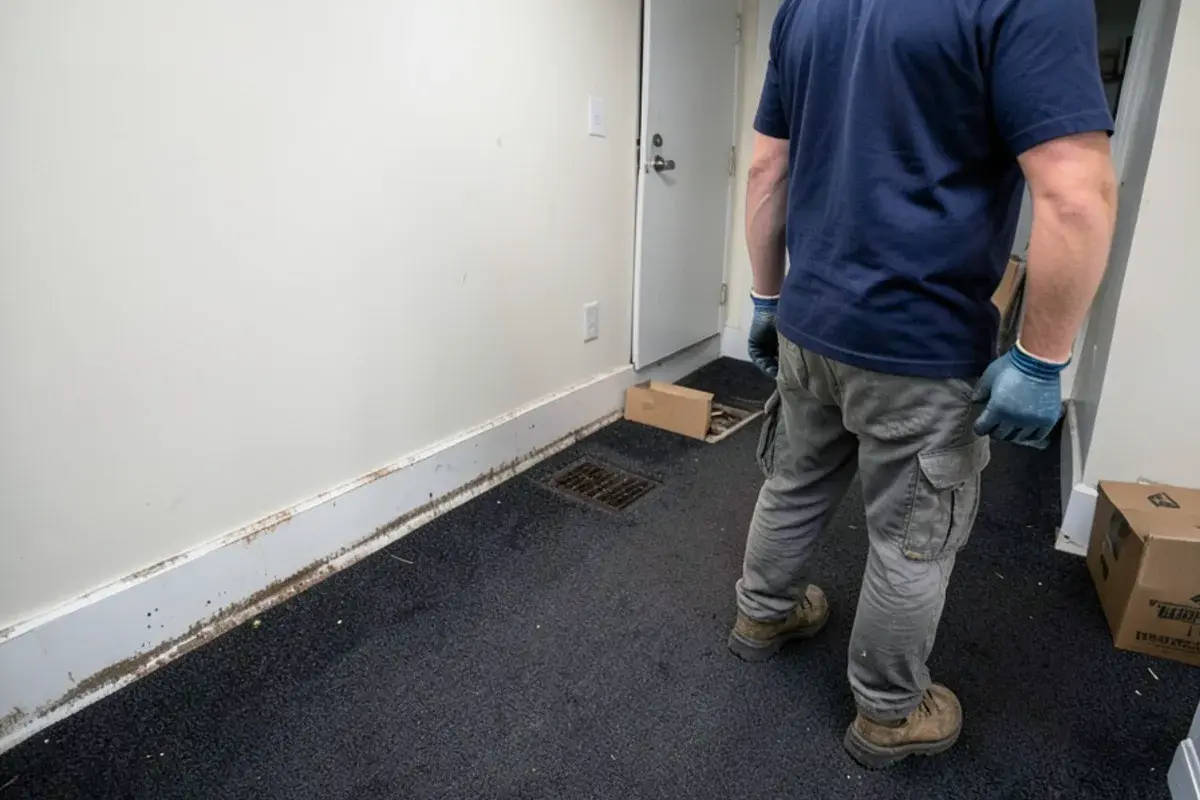
It covers damage from water or waterborne material that comes up through a drain or sewer, or overflows from a sump pump. The state's glossary says the add-on pays for damage to your finished basement caused by that water, and that seepage is not covered. Limits and deductibles vary by insurer.
Triple-I has described a sewer backup rider as costing about $50 a year, with limits set by the insurer. That figure comes from an industry press release, and your price will differ. The Des Plaines public works page adds that such a rider may also cover repair or replacement of a damaged lateral in some policies. Read the wording on the lateral before you assume it does.
What Will the Endorsement Not Pay For?
The gaps are as important as the coverage:
- Flood and surface water. Policygenius says those need a separate flood policy, even with the add-on.
- The failed equipment. The water damage may be paid, but not a new pump.
- Maintenance problems. The Illinois Department of Insurance lists ongoing leaks, humidity, condensation and landscaping or drainage problems as outside standard policies.
- Neglect. Policygenius says wear and tear, or a sump pump left switched off, can lead to a denied claim.
How Much Backup Coverage Is Enough?
Enough to rebuild the part of the basement you would actually replace. Policygenius says insurers generally offer about $5,000 to $25,000, at roughly $30 to $70 a year for the first $5,000 and $25 to $35 for each additional $5,000. Your deductible may match your main one or run as low as $250.
Here is that math on an $18,000 loss, a round number we picked for the example:
| Limit | Estimated yearly cost | Above the limit, on you |
|---|---|---|
| $5,000 | $30 to $70 | $13,000 |
| $10,000 | $55 to $105 | $8,000 |
| $25,000 | $130 to $210 | $0 |
The last column is before the deductible, and forms differ in how they apply it. To size your own number, add up carpet, wallboard, furniture, the washer and dryer and anything stored below grade. Then ask whether the add-on pays replacement cost or actual cash value, which the state defines as replacement cost less depreciation. An unfinished basement with a concrete floor and little in it may do fine at the lowest limit. A finished basement with a bathroom is a different risk.
How Do You Check Your Own Policy?
Take ten minutes and look for these items:
- The declarations page, which lists endorsements by name or form number.
- Any endorsement mentioning water backup, sewer or drain backup, or sump pump overflow.
- The limit on that coverage, which is often much lower than your dwelling limit.
- The deductible for that coverage, which may differ from the main one.
- The exclusions section, for the words sewer, drain, sump or seepage.
Illinois now requires insurers to give homeowners applicants information about sewer backup and sump pump overflow coverage, including limits and costs, and to send renewing policyholders that information at least 30 days before renewal. That is House Bill 5357, effective January 1, 2025, as summarized by AAIS. If you cannot find it in your renewal packet, ask your agent.
What We Look For After a Backup
The insurer will want to know why the line backed up, and we can tell you what we see. We cannot tell you what your policy pays.
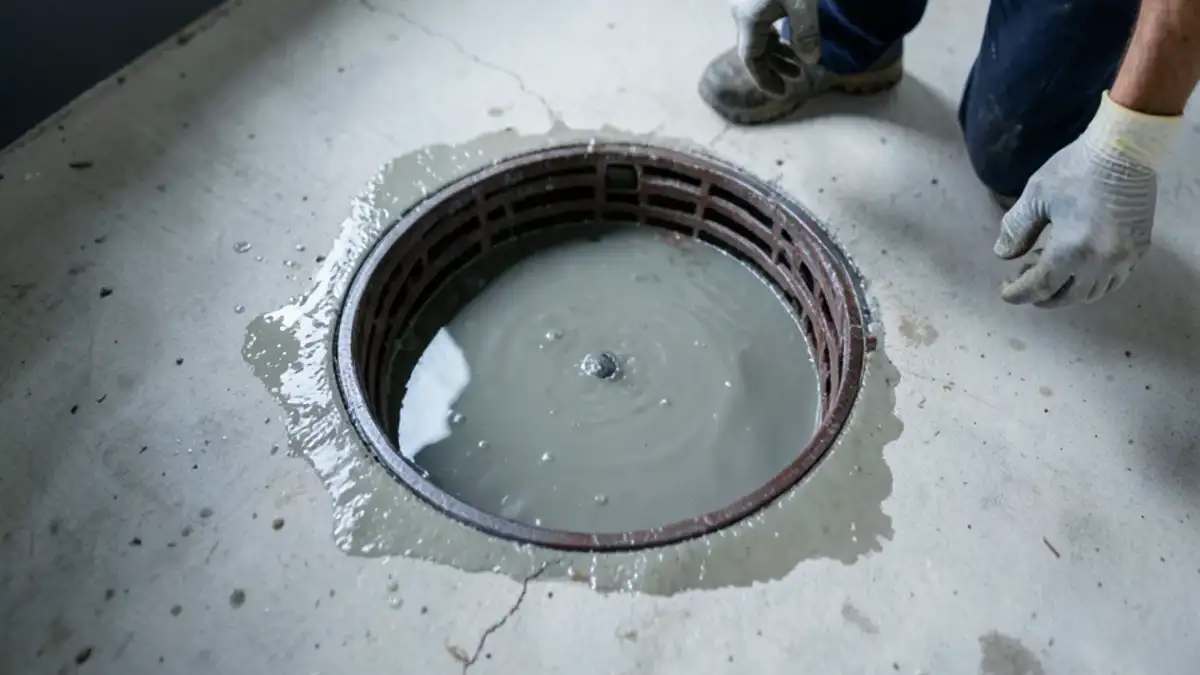
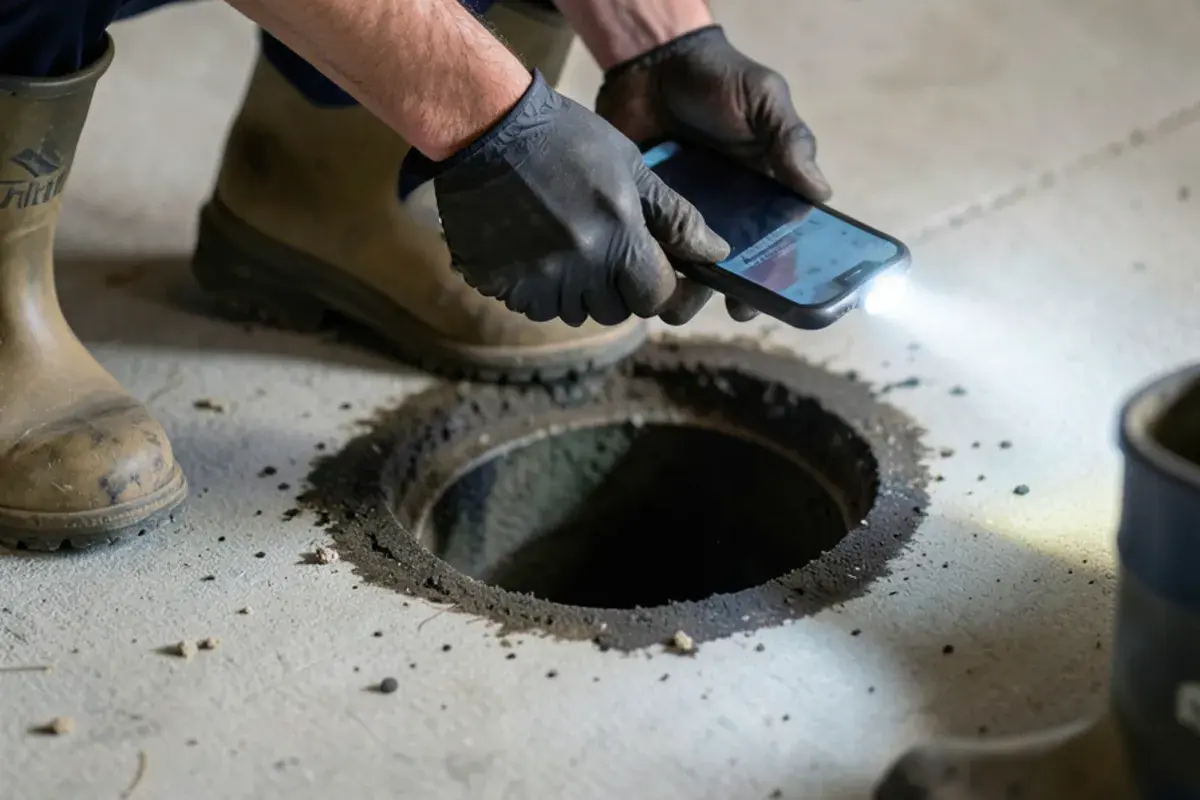
We note what came out of the line, whether the blockage was roots, grease, wipes or a failed section of pipe, and what the camera shows. Photographs of the cleanout, the line and the affected drains give you something factual to hand your insurer. There is one trade-off: clearing the line stops the damage, and it also removes the evidence. We will not hold off clearing a backup to document it, but a photo of what comes back on the cable takes seconds, so ask for one. Our emergency sewer backup page covers the plumbing side, sewer line cleaning covers the cable work, and our guide to sewage backing up into the house covers what to do while you wait.
Why Is a Burst Pipe Covered but a Sewer Backup Not?
They are written as separate risks. Triple-I says standard homeowners and renters policies cover burst pipes, while sewer backups are not covered under a typical policy. The published sources do not explain the insurers' reasoning, but the practical difference is easy to see: a burst pipe is a break inside your plumbing, while a backup is water and waste coming up from the drain system.
The two sound alike on a phone call, so name the cause when you report a loss, and ask how the policy treats it.
Can the City or Sanitary District Pay Instead?
Do not count on it, but ask. Belleville, Illinois, says it is not automatically liable for property damage or cleanup after a backup, and that filing a written claim does not mean it will be paid. Rules differ by town.
Peoria is the useful local example, and its help goes to prevention, not damage. The city says to call the Greater Peoria Sanitary District before a plumber. The district checks the public sewer at no cost, and if that is clear, the private line is the owner's, including under the street and sidewalk. The city's page lists 75 percent, up to $3,500, toward a plumbing conversion and sump pump, and up to $1,200 toward a gate-check valve, for homes on city-owned mains. It also lists a district program paying 75 percent, up to $3,500, for basement replumbing on properties built before 1995. Confirm the current terms before you plan around them.
What Should You Do If You Have No Coverage?
Plan around it. In older neighborhoods such as those in Peoria, roughly 11 miles from our base, a line that backs up once because of roots or a failing joint can do it again. Ask your agent to quote the endorsement before the next storm. Treat a camera inspection as a way to learn the line's condition, and keep the cleanout reachable. A sewer camera inspection shows whether the pipe is the cause.
If a backup has already happened, photograph everything, keep damaged items until the insurer says otherwise, and dry the space quickly. Wallboard takes up moisture within hours, and wet framing left alone past 48 hours can start growing microbes. The Illinois Department of Insurance says your policy allows reasonable and necessary repairs to protect the property, but to avoid large permanent repairs until the insurer has inspected, and to keep every receipt.
Fix the Line, Then Read the Fine Print
Insurance pays for some of the mess. A sound, clear line is what keeps it from happening. Check your declarations page this week, ask your agent for the limit in writing, and call (209) 563-1400 if a drain is gurgling or a backup has already started. We clear the line and show you what we found. Your agent answers what the policy pays.
Sources
- Illinois Department of Insurance: Homeowners and Renters Definitions
- Illinois Department of Insurance: Flood Insurance
- Triple-I: Which disasters are covered by homeowners insurance?
- Triple-I: Water Damage, What's Covered and What's Not
- AAIS: Illinois Enacts House Bill 5357
- City of Des Plaines: Sewer System (private sewer laterals)
- Policygenius: What Is Water Backup Coverage?
- City of Peoria: Sanitary Sewer Information
- City of Belleville: Sewer Backups, What Every Homeowner Should Know

Written by the Professional Sewer & Drain Services team
A plumbing and sewer company based in Washington, IL. About us