Problem solving
Tree Roots in Your Sewer Line: Signs and Fixes
Published November 1, 2026. Updated November 1, 2026.
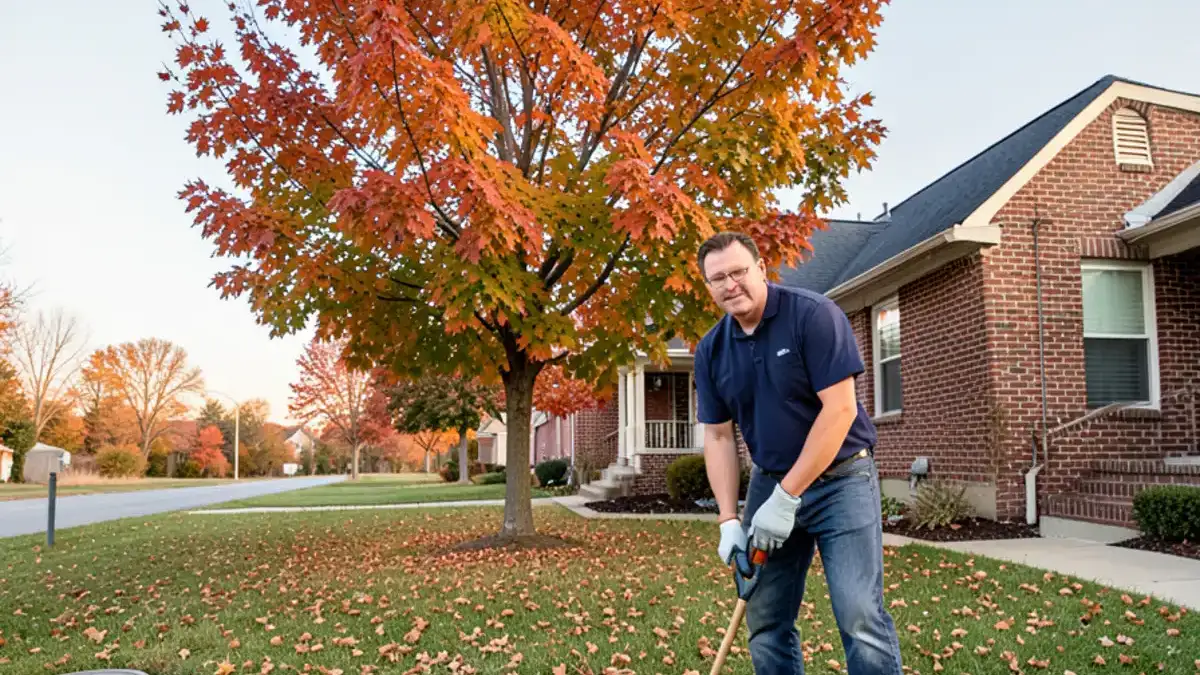
Tree roots in a sewer line almost never break a healthy pipe. They enter through a crack or a loose joint that was already there, then grow into a mat that catches paper and grease. Slow drains, gurgling and a backup in the lowest drain are the signs, and cutting is only temporary unless the opening is repaired.
What Are the Signs of Tree Roots in Your Sewer Line?
Watch for slow drains that return after every cleaning. Roots build slowly, so the early signs are easy to write off.
- Several drains slow down over weeks, not days
- Gurgling in a toilet or tub when another fixture drains
- The lowest drain in the house, often a basement floor drain, backs up
- A backup that comes back after a cleaning, sometimes sooner after heavy rain
- A sewage smell near the floor drain
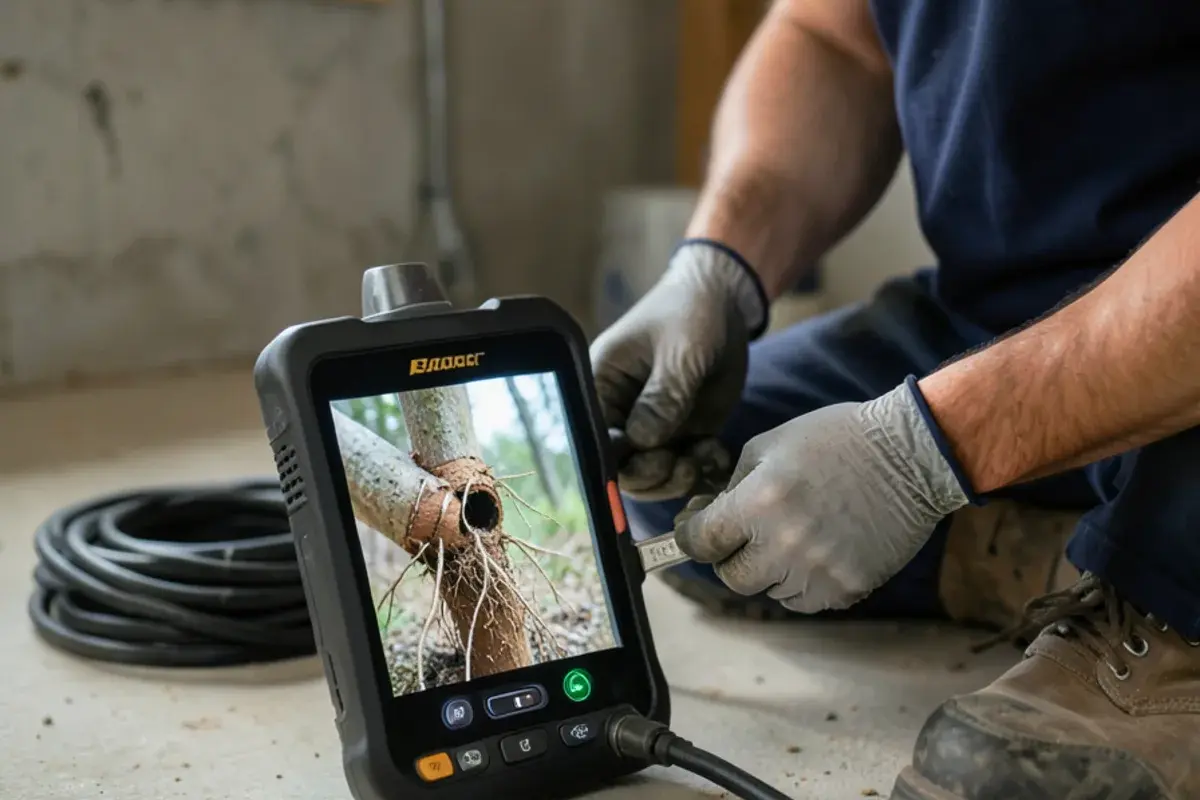
None of these proves roots, because grease and wipes cause the same signs. A sewer camera inspection shows what is in the pipe and where it entered.
Roots in your sewer line? Call (209) 563-1400
Open 7 days, 7:15 AM to 6:15 PM. Tell us what is happening and we will give you a clear, upfront quote.
How Do Roots Get Into a Sewer Line in the First Place?
Roots enter through a flaw, then enlarge it. The City of Bismarck notes that in most cases the sewer line has a defect to begin with: many older clay lines are cracked, or the joints have shifted as soil settled. The line then releases a little moisture and oxygen, and fine root hairs follow it in.
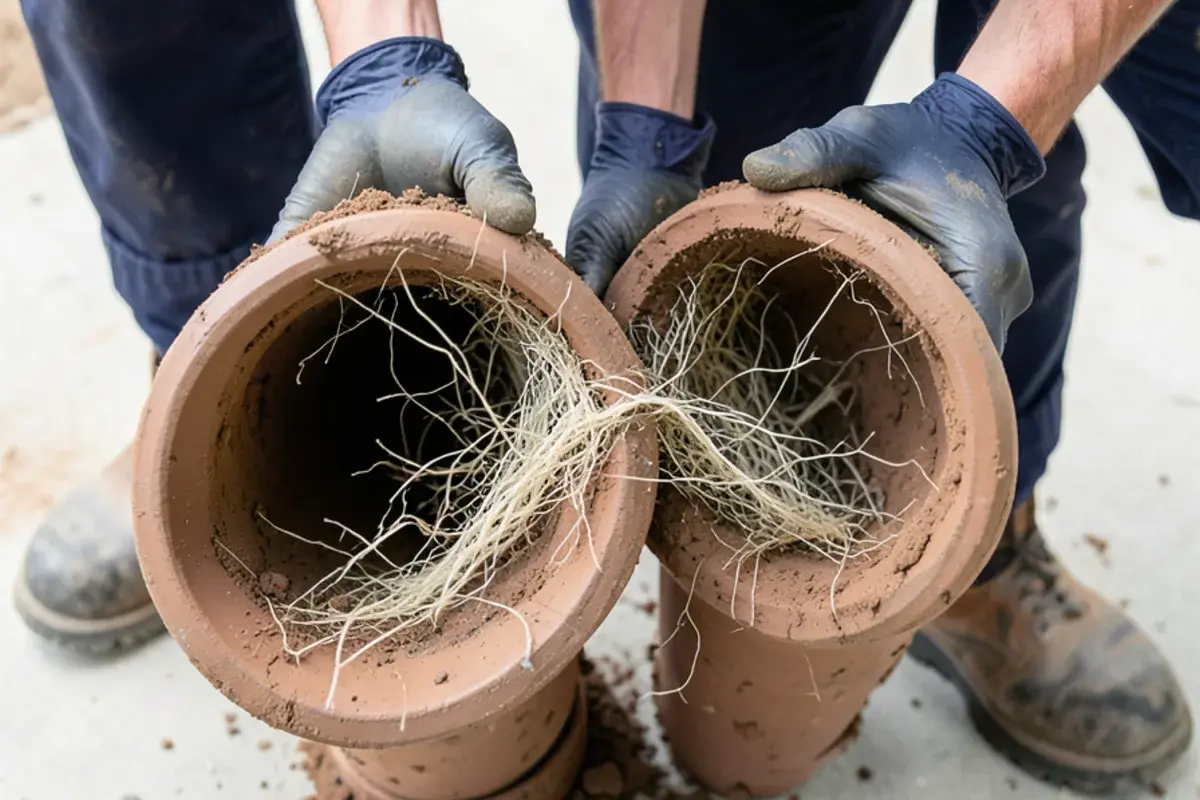
A USDA Forest Service review lists the conditions that raise the odds: old pipes with joints, shallow pipes, small-diameter pipes and fast-growing species. The same review reports that roots cause more than half of all sewer blockages in the systems studied. In small pipes, root removal every year or every other year is described as common.
That matters locally because about 13% of Washington's housing units date to 1939 or earlier (Point2homes, citing Census data), and homes of that age often have clay tile sewers with a joint every few feet. Older streets with big trees, like those in Metamora, have the same ingredients.
Why Do Roots Hit Your Lateral Harder Than the City Main?
Your lateral is usually the easier pipe to reach. The USDA Forest Service review says root penetration seems most severe in service connections, the pipes that join a house to the main, because they run shallower and may not have been well inspected when laid. A Danish survey it cites found more root intrusions in those pipes than in mains.
The age of the joints matters as much as the tree:
| Pipe in the ground | What the research says | What to expect |
|---|---|---|
| Old clay, packed or mortared joints | Roots blocking drains are usually in old clay in bad condition, and EPCOR calls clay tile the easiest to penetrate | Repeat trouble until the joints are closed |
| Concrete | Still shows up in intrusion surveys, including pipe laid from 1979 to 1985 | Depends on the joints, so look before you plan |
| Modern plastic | The review calls it unlikely to suffer, and EPCOR says PVC resists intrusion better | Rare, so look elsewhere for the clog |
Lists of Bad Trees Disagree
Do not plan around a species list alone. EPCOR, a Canadian utility, names poplar, willow, elm, ash and birch as the likeliest invaders. A 2012 Swedish study of root-damaged pipes found most species seemed capable of it, and its authors could not say why rates differed. A tree that looks harmless can still reach a leaking joint. The pipe is the better thing to judge.
Does Cutting Make Roots Grow Back Faster?
Often, yes. The same review says cutting corrects the immediate problem, but roots frequently grow back more vigorously after each cut, and often in greater numbers. One author it cites recommends following a cut with a chemical treatment or a flood of scalding water, while the review warns that herbicides may threaten the environment.
So a cut is a reset, not a cure. It is still a fair choice. On system-wide costs, the review says root removal may be one-sixth the cost of replacing or renewing the pipe. By that ratio, six cuts would match one replacement, which at one cut every two years is 12 years of cutting. That ratio comes from public sewer budgets, not a house quote, so get both prices for your own line.
Which Fix Lasts: Cutting, Jetting, Lining or Replacement?
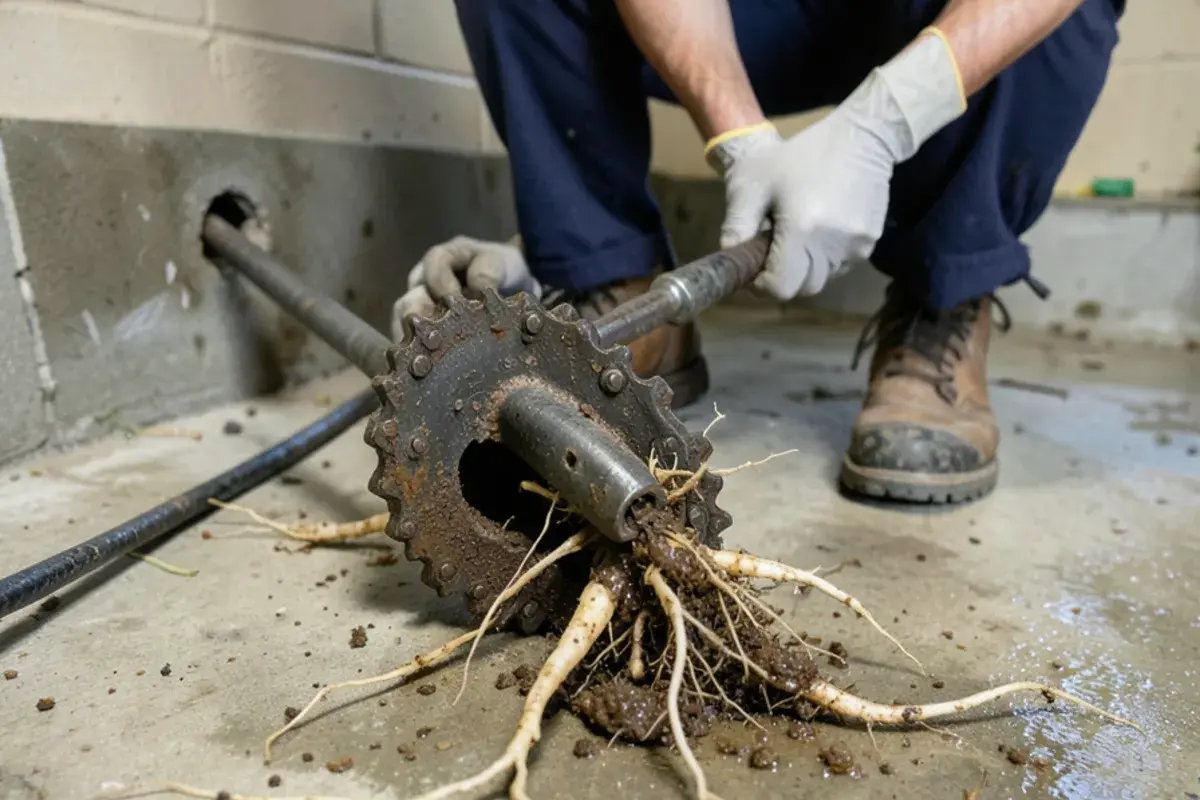
The fix that lasts is the one that closes the opening. Cutting and jetting clear roots out of the pipe, and neither seals the crack or joint where they came in (a point made by a plumbing provider in its own guide to snaking versus jetting).
| Fix | What it does | When it wins |
|---|---|---|
| Cable and cutter | Cuts roots out of the line | A blocked line that needs to open now |
| Hydro jetting | Washes out roots, sludge and grease | Sound pipe with a mix of roots and buildup |
| Spot repair | Replaces a short failed section | One bad joint or crack found on camera |
| Liner or full replacement | Removes the openings | Repeated blockages from several joints |
Our sewer root removal page covers the cutting work step by step, and sewer line cleaning covers the main line. A cut every year or two is a fair plan for a sound line with a known tree. Once the schedule gets tight, repair costs less than endless cleaning.
If You Decide to Keep Cutting
Run it as a schedule, not as a string of emergencies.
- Write down the date of every cut and how the line ran afterward.
- Keep the camera footage, and note how far each root entry sits from the cleanout.
- Book the next cut before the last gap runs out. If drains slowed 18 months after the last cut, book the next one at about 15.
- Watch the gap. A gap that keeps shrinking means the opening is growing, and it is time to price a repair.
For the price side of that decision, our guide to sewer line replacement cost lays out what moves the number.
What Should You Do About the Tree?
Do not remove the tree before you know the cause. The City of Bismarck points out that roots can spread three to five times the height of the tree, so the closest tree may not be the only one. A removed tree's roots can also keep growing for a few years.
Instead, learn where the sewer runs and what is above it. Plant large trees well away from the line, and ask the camera to show whether roots from one tree or several are in the pipe. If roots already cross the line, fix the pipe first, then decide about the tree. Fixing the opening protects you whichever tree is responsible.
Who Is Responsible for Roots in the Lateral?
Usually the owner is responsible for the private lateral, the pipe from the house to the city main, and the city maintains the main itself. Exact rules vary by town, so ask your public works office where your responsibility ends. A proposed Washington ordinance touches on private sewer laterals, so check its current status with the city before assuming anything. Either way, roots in the part you own are yours to clear, and the camera footage is useful if the city main turns out to be involved. If the roots come from a tree in the parkway, ask public works how it treats that case, because we found no single rule that covers every town.
What We Check on a Root Call
Before cutting, we find the cleanout and ask when the line last backed up. After the cut, we look at what came out. Fine, hair-like roots on the cutter mean the line is open somewhere, and we want to see where. Thick roots mean the opening has been growing for years.
We will tell you what a cut will not do. It does nothing for the joint, and a heavy cut in brittle old clay carries its own risk, so we would rather see the line first when the backup allows it. Spot repairs have a limit too: they close the joint you can see and leave the neighbors alone, which is why the whole run needs a look.
Then we offer a camera pass so the fix is based on footage and not guesswork. If the footage shows one bad joint, a short repair may do. If it shows many, we say so, and talk through the options and a clear, upfront quote before any digging.
Big Tree, Slow Drains? Get a Look at the Line
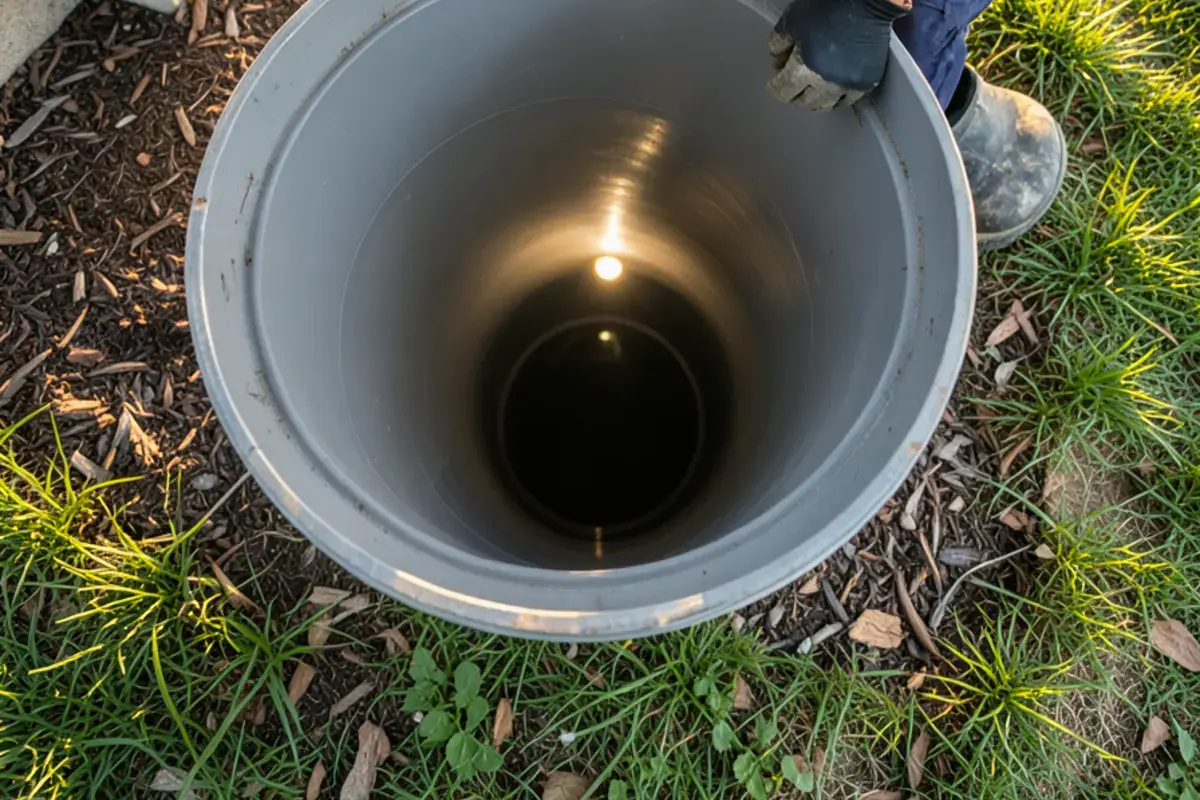
The cheapest root problem is one you find before the backup. If you own an older home with mature trees and the drains have started to slow, or your lowest drain has backed up even once, this is the time to find out what the pipe looks like.
Call (209) 563-1400 and tell us when the line last backed up and where your cleanout is. We work around Washington, Metamora and the rest of Tazewell, Woodford and Peoria counties. If sewage is already coming up, stop running water first, then call.
Sources

Written by the Professional Sewer & Drain Services team
A plumbing and sewer company based in Washington, IL. About us